2 Delhi Police personnel, including a Pink Force member, injured during detention of protesters
Source Entity
India Latest News: Top National Headlines Today & Breaking News | The Hindu
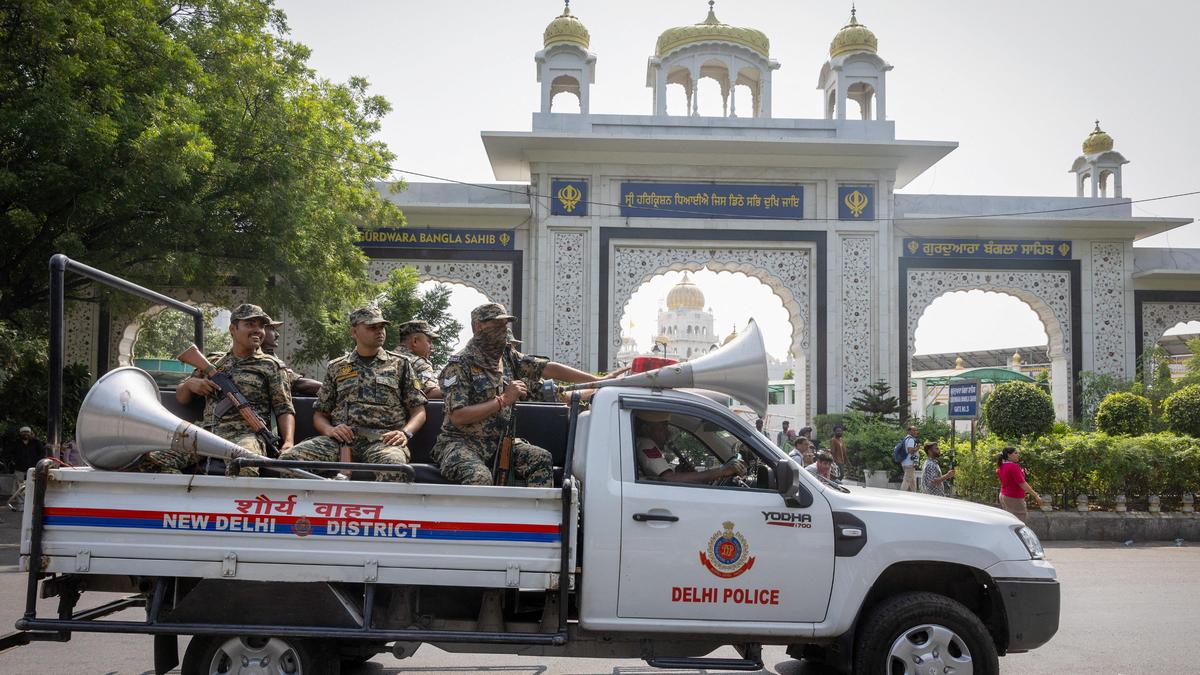
Rahul Gandhi has accused Prime Minister Narendra Modi of undermining Indian democracy and silencing dissent amidst widespread protests in Delhi. Security forces have implemented severe restrictions, including the closure of 45 Delhi Metro stations, to manage demonstrations.
Tensions Escalate: Rahul Gandhi's Critique and Delhi's Security Lockdown
The Political Confrontation in Chennai
During the sixth iteration of his 'Chhatron Ki Goonj' youth outreach initiative in Chennai, Leader of the Opposition Rahul Gandhi launched a sharp critique against Prime Minister Narendra Modi. Utilizing the provocative moniker "Mogambo Modi," Gandhi accused the Prime Minister of actively dismantling India's democratic foundations and engaging in "vote chori." This rhetoric marks a significant intensification of the opposition's stance, framing the current administration's actions not merely as policy disagreements but as fundamental threats to the constitutional order.
Contextualizing the 'Chhatron Ki Goonj' Initiative
The 'Chhatron Ki Goonj' program, which has spanned cities from Kota to Pune, serves as a strategic platform for the Congress party to mobilize the youth demographic. By addressing students and young professionals, Gandhi is attempting to consolidate anti-incumbency sentiment. His recent commentary specifically highlights the perceived disconnect between the government and the younger generation, suggesting that the "drama" of the last 15 years is reaching a critical inflection point where the administration will be held accountable for its actions.
The Security Apparatus in New Delhi
Simultaneously, the capital city of New Delhi has been thrust into a state of high alert. Reports from October 10 indicate that security forces have deployed a wide net across the city, particularly around sensitive areas like Janpath and Ashoka Road. The presence of tear gas munitions and the systematic blocking of major thoroughfares underscore the government's determination to contain the ongoing anti-CEC protests. The detention of early-bird protesters arriving from NCR regions like Gurugram and Faridabad demonstrates the preemptive nature of this security strategy.
Infrastructure Impact: The Metro Shutdown
Perhaps the most visible sign of the escalating tensions is the unprecedented closure of 45 Delhi Metro stations. The decision to barricade entrances and halt transit services reflects the severity of the security concerns. By disrupting the primary mode of transportation for thousands of residents, the administration has effectively signaled that public order and security containment take precedence over urban mobility during periods of civil unrest.
Broader Implications for Indian Democracy
The intersection of Rahul Gandhi’s public accusations and the ground reality of the Delhi protests reveals a deeply polarized political landscape. The opposition's claim that the government is "silencing voices" is corroborated by the heavy-handed police presence and the restriction of movement in the capital. These events suggest a future trend where protest culture and state response become increasingly confrontational, potentially testing the resilience of India's democratic institutions as the political discourse moves toward more aggressive rhetoric and physical containment.
Conclusion
As the administration faces mounting pressure from both political opponents and public demonstrators, the events in Chennai and Delhi serve as a microcosm of the broader challenges facing Indian governance. Whether this leads to a shift in policy or a further hardening of positions remains to be seen, but the current trajectory suggests a period of prolonged political and civil instability.
Multiple Citing Sources
Verification Required?