Delhi Police personnel misbehaved with women protesters, Amit Shah must answer: Rahul Gandhi
Source Entity
India Latest News: Top National Headlines Today & Breaking News | The Hindu
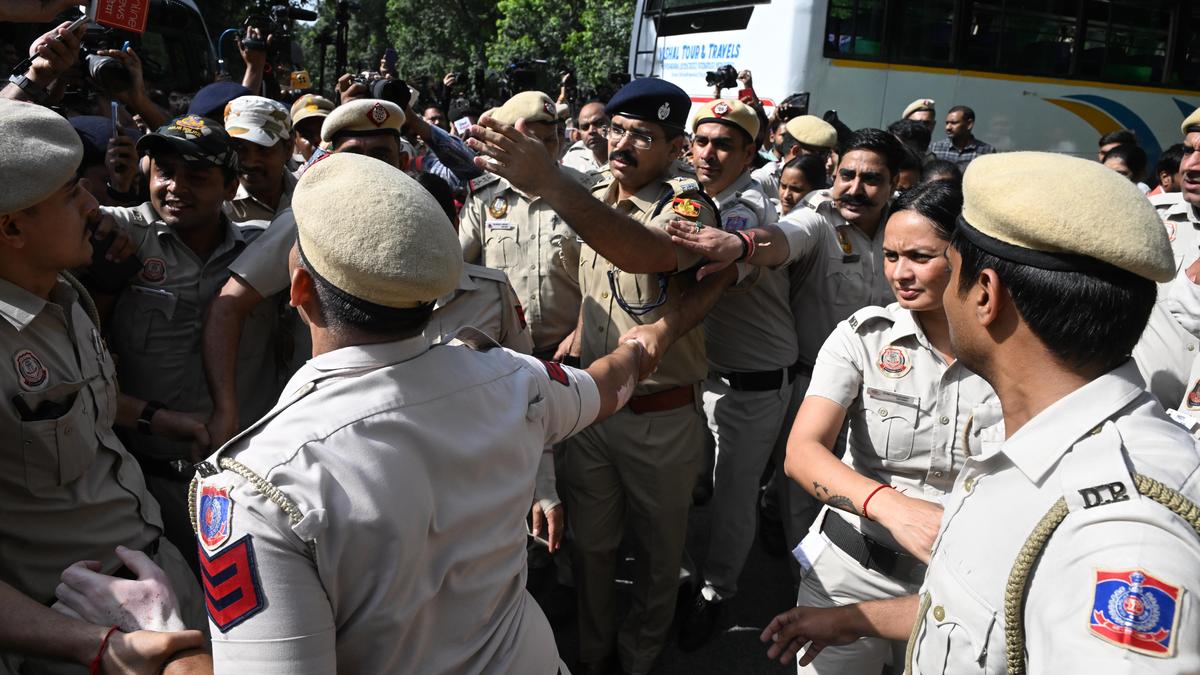
Rahul Gandhi has demanded an explanation from Home Minister Amit Shah regarding alleged police misconduct against women protesters at Jantar Mantar. The Congress leader criticized the Delhi Police for failing to register an FIR despite accusations of abuse.
Allegations of Police Misconduct at Jantar Mantar Spark Political Uproar
On October 3, 2026, a significant political controversy erupted following reports of alleged misconduct by Delhi Police personnel toward women protesters and journalists at Jantar Mantar. Rahul Gandhi, the Leader of the Opposition in the Lok Sabha, has forcefully called upon Union Home Minister Amit Shah to address these grievances. The core of the accusation centers on the assertion that the police, who are tasked with ensuring public safety, instead engaged in aggressive behavior against those exercising their right to protest.
The Accountability of the Ministry of Home Affairs
Rahul Gandhi’s demand for accountability is rooted in the administrative structure of the National Capital Territory of Delhi. Because the Delhi Police functions directly under the jurisdiction of the Ministry of Home Affairs, Gandhi argues that the ultimate responsibility for the force's actions rests with the Home Minister. By invoking this constitutional and administrative link, the Opposition is positioning the incident as a failure of executive oversight, challenging the Ministry to justify the conduct of its subordinates.
The Breakdown of Procedural Justice
Central to the protest is the demand for the registration of an FIR (First Information Report) following an accusation of misconduct leveled by a female journalist against a police officer. The failure to record this complaint has become a flashpoint for the protesters. Gandhi highlighted the irony that hundreds of journalists have been forced to stage a 'satyagraha'—a form of non-violent resistance—simply to compel the police to perform their most basic, mandatory duty under the law. This refusal to file an FIR is being interpreted by critics as an attempt to shield law enforcement from accountability.
Civil Liberties and the Right to Protest
The situation at Jantar Mantar reflects a broader tension regarding the management of public dissent in India's capital. Reports indicate that on the same day, hundreds of individuals were taken into custody, raising concerns about the suppression of democratic expression. The narrative suggests that women and students, who are already experiencing heightened anxiety regarding their personal safety, are now facing a hostile environment when attempting to voice their concerns through peaceful assembly.
Broader Implications and Future Trends
This incident is likely to intensify the ongoing friction between the Union government and the Opposition regarding the autonomy and conduct of central agencies. If the allegations of misconduct are substantiated, it could lead to increased scrutiny of police training and standard operating procedures for handling protesters. Furthermore, the persistent demand for an FIR suggests that trust in the current grievance redressal mechanisms is eroding, which may lead to more frequent and prolonged demonstrations as activists seek to challenge the institutional status quo.
Conclusion
In summary, the accusations of police misconduct at Jantar Mantar have escalated into a significant national issue. With the Leader of the Opposition directly challenging the Home Minister, the incident has highlighted systemic concerns regarding the registration of complaints and the treatment of protesters. As the situation develops, the government’s response—or lack thereof—will likely serve as a benchmark for how the administration addresses allegations of abuse of power within the security apparatus.
Verification Required?