‘Matter of national security’: Rajasthan High Court junks plea against mosques’ eviction near Indo-Pak border
Source Entity
Vineet Upadhyay, Somya Tyagi
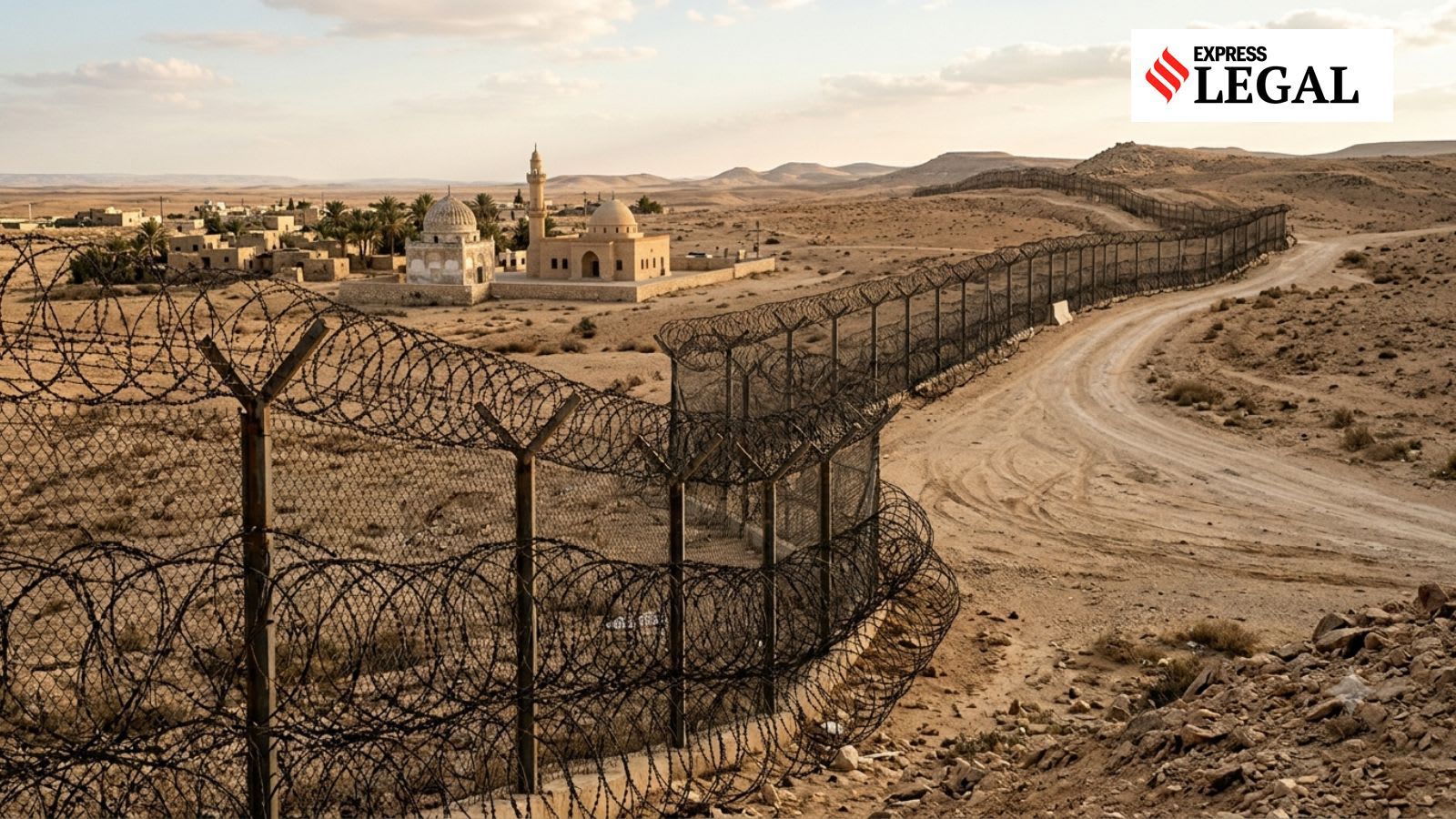
Refusing to stall eviction proceedings against religious institutions near the Indo-Pak border within 50 kilometers, the Rajasthan High Court has held that national security outweighs speculative fear...
National Security vs. Religious Structures: Analyzing the Rajasthan High Court Ruling
The Rajasthan High Court has recently underscored the primacy of state sovereignty and border integrity by dismissing a plea aimed at stalling the eviction of religious institutions, specifically mosques, located within a 50-kilometer radius of the Indo-Pak border. This judicial decision highlights a critical tension in democratic governance: the balance between the fundamental right to practice religion and the state's imperative to maintain national security in highly volatile geopolitical zones. By characterizing the petitioners' concerns as "speculative fear," the court has signaled that in matters of border defense, administrative and security mandates take precedence over localized religious interests.
The Strategic Imperative of the Border Zone
To understand the court's reasoning, it is essential to consider the strategic volatility of the Rajasthan sector of the Indo-Pak border. This region has historically been a flashpoint for infiltration, smuggling, and cross-border tensions. The establishment of a regulated buffer zone—where unauthorized structures are removed—is a standard security protocol designed to provide the Border Security Force (BSF) and other intelligence agencies with clear lines of sight and unobstructed movement. Structures located too close to the border can potentially be misused for surveillance or as cover for illegal activities, making their removal a matter of tactical necessity rather than a targeted religious action.
Legal Doctrine and the 'National Security' Trump Card
From a legal perspective, this ruling aligns with a broader trend in Indian jurisprudence where "national security" is often treated as a non-justiciable or highly deferred domain. When the state invokes security concerns, courts typically grant the executive wide latitude, provided the actions are not blatantly arbitrary. In this instance, the High Court's refusal to grant a stay indicates that the government provided sufficient justification for the evictions. The court's focus on the 50-kilometer threshold suggests a systematic approach to border management, applying a uniform security standard to all structures regardless of their religious or social utility.
Socio-Political Implications and Communal Sensitivity
While the ruling is grounded in security, the eviction of religious sites—particularly mosques—carries significant socio-political weight. In a diverse society, the removal of places of worship can be perceived as a communal or targeted action, potentially leading to social unrest. However, by framing the issue strictly as a "matter of national security," the court has attempted to depoliticize the eviction process. The challenge for the state now lies in executing these evictions with transparency and fairness to ensure that the security objective does not inadvertently trigger communal friction in the border districts.
Future Trends in Border Management
This judgment is likely to set a precedent for other border states, such as Punjab and Gujarat, where similar disputes over unauthorized constructions near international boundaries persist. We can expect an increase in the scrutiny of land titles and construction permits in sensitive zones. Furthermore, this may lead to a more rigorous implementation of the Border Security Force Act and other regulatory frameworks governing the "no-man's land" and adjacent civilian areas. The state is likely to move toward a more sterilized border environment to enhance electronic surveillance and physical patrolling capabilities.
Conclusion
In summary, the Rajasthan High Court's decision reaffirms that while religious freedoms are a cornerstone of the Indian Constitution, they are not absolute and must yield to the existential necessity of national security. By prioritizing the integrity of the Indo-Pak border over the preservation of specific religious structures, the judiciary has reinforced the state's authority to manage its frontiers. The long-term impact will likely be a more stringent enforcement of border zoning laws, ensuring that tactical security requirements are met without compromise.