Rajkot demolitions: Municipal corporation to recover Rs 18 lakh ‘splurged’ on mandap, shooting, catering in February
Source Entity
The Indian Express
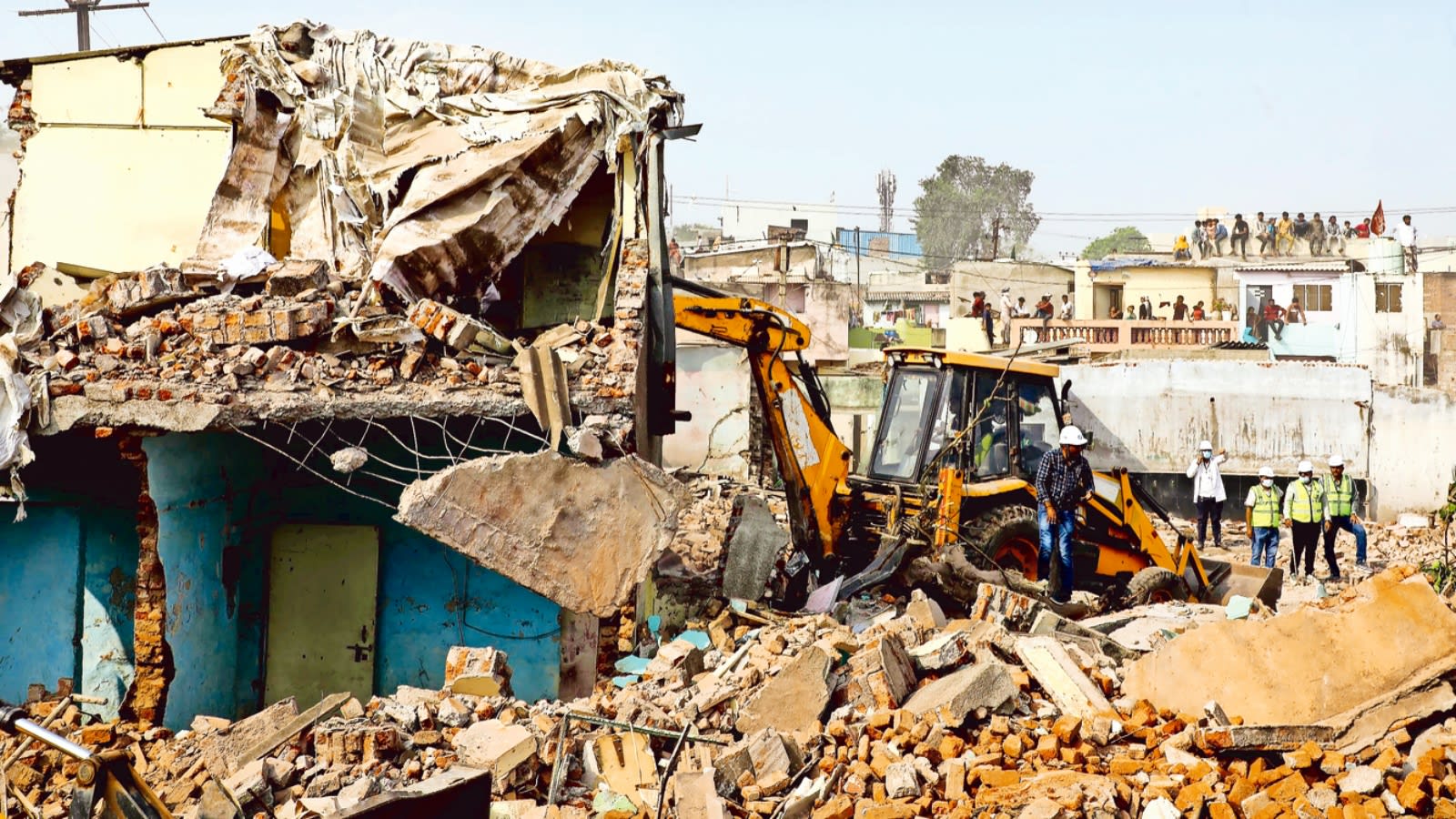
The Rajkot Municipal Corporation is moving to recover over Rs 18 lakh in public funds following an internal probe into suspicious billing for services during February demolition drives. The investigation revealed significant overpayments for catering, transport, and media services.
Financial Accountability in Rajkot: The Aftermath of the Aji River Demolitions
The Scope of the Fiscal Irregularity
The Rajkot Municipal Corporation (RMC) has initiated a critical recovery process targeting Rs 18,72,561 in public funds. This amount, which was either already disbursed or slated for payment, was linked to private agencies engaged during the large-scale demolition operations along the Aji river in February. The revelation of these discrepancies highlights a significant lapse in oversight regarding municipal expenditures during civil works.
Breakdown of Misspent Resources
The investigation into the RMC’s accounts uncovered that the funds were distributed across three separate municipal departments. These departments had contracted seven different private agencies to provide essential logistical support, including catering, transportation, and the erection of mandaps (awnings). Furthermore, the scope of services included videography and drone shooting, which were ostensibly used to document the demolition process in the Jangleshwar area.
The Catalyst for Internal Investigation
The exposure of these financial irregularities did not occur in a vacuum. It was the direct result of intense political pressure and sustained media scrutiny, which eventually forced the RMC to launch an internal probe. By identifying suspicious billing patterns, the corporation was able to halt several pending payments, effectively preventing further loss of taxpayer money while the audit was underway.
Implications for Municipal Governance
This incident underscores the broader challenges of municipal governance in urban India, where large-scale demolition drives—often executed under high-pressure scenarios—can create an environment prone to financial mismanagement. The fact that non-essential services like catering and elaborate drone documentation were being billed to the public treasury raises questions about the prioritization of municipal spending and the adequacy of financial checks and balances.
Future Trends and Transparency
Moving forward, the RMC’s decision to recoup these funds serves as a cautionary tale for municipal bodies across the country. As urban development and anti-encroachment drives become more frequent, the need for stringent, real-time auditing of service-level agreements is paramount. The RMC’s recovery efforts reflect a shift toward greater accountability, where public agencies are increasingly expected to justify every rupee spent during administrative operations.
Conclusion
The recovery of Rs 18 lakh by the Rajkot Municipal Corporation is a necessary step toward restoring public trust and fiscal discipline. By addressing the overbilling issues identified in the wake of the Jangleshwar demolitions, the RMC has signaled that it intends to rectify past administrative failures. The successful retrieval of these funds will be a benchmark for how the corporation handles future vendor relationships and project expenditures.