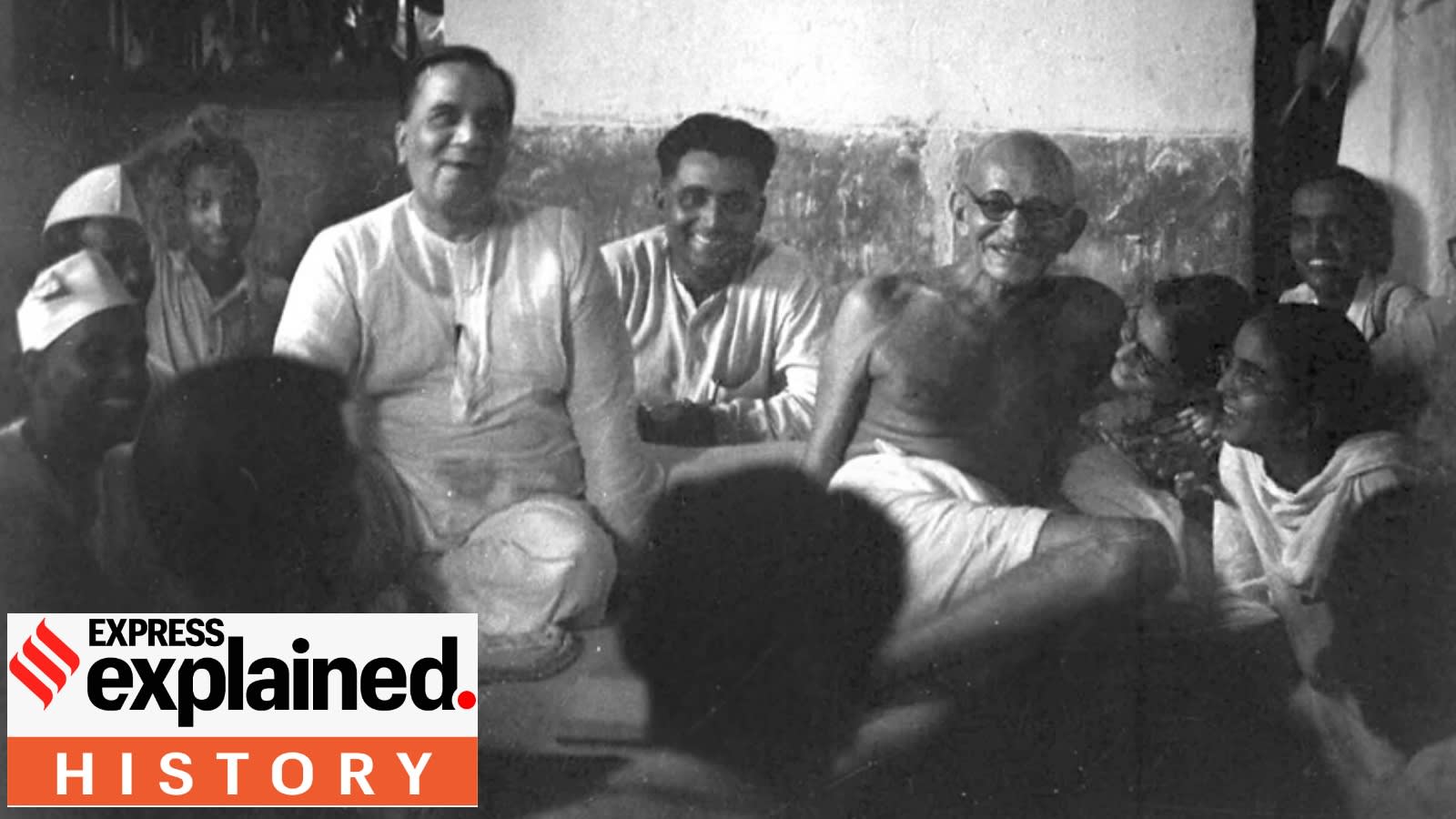
Why Gandhi spent August 15, 1947, in Calcutta instead of Delhi
Source Entity
Nikita Mohta
As India reflects on its journey to independence, the stories of freedom fighters like YC Revanna and the strategic absence of Gandhi in Calcutta highlight the complexities of 1947. These narratives underscore the dual struggle of ending colonial rule and the arduous process of national integration.
The Dual Struggle: Independence and Integration
The narrative of Indian independence is often simplified into a singular moment of triumph on August 15, 1947. However, historical accounts reveal a far more nuanced reality. For individuals like 99-year-old YC Revanna, the movement was a visceral, grassroots experience. As a 15-year-old student in 1942, Revanna’s decision to abandon his studies to join the Quit India movement exemplifies the youthful fervor that catalyzed the end of British rule. This grassroots participation was driven by the inspirational leadership of figures like Devaraj Urs and M.N. Jois, who instilled in the youth a profound sense of agency and the belief that self-governance was an attainable reality.
The Absence of the Mahatma
While the national capital of Delhi was immersed in the pageantry of power, marked by the swearing-in of Lord Mountbatten as Governor-General and widespread celebrations, the absence of Mahatma Gandhi was deeply symbolic. Gandhi’s choice to remain in Calcutta rather than join the festivities in Delhi highlighted his preoccupation with the communal fissures that accompanied the birth of the nation. His presence in regions of conflict served as a reminder that the attainment of political sovereignty was only the beginning of a much longer struggle for national unity and peace.
The Challenge of Princely States
Beyond the symbolic transition of power, the logistical reality of the newly independent nation was daunting. The departure of the British left behind over 500 princely states that existed in a state of semi-autonomy. These entities, which had been both nurtured and manipulated by colonial authorities, posed an immediate threat to the integrity of the nascent Indian state. The process of integrating these hundreds of territorial pieces into a cohesive whole was a task that required immense diplomatic and political maneuvering, far exceeding the initial excitement of the midnight transition.
Echoes of the Past in the Present
Reflecting on the experiences of those like Revanna, one observes a bridge between the idealism of the 1940s and the responsibilities of modern generations. The 'Quit India' movement was not merely a protest against colonial administration; it was a foundational exercise in civic participation. Revanna’s message to Gen Z—that movements for the nation’s good must not stop—serves as a reminder that the democratic project is an ongoing endeavor requiring constant vigilance and engagement.
Historical Complexity as a Foundation
The synthesis of these events—the student protests, the deliberate absence of the Father of the Nation from the capital, and the complex integration of princely states—paints a picture of a nation born in volatility. The transition from a collection of chiefdoms to a unified republic was not a given. It was the result of a hard-earned dream that necessitated the sacrifice of personal milestones, as seen in the lives of freedom fighters, and the pragmatic navigation of a fragmented landscape.
Conclusion
Ultimately, the history of 1947 is defined by the contrast between public celebration and private sacrifice. By examining the roles of individual activists and the strategic decisions of national leaders, we gain a comprehensive view of the challenges that defined the dawn of independence. These historical lessons remain relevant as modern society continues to grapple with the preservation of the democratic values fought for by the generation of 1942.