Watch: Saraswati without a veena: Early South Indian temple art offers a different vision of the Goddess
Source Entity
India Latest News: Top National Headlines Today & Breaking News | The Hindu
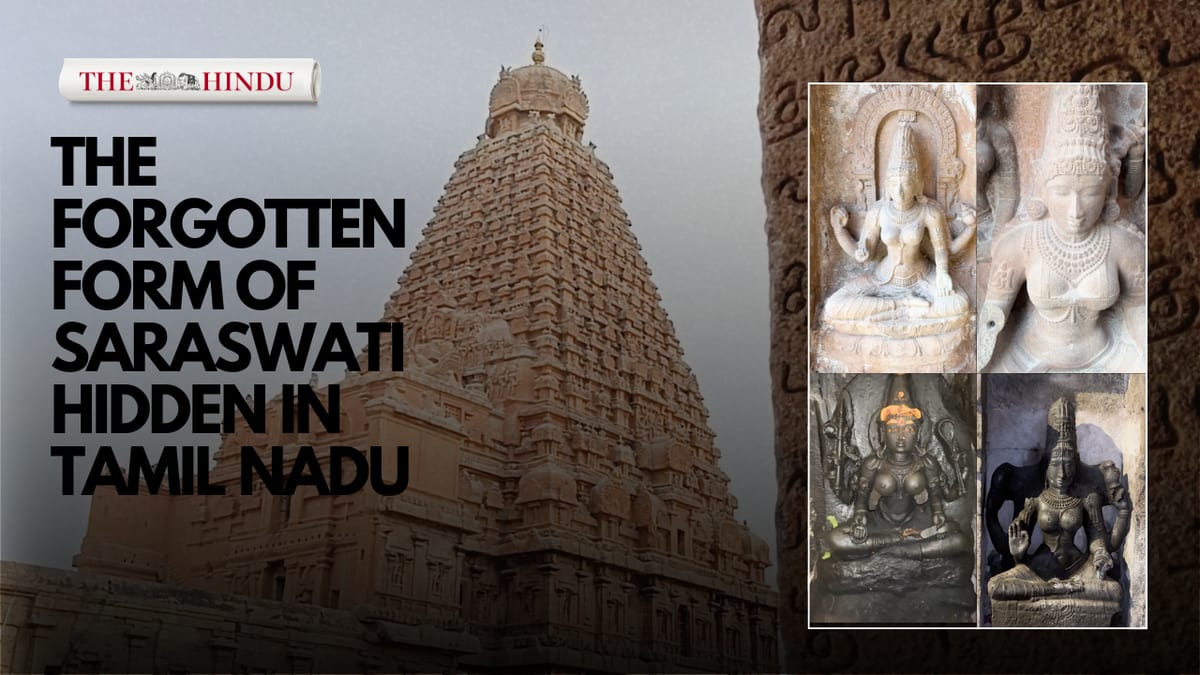
Recent findings in South Indian temple art challenge the standard iconography of Goddess Saraswathi and highlight the complex, fierce nature of deities like Pidari Ekaveeri. These historical depictions reveal a diverse evolution of religious representation beyond modern popular culture.
Reimagining the Divine: Shifting Perspectives in South Indian Iconography
For centuries, the cultural consciousness of India has been anchored by specific, widely recognized visual representations of deities. Goddess Saraswathi, the revered patron of knowledge, wisdom, and the arts, is almost universally depicted in contemporary popular culture as a serene figure seated upon a lotus, gracefully holding a veena. However, recent scholarly observations regarding early South Indian temple art suggest that this singular image is a modern distillation, potentially obscuring a much richer and more varied historical tradition of how the goddess was once imagined and venerated.
Deconstructing the Saraswathi Archetype
The reliance on the veena as a primary attribute of Saraswathi represents a narrowing of her iconographic history. By examining ancient temple reliefs, researchers are uncovering earlier iterations that lack this musical instrument, suggesting that the goddess’s association with wisdom was originally expressed through different symbolic languages. This shift indicates that religious iconography is not a static monolith but a fluid medium that adapts to regional cultural priorities and aesthetic preferences over time.
The Duality of the Divine: Pidari Ekaveeri
Beyond the evolution of Saraswathi, South Indian temple art offers profound examples of complex theological archetypes, such as the Pidari Ekaveeri at the Tiruvalanchuzhi Temple. Unlike the gentle, serene depictions common in modern devotional art, Ekaveeri presents a paradox of ferocity and grace. As an eight-armed guardian deity, her form is adorned with a garland of human skulls and an array of weapons, yet this fearsome exterior is marked by a captivating, serene smile. This specific juxtaposition serves as a reminder that early Indian religious art often embraced the duality of the divine, balancing protective power with accessible benevolence.
Historical Context and Royal Patronage
The significance of these depictions is further underscored by the historical context of their preservation. For instance, the presence of these deities in sites like the Tiruvalanchuzhi Temple is often linked to significant historical grants, such as those made by the mother-in-law of the legendary Chola monarch, Raja Raja. These grants were not merely acts of piety but strategic cultural investments that solidified the religious landscape of the era, ensuring that both fierce guardians and wisdom-bestowing deities remained central to the community's spiritual life.
Broader Implications for Cultural History
These findings force a reassessment of how we interpret historical religious texts versus their material manifestations. When we compare the 'standardized' versions of deities found in mass-produced media today with the nuanced, highly specific, and often aggressive or unconventional forms found in temple architecture, we gain a deeper appreciation for the diversity of Hindu iconography. The study of these temple arts reveals that regional interpretations were once far more experimental and diverse than the homogenized imagery that dominates the current digital and print landscape.
Conclusion: Preserving Diversity in Tradition
Ultimately, the study of early South Indian temple art serves as a crucial corrective to the simplified narratives of religious history. By acknowledging that Saraswathi was not always defined by a veena and that deities like Pidari Ekaveeri were celebrated for their fierce, multi-faceted nature, we can better appreciate the historical complexity of Indian spirituality. Future research into these architectural treasures will likely continue to challenge our preconceptions, encouraging a more rigorous and historically grounded understanding of the divine.
Multiple Citing Sources
Verification Required?