Revanth Reddy seeks four-week extension for electoral roll revision
Source Entity
India Latest News: Top National Headlines Today & Breaking News | The Hindu
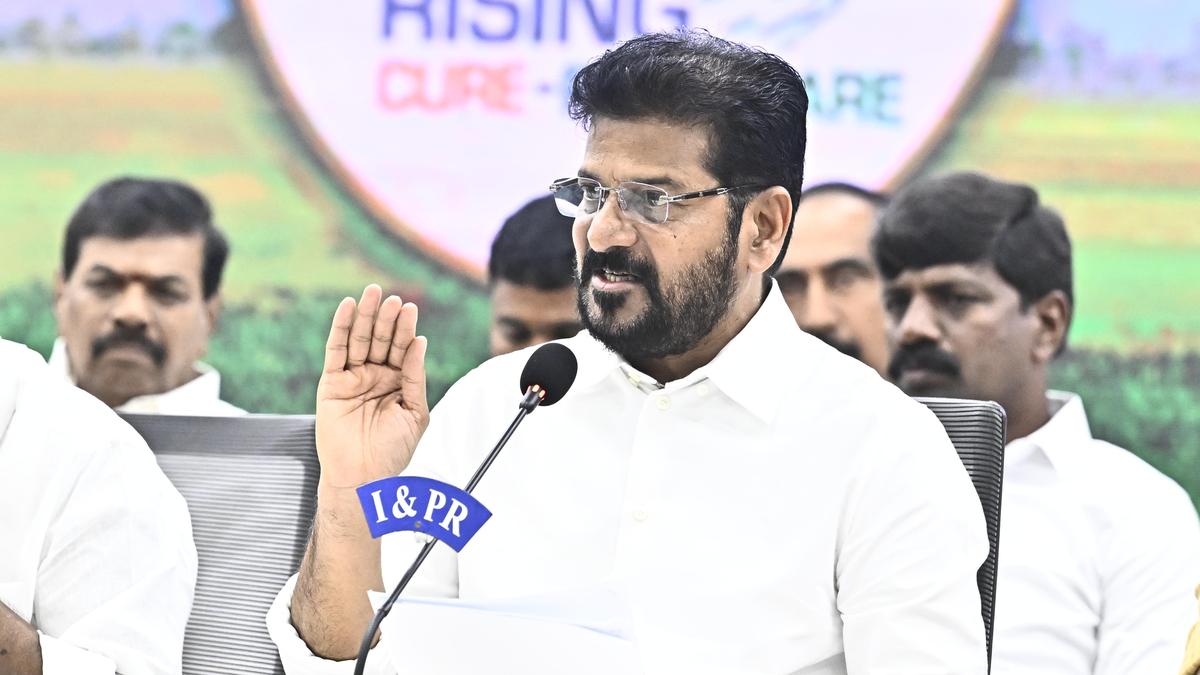
Chief Minister Revanth Reddy has requested a four-week extension for the state's electoral roll revision, citing concerns that over 73 lakh voters could be wrongly excluded. The request follows the flagging of nearly one-third of the electorate as requiring verification.
Request for Electoral Roll Revision Extension
Telangana Chief Minister A. Revanth Reddy has formally requested the Election Commission of India (ECI) to grant a four-week extension for the ongoing Special Intensive Revision (SIR) of electoral rolls. The request, outlined in a letter to Chief Election Commissioner Gyanesh Kumar dated August 29, 2026, highlights significant bureaucratic hurdles that threaten the integrity of the state’s voter database.
The Scale of the Verification Crisis
The urgency of this request stems from the sheer magnitude of the electoral roll scrutiny currently underway. According to official data, out of the state's 3.38 crore registered electors as of June 10, approximately 73.39 lakh entries have been categorized under the 'ASDD' (Absent, Shifted, Dead, and Duplicate) labels. This represents roughly one-third of the entire electorate, creating a massive administrative burden that threatens to disenfranchise legitimate voters if the revision period is not adequately extended.
Implications of ASDD Categorization
The ASDD classification serves as a crucial mechanism for maintaining clean electoral rolls, but it is often prone to systemic errors. When such a high percentage of voters are suddenly marked for verification, it creates a logistical bottleneck. CM Revanth Reddy’s concern is that the current timeframe is insufficient for citizens to navigate the bureaucratic process required to re-establish their eligibility, potentially leading to mass deletions of active, eligible voters.
Balancing Accuracy and Participation
Electoral roll revision is a delicate balance between maintaining accuracy—ensuring dead or duplicate voters are removed—and upholding the fundamental right to vote. By requesting an extension, the Chief Minister is advocating for a more inclusive process that prioritizes voter participation over rapid administrative completion. Failure to provide this buffer could lead to significant social and political unrest if a large portion of the population finds themselves unable to vote in future elections.
Potential Future Trends and ECI Response
The ECI must now weigh the administrative necessity of the current schedule against the potential for large-scale disenfranchisement raised by the state government. If the request is granted, it will set a precedent for states to prioritize localized verification timelines over rigid national schedules. Conversely, a rejection could place the burden of proof entirely on the individual voter, likely increasing the demand for localized help centers and public awareness campaigns to prevent mass exclusion.
Conclusion
The situation in Telangana underscores the challenges of modernizing electoral rolls in a large democracy. As the ECI deliberates, the focus remains on ensuring that the 73.39 lakh flagged entries are verified with precision, ensuring that the democratic process remains both clean and accessible to all eligible citizens.
Verification Required?