Watch: Smoke over Riyadh airport after Houthi's major attack on Saudi Arabia
Source Entity
VIJAYA SRIVASTAVA
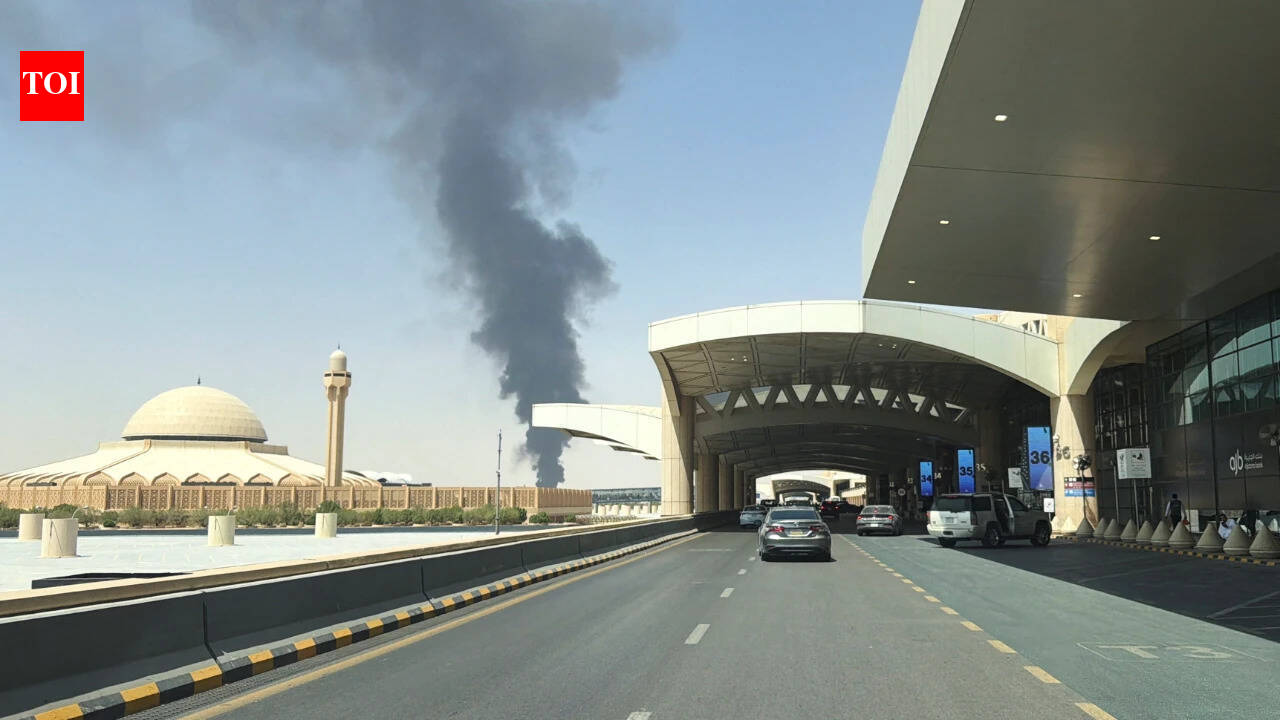
A fire and plumes of black smoke were observed at Riyadh's King Khalid International Airport following reported Houthi strikes. The incident triggered significant flight disruptions, with tracking data indicating major delays and cancellations.
Incident Overview: Security Breach at King Khalid International Airport
On Saturday, the security landscape in Saudi Arabia was severely tested as reports emerged of flames and a massive plume of black smoke rising from the vicinity of King Khalid International Airport in Riyadh. Eyewitness accounts, corroborated by imagery from news agencies such as Reuters and AFP, confirmed that the smoke originated from a fuel storage depot located near the airport infrastructure. This incident follows a series of reported Houthi strikes, highlighting an escalation in the regional volatility that has intermittently threatened Saudi Arabian critical infrastructure.
Operational Impact and Aviation Disruption
The immediate consequence of the fire was a significant disruption to regional and international air travel. Flight-tracking platform Flightradar 24 reported an arrival and departure delay index of 5, the highest possible level on its disruption scale. This index is specifically designed to signal 'major problems,' encompassing extensive delays and the cancellation of numerous flights. The operational paralysis at one of the Kingdom's most vital transport hubs underscores the tactical efficacy of targeting logistics centers to generate both physical and economic pressure.
Precautionary Measures and State Response
In the hours preceding the visible fire, Saudi civil defense authorities issued urgent alerts to residents in Riyadh and the nearby city of Al-Kharj, warning of potential danger. These alerts, delivered via phone, suggest that Saudi security services had detected an inbound threat or an ongoing hostile operation before the visual confirmation of the fire. Although an 'all-clear' was issued on Saturday morning, the government media office has remained notably silent regarding the specific cause and the total extent of the damage, leaving a vacuum of information regarding the precise nature of the weaponry involved in the strikes.
Broader Geopolitical Implications
The strikes on Riyadh represent a significant development in the ongoing conflict involving the Houthi movement. By targeting a major international airport, the strikes move beyond front-line skirmishes and directly impact civilian and commercial sectors within the Saudi capital. This shift suggests a deliberate attempt by the perpetrators to demonstrate reach and the capability to disrupt high-profile targets, forcing a recalibration of security postures across the Arabian Peninsula.
Historical Context and Future Trends
This event is not an isolated occurrence but rather a continuation of a long-standing pattern of aerial threats directed at Saudi territory. Historically, such incidents have necessitated robust air defense responses and have often led to heightened diplomatic tensions. Looking forward, the frequency and precision of these strikes will likely dictate the future of regional security architectures. Observers should expect increased scrutiny of airport security protocols and potential adjustments to flight corridors in the region as authorities work to mitigate the risks posed by long-range projectile threats.
Conclusion
While the situation remains a developing story, the visual evidence of fire at a key fuel depot and the corresponding collapse of airport operations serve as a stark reminder of the persistent security challenges facing Saudi Arabia. As the region navigates this latest escalation, the primary focus will remain on the restoration of normalcy at King Khalid International Airport and the long-term impact of these strikes on regional stability.
Multiple Citing Sources