Five killed as car crashes into State transport bus in Maharashtra's Beed district
Source Entity
India Latest News: Top National Headlines Today & Breaking News | The Hindu
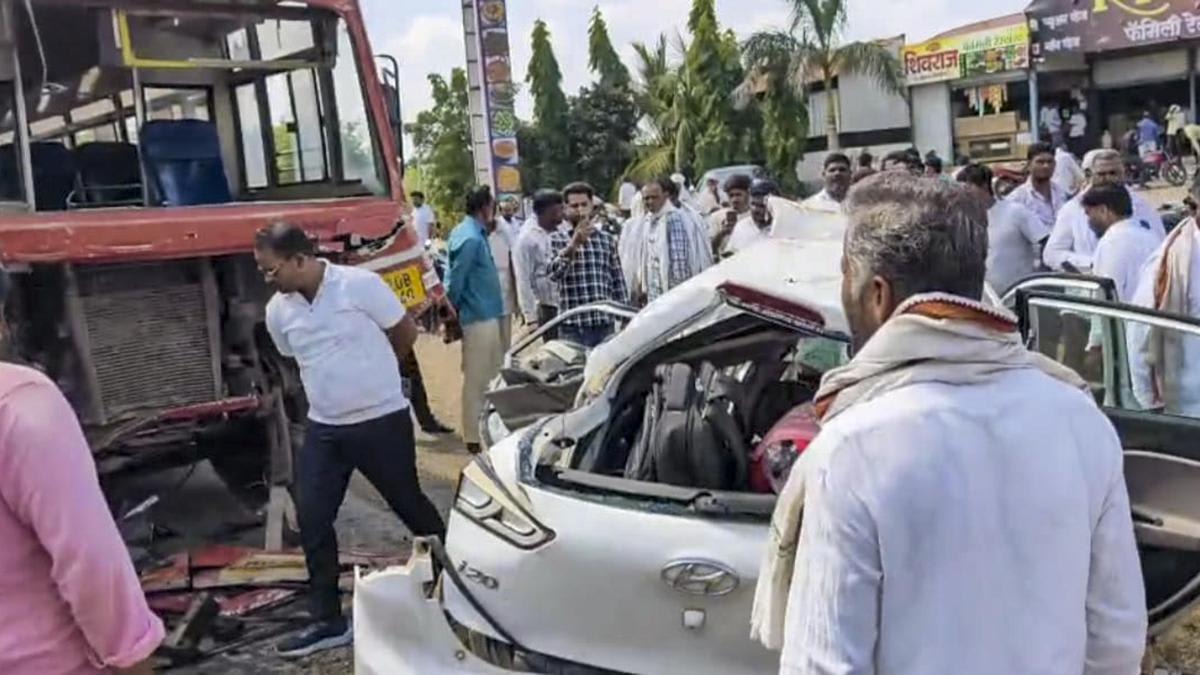
Recent road accidents in Maharashtra and Telangana have resulted in multiple fatalities due to high-speed driving and poor infrastructure. These incidents underscore a critical need for enhanced road safety measures and better infrastructure maintenance across India.
Road Safety Crisis: A Deep Dive into Recent Fatal Accidents
The Beed District Tragedy: Infrastructure and Human Error
The tragic accident in Maharashtra’s Beed district, which claimed the lives of five individuals including an 11-year-old child, highlights the lethal intersection of poor road maintenance and high-speed travel. According to reports from the Khamgaon-Pandharpur National Highway, the car lost control while attempting to maneuver around potholes on a bridge. This incident serves as a stark reminder of how neglected infrastructure—specifically deep potholes—can transform a standard commute into a life-altering disaster when combined with high velocities.
The Role of Infrastructure in Road Safety
While the immediate cause of the Beed crash was the driver’s attempt to avoid road hazards, the broader implication points to the critical state of national highways. Potholes on bridges and major arterial roads act as unpredictable catalysts for accidents. When drivers are forced to swerve suddenly, they often lose control, leading to high-impact, head-on collisions with heavier vehicles like the MSRTC bus involved in this case. The severity of the crash, which left the vehicle a "mangled heap of metal," underscores the physics of such impacts and the vulnerability of passenger cars against heavy transport.
The Menace of Reckless Driving: Telangana Incidents
Parallel to the infrastructure-related accident in Maharashtra, recent events in Telangana reveal a different, yet equally dangerous, trend: reckless driving. Reports of a speeding car drifting and spinning, and a separate incident where two bike riders were flung into the air after striking a tree, indicate a pattern of high-speed maneuvers that disregard fundamental traffic safety protocols. These incidents reflect a growing concern regarding driver behavior, particularly in areas where speed limits are either ignored or poorly enforced.
Analytical Perspectives on Driver Behavior
When analyzing these disparate events, a clear narrative emerges regarding the dual threat of environmental hazards and human negligence. While infrastructure authorities are tasked with maintaining safe road conditions, there is a persistent need for stricter enforcement of speed limits and dangerous driving laws. The transition from controlled driving to high-speed drifting or erratic swerving represents a significant failure in road safety culture that requires immediate intervention from traffic authorities.
Future Trends and Mitigation Strategies
To prevent future tragedies, a multi-faceted approach is required. Firstly, there must be a rigorous audit of highway conditions, particularly in regions prone to heavy rainfall or high traffic volume, to ensure potholes are addressed before they cause fatalities. Secondly, the integration of advanced surveillance technology, such as the CCTV systems that captured these incidents, should be utilized not just for post-accident investigation but for real-time traffic monitoring and speed enforcement. By addressing both the physical quality of the roads and the behavioral patterns of motorists, the frequency of such devastating accidents can be significantly reduced.
Verification Required?