Rocket Report: FAA eyes more Starbase traffic; India's Skyroot snares US customer
Source Entity
Stephen Clark
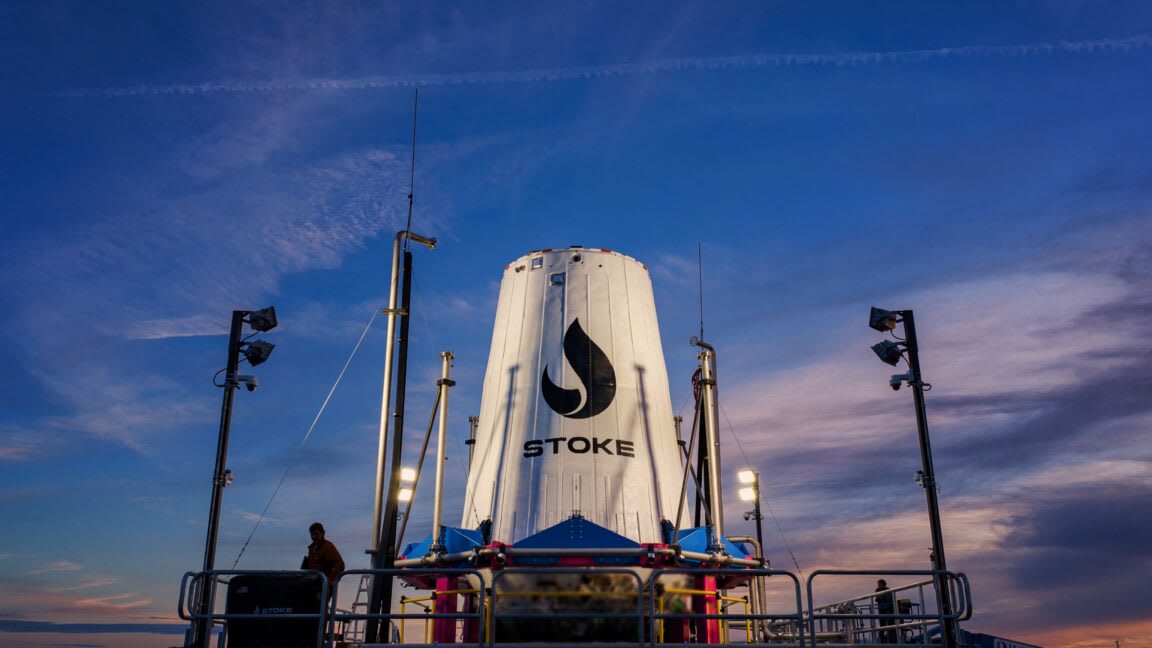
Japan's MMX mission is preparing to launch on an H3 rocket to explore the moons of Mars. Meanwhile, the space industry sees progress with Stoke Space's reusable technology and international growth for India's Skyroot.
The Expanding Horizon of Global Space Exploration
The landscape of space exploration is currently undergoing a period of rapid diversification and technological maturation. As noted in the latest industry updates, Japan is preparing for the highly anticipated Martian Moons Exploration (MMX) mission. Set to launch aboard the Japanese H3 rocket, this mission represents a significant milestone in deep-space logistics. By targeting Phobos and Deimos—the two natural satellites of Mars—the MMX mission seeks to deploy a rover and secure samples for a return to Earth by 2031, marking a sophisticated leap in autonomous planetary science.
Technological Advancements in Reusability
Beyond government-led planetary missions, the private sector continues to push the boundaries of launch vehicle efficiency. A pivotal development in this arena is the recent shipment of Stoke Space’s reusable upper stage for their Nova rocket. The pursuit of full reusability is the "holy grail" of modern aerospace engineering; by successfully recovering and reusing the upper stage, companies aim to drastically reduce the cost-per-kilogram of orbital access. This shift is essential for sustaining long-term infrastructure in low Earth orbit and beyond.
The Growth of International Launch Markets
The global space economy is no longer the exclusive domain of a few superpowers. Evidence of this decentralization is found in the international expansion of India's Skyroot Aerospace, which has successfully secured a United States-based customer. This cross-border commercial partnership highlights how emerging private space companies in India are becoming competitive players in the global launch services market, offering cost-effective and reliable alternatives for international satellite operators.
Regulatory Shifts and Infrastructure
As the number of launch providers increases, the regulatory environment is also evolving to accommodate higher flight cadences. The FAA is currently evaluating proposals to increase launch traffic at Starbase, reflecting the broader industry trend toward higher frequency operations. As private companies ramp up their testing and launch schedules, the role of regulatory bodies becomes increasingly complex, balancing the need for safety with the imperative to facilitate rapid technological iteration.
Future Trends and Strategic Outlook
Looking ahead, the synergy between planetary science missions, like the MMX, and the development of reusable launch vehicles will define the next decade of spaceflight. The successful return of samples from Martian moons will provide invaluable data on the early solar system, while the maturation of rockets like the Nova will provide the logistical backbone required for such ambitious endeavors. The integration of international players like Skyroot into the US market further suggests a future characterized by globalized supply chains and shared scientific objectives, moving the industry toward a more interconnected and efficient operational model.