Putin tests NATO's nerves? Romania shoots down Shahed in first airspace kill amid mystery incursions
Source Entity
Latest News: Todays Latest News Headlines from India & World | Hindustan Times | Hindustan Times
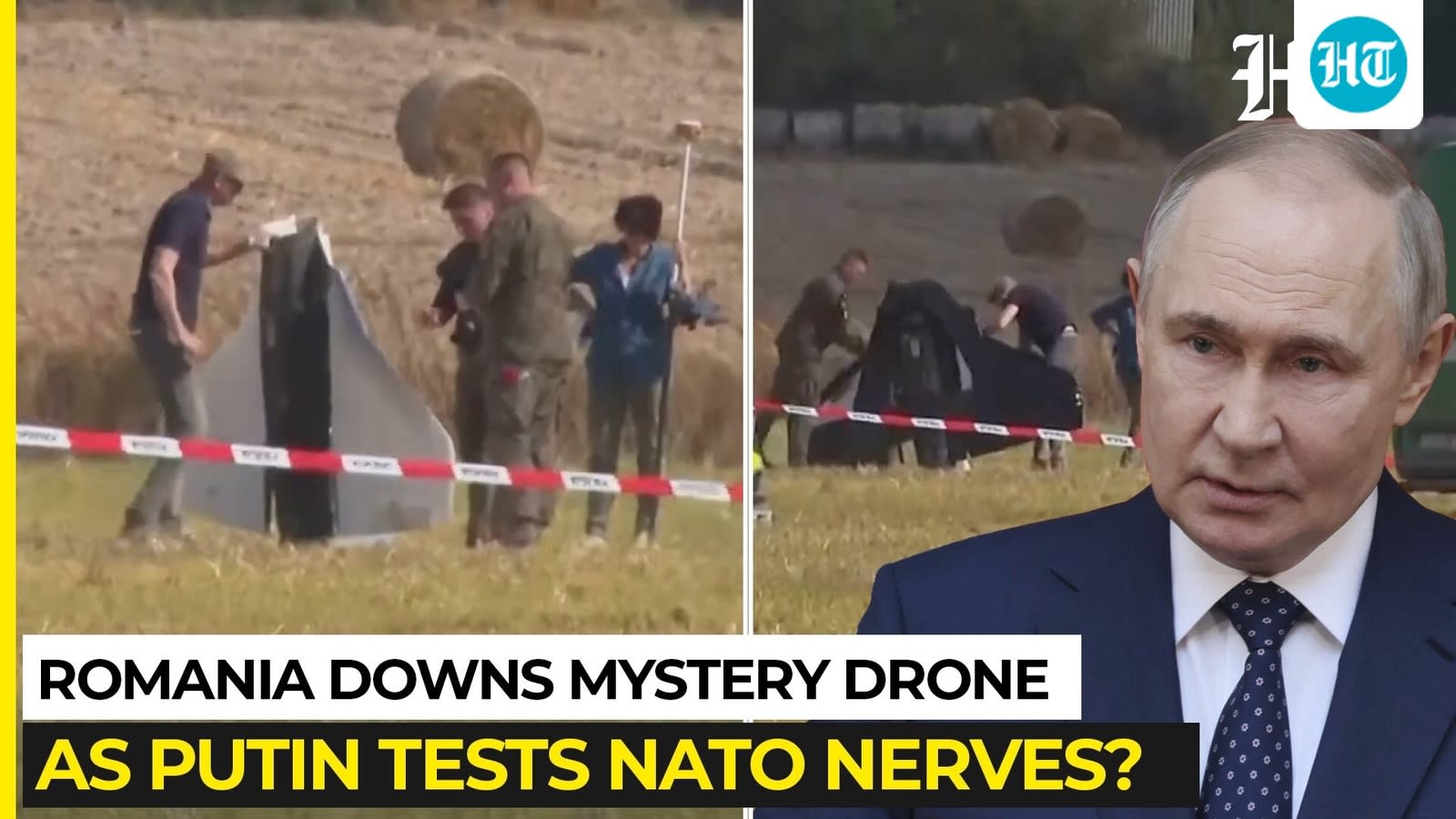
Romania has successfully intercepted and shot down a Russian-style Shahed drone that violated its airspace. This marks a significant escalation in the ongoing conflict, testing NATO's defensive capabilities on its eastern flank.
A Critical Escalation on the NATO Frontier
In a significant development for regional security, Romania successfully intercepted and shot down a drone that entered its sovereign airspace. This event marks the first time since the inception of the Russia-Ukraine war that a NATO member state has actively engaged and destroyed an intruding unmanned aerial vehicle (UAV) of this nature. The drone, identified as a Shahed-type or Geran-2, is a weapon system frequently deployed by Russian forces to strike deep into Ukrainian territory, making its presence within Romanian borders a alarming departure from previous boundary observance.
The Mechanics of the Interception
The operation was a textbook example of NATO’s collective defense coordination. Romanian F-16 fighter jets were scrambled to the scene, bolstered by the presence of Italian Eurofighters operating under the NATO Enhanced Air Policing mission. By successfully neutralizing the threat before it crashed in Buzău County, the alliance demonstrated both its technical readiness and its strategic commitment to maintaining the integrity of its eastern flank. This coordinated response highlights the necessity of integrated air defense systems in a theater where the lines between combat zones and neutral territory are increasingly blurred.
Strategic Implications for NATO
The incursion into Romanian airspace represents a profound challenge to NATO's nerves. While Russia has frequently engaged in 'mystery incursions' near the borders of alliance members, the physical destruction of a weaponized drone signals a shift in the stakes. NATO has long sought to avoid direct kinetic confrontation with Russian assets to prevent a broader escalation of the conflict. However, the presence of explosive-laden UAVs near civilian or military infrastructure in a member state necessitates a firm response to ensure that such incursions do not become a normalized tactic of intimidation.
Historical Context of Border Tensions
Since the invasion of Ukraine began, the Black Sea region has become a flashpoint for geopolitical friction. Romania, as a key NATO member, has been at the forefront of monitoring these developments. Historically, the alliance has relied on patrols and diplomatic warnings to manage airspace violations. The transition to active engagement suggests that the threshold for tolerance regarding Russian aerial maneuvers has been lowered, as the risk of collateral damage or accidental strikes on allied soil has increased alongside the intensification of the conflict.
Future Trends and Deterrence
Looking ahead, this incident will likely lead to an increase in air defense patrols and a recalibration of NATO’s stance on 'mystery' aircraft. We can expect the alliance to bolster its radar capabilities and potentially tighten the rules of engagement for intercepted threats. The persistence of the Russia-Ukraine conflict guarantees that the risk of stray drones or deliberate boundary-probing will remain high. The success of this specific interception serves as a vital deterrent, signaling that while NATO does not seek war, it remains prepared to defend its territorial sovereignty against any airborne intrusion that poses a threat to its citizens and infrastructure.
Verification Required?