RPKI now protects 70% of internet routes
Source Entity
Hacker News
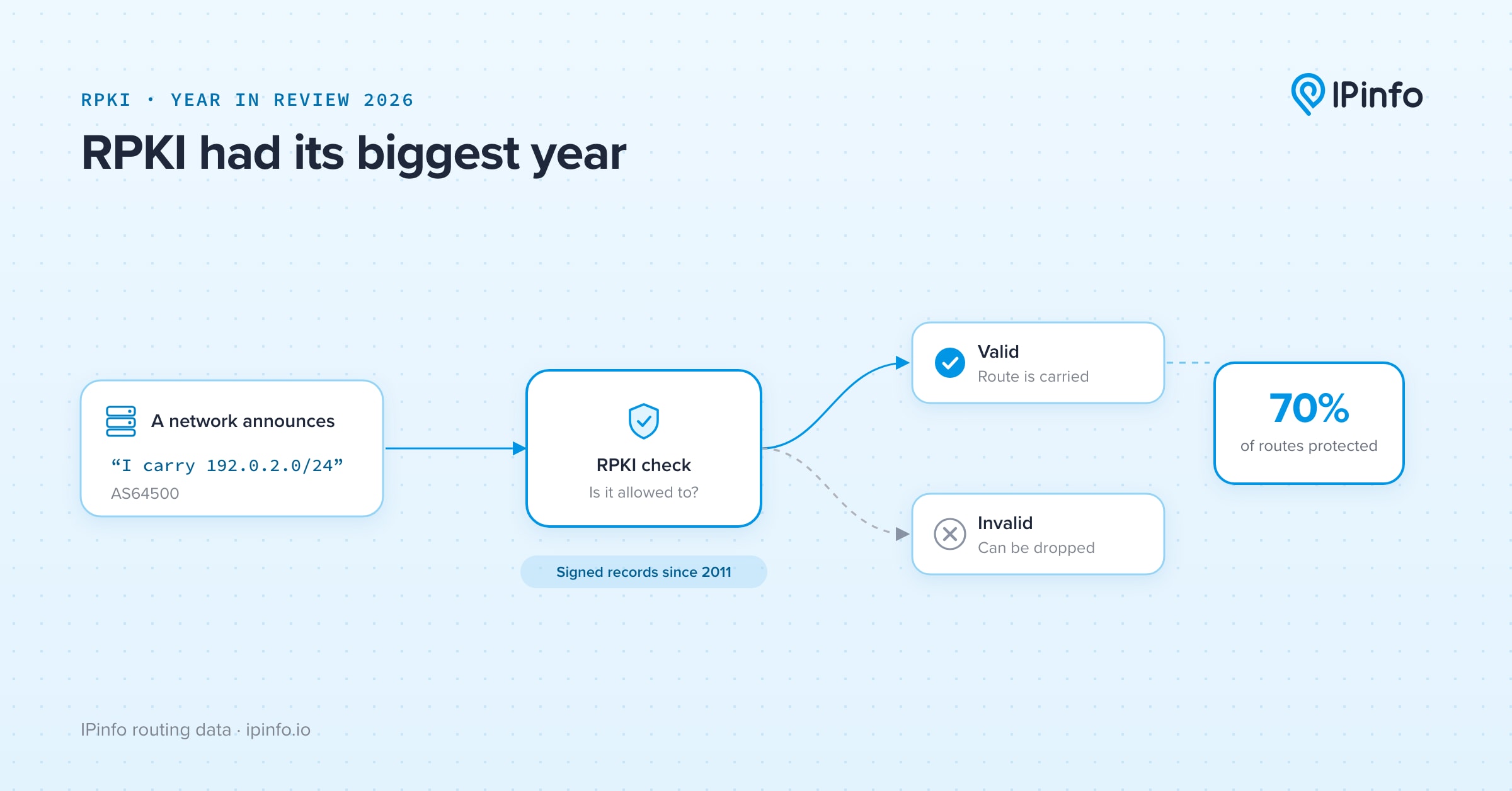
Resource Public Key Infrastructure (RPKI) has now secured 70% of internet routes, significantly reducing the risk of BGP hijacking. This milestone marks a major shift toward a more secure, trust-verified global routing architecture.
The Shift Toward a Verified Internet Routing Architecture
The global internet is built upon a fundamental reliance on trust between autonomous networks. For decades, the Border Gateway Protocol (BGP) has acted as the internet's routing 'map,' allowing networks to exchange information about which IP addresses they control. However, this system was designed in an era where network operators were assumed to be acting in good faith, leading to a structural vulnerability where malicious or accidental route announcements can cause global traffic redirection.
The Historical Catalyst: The 2008 YouTube Hijack
To understand the necessity of Resource Public Key Infrastructure (RPKI), one must look at the 2008 Pakistan Telecom incident. When Pakistan Telecom attempted to block YouTube locally by announcing a more specific route for YouTube’s IP address space, the lack of validation mechanisms allowed this erroneous route to propagate globally. Consequently, YouTube traffic was rerouted to Pakistan for two hours, rendering the service inaccessible worldwide. This event served as a stark wake-up call for the networking community, highlighting that BGP's 'trust-based' model was no longer sufficient for a critical global utility.
How RPKI Secures the Digital Perimeter
RPKI addresses this fundamental flaw by introducing cryptographic verification to routing announcements. By using digital certificates to link IP address blocks to the Autonomous System (AS) numbers authorized to originate them, RPKI allows network operators to verify the legitimacy of a route advertisement. As of the latest industry data, 70% of internet routes are now protected by this framework, representing a massive improvement in global network hygiene and a significant reduction in the surface area for BGP hijacking.
The Broader Implications for Cybersecurity
Reaching the 70% threshold is a monumental achievement for internet stability. When networks implement RPKI, they effectively prevent 'route leaks' and 'hijacks' that can be used for data interception or massive denial-of-service attacks. The transition away from implicit trust toward cryptographic validation is essential for maintaining the integrity of digital commerce, government communications, and personal data privacy in an increasingly hostile threat landscape.
Future Trends and Remaining Challenges
While 70% coverage is a testament to the collaborative efforts of RIPE NCC and other regional internet registries, the remaining 30% of routes represent a persistent risk. Future trends indicate that as more transit providers mandate RPKI validation for their customers, the 'unsecured' portion of the internet will become increasingly isolated and scrutinized. The ongoing challenge will be to incentivize smaller or resource-constrained networks to adopt these standards, ensuring that the entire routing ecosystem benefits from the same level of cryptographic rigor.
Conclusion
The advancement of RPKI marks a new era in internet infrastructure security. By moving past the vulnerabilities that allowed incidents like the 2008 YouTube hijack to occur, the global community is successfully hardening the very foundation of the internet. While the journey toward 100% adoption continues, the current 70% milestone provides a much more resilient and trustworthy environment for the billions of users who rely on the internet daily.