RSS is creating a ‘meeting pot’
Source Entity
Dr Rakesh Sinha
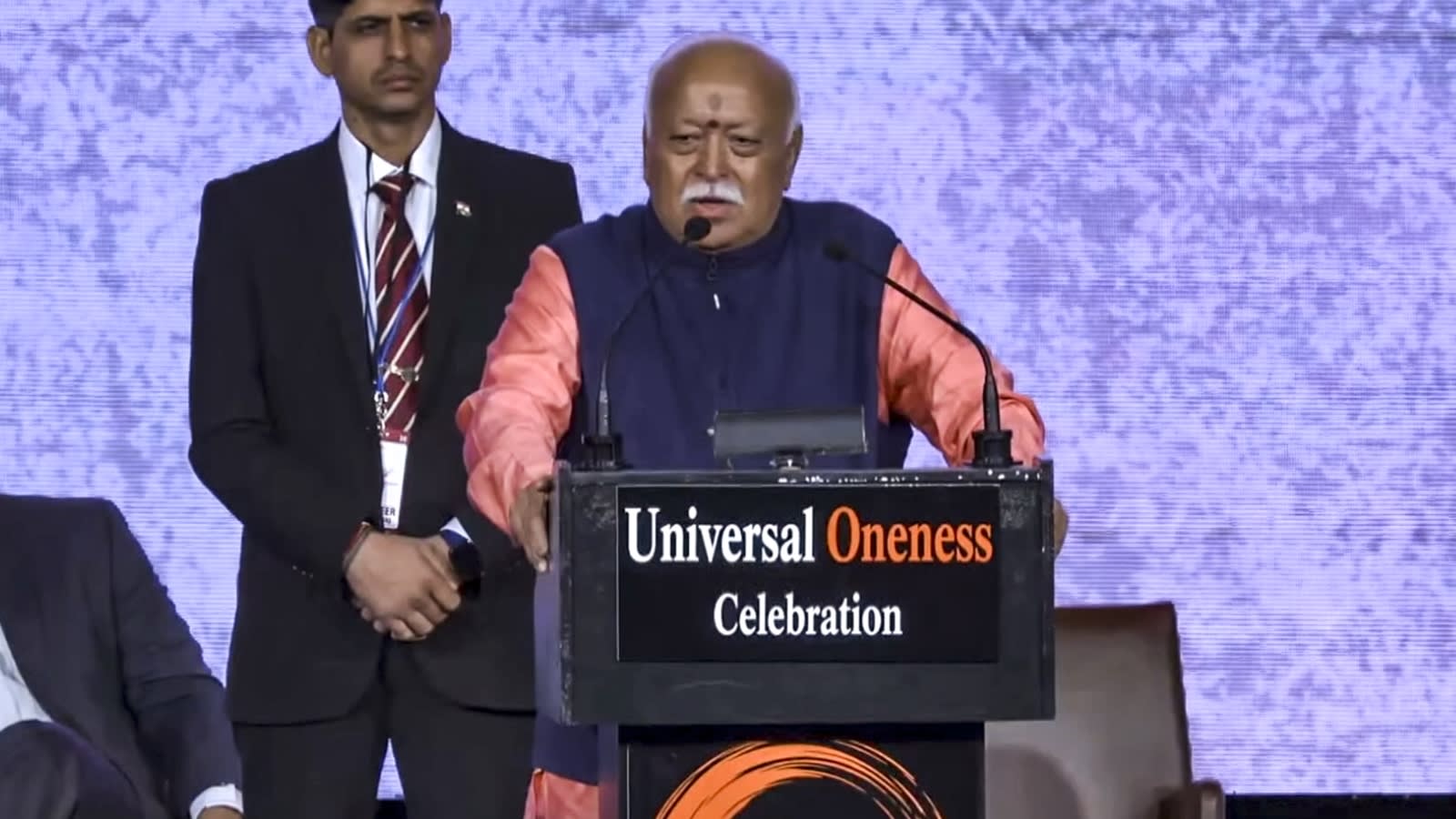
RSS Chief Mohan Bhagwat’s recent speeches promoting universal oneness face scrutiny as critics label them tactical shifts. Meanwhile, the VHP has enforced a ban on Muslim participation in Maharashtra's Navratri events, highlighting a divide between stated ideology and ground-level actions.
The Duality of RSS Discourse and Ground-Level Reality
Recent statements by Rashtriya Swayamsevak Sangh (RSS) Sarsanghchalak Mohan Bhagwat, particularly during his visit to New York, have ignited a complex debate regarding the organization's evolving public image. Bhagwat’s rhetoric, which emphasized universal oneness and sought to redefine the RSS’s stance on minorities, appears to be an attempt to project the organization as a global philosophical voice. By critiquing the moral foundations of neoliberalism and positioning India’s global ambition as that of a 'vishwaguru' (world teacher) rather than a mere superpower, Bhagwat has attempted to broaden the RSS’s intellectual appeal to both domestic and international audiences.
Tactical Positioning vs. Ideological Shift
Critics argue that Bhagwat’s recent speeches represent a 'tactical positioning' rather than a fundamental ideological transformation. While proponents view these speeches as a genuine evolution, skeptics contend that the RSS chief is merely repackaging the core tenets of Hindutva to make them palatable to a wider, more diverse audience. A point of contention remains his interpretation of diversity; while Bhagwat framed it as a 'beautification of unity,' critics argue this diminishes the role of diversity as an inherent, inseparable component of Indian identity, suggesting that the underlying structure of Hindutva remains unchanged.
The VHP's Divergent Approach
Barely a week after Bhagwat’s discourse on universal oneness, the Vishwa Hindu Parishad (VHP)—a prominent affiliate of the Sangh Parivar—took actions that directly contrast with the inclusive rhetoric projected in New York. The VHP has mandated the exclusion of Muslims from Navratri garba and dandiya events across Maharashtra. This decision includes stringent enforcement measures, such as mandatory Aadhaar card verification and the application of a tilak to ensure the 'Hindu identity' of attendees, marking a stark departure from the language of universal inclusion.
Implications for Secular Democracy
This discrepancy between the top-tier rhetoric of the RSS and the grassroots implementation by its affiliates raises significant questions about the political landscape of India. For secular critics, the VHP’s exclusionary tactics serve as evidence that the core identity of the movement remains focused on rigid religious boundaries rather than the pluralistic vision suggested by Bhagwat. This creates a challenging environment for the RSS, which seeks to maintain a global image of moderation while its organizational base continues to pursue hardline cultural policies.
Historical Context and Future Trends
Historically, the RSS has navigated tensions between its internal ideological consistency and the need for broader political acceptance. The current situation suggests that while the organization is eager to influence global discourse, it faces a profound internal struggle in reconciling its traditional base’s exclusionary practices with its modern aspirations for global influence. Moving forward, the effectiveness of Bhagwat’s 'vishwaguru' narrative will likely be tested by the ability—or inability—of the broader Sangh Parivar to align its local actions with these international declarations.
Conclusion
The juxtaposition of Mohan Bhagwat’s speeches in New York and the VHP’s restrictive policies in Maharashtra illustrates the multi-faceted nature of the current political climate. While the RSS seeks to redefine its positioning on minorities and global morality, the persistence of exclusionary practices at the ground level suggests that the 'meeting pot' concept remains a contested ideal. The future of this discourse will depend on whether the organization can bridge the widening gap between its high-level philosophical outreach and the practical realities of its grassroots operations.