Russia releases former US Marine reported in poor health
Source Entity
BBC News
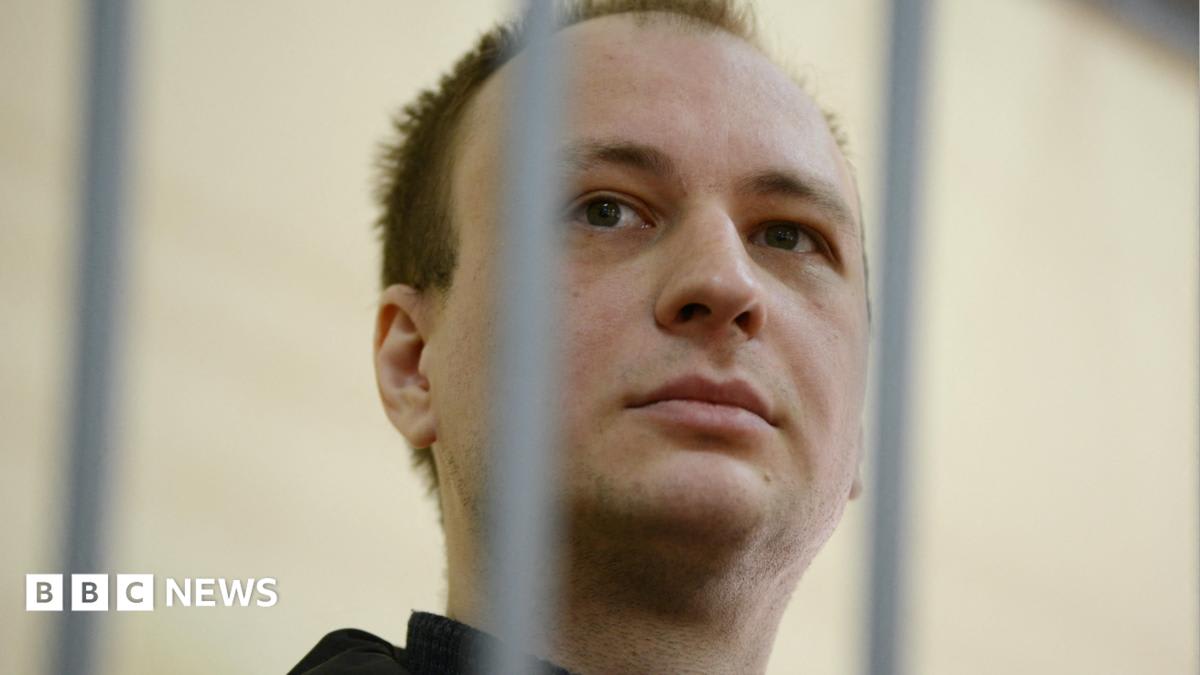
Former US Marine Robert Gilman has been released from Russian custody on humanitarian grounds due to severe health concerns. His release follows high-level diplomatic channels, including discussions involving Donald Trump and Russian officials.
The Humanitarian Release of Robert Gilman
Robert Gilman, a former United States Marine from Massachusetts, has been released from Russian detention after serving a portion of a four-and-a-half-year sentence. Gilman was originally incarcerated in 2022 following an incident on a train to Moscow, where he was arrested for kicking a police officer while intoxicated. His release, framed by Russian authorities as a humanitarian gesture, marks the end of a harrowing period of imprisonment that drew significant concern regarding his physical and mental well-being.
Critical Health Concerns and Medical Status
The circumstances surrounding Gilman’s detention became increasingly dire in his final months of custody. According to reports cited by Senator Ed Markey, Gilman had fallen into a state described as "essentially catatonic." Medical reports indicated he was suffering from a severe case of pneumonia and a condition identified as a dissociative stupor. This state left him non-responsive, unable to communicate, or consume food, necessitating urgent intervention to prevent a fatal outcome within the Russian penal system.
High-Level Diplomacy and Political Context
The release of Gilman highlights the complex and often opaque nature of US-Russia prisoner diplomacy. Kirill Dmitriev, a special envoy for President Vladimir Putin, confirmed that Gilman was flown to Washington, D.C., on a US plane. Furthermore, former President Donald Trump has publicly claimed that a conversation he held with Vladimir Putin was instrumental in securing this release. This suggests that even outside of current official administrative channels, back-channel or personal diplomatic influence remains a factor in high-stakes prisoner negotiations between the two nations.
The Legal and Geopolitical Backdrop
Gilman’s 2022 sentencing in a southwestern Russian court occurred during a period of rapidly deteriorating US-Russia relations, exacerbated by the ongoing conflict in Ukraine. While his initial arrest was for a criminal assault charge—kicking a police officer—his case became emblematic of the risks faced by American citizens detained in Russia. The intersection of local criminal law and geopolitical leverage often complicates the consular support process, making humanitarian releases rare and highly scrutinized.
Broader Implications for US-Russia Relations
The successful repatriation of Gilman serves as a narrow bridge of communication between Washington and Moscow. While it does not represent a broader thaw in diplomatic relations, it underscores the persistent use of "humanitarian reasons" as a mechanism for de-escalation in specific cases. The focus now shifts to Gilman's recovery in the United States, as his family and government officials work to address the severe health complications he developed while in custody.
Future Outlook
As Gilman returns to the United States, the case serves as a stark reminder of the volatility inherent in international travel for US citizens in nations with strained diplomatic ties. The involvement of various political figures in this release process indicates that while formal state-to-state negotiations remain difficult, individual cases can still be resolved through targeted, high-level advocacy. The long-term impact of this release may be limited, but for the parties involved, it represents a critical resolution to a life-threatening medical crisis.