Russia Test-Fires Bulava Nuclear-Capable ICBM | Putin’s Strategic Missile Arsenal in Focus
Source Entity
Latest News: Todays Latest News Headlines from India & World | Hindustan Times
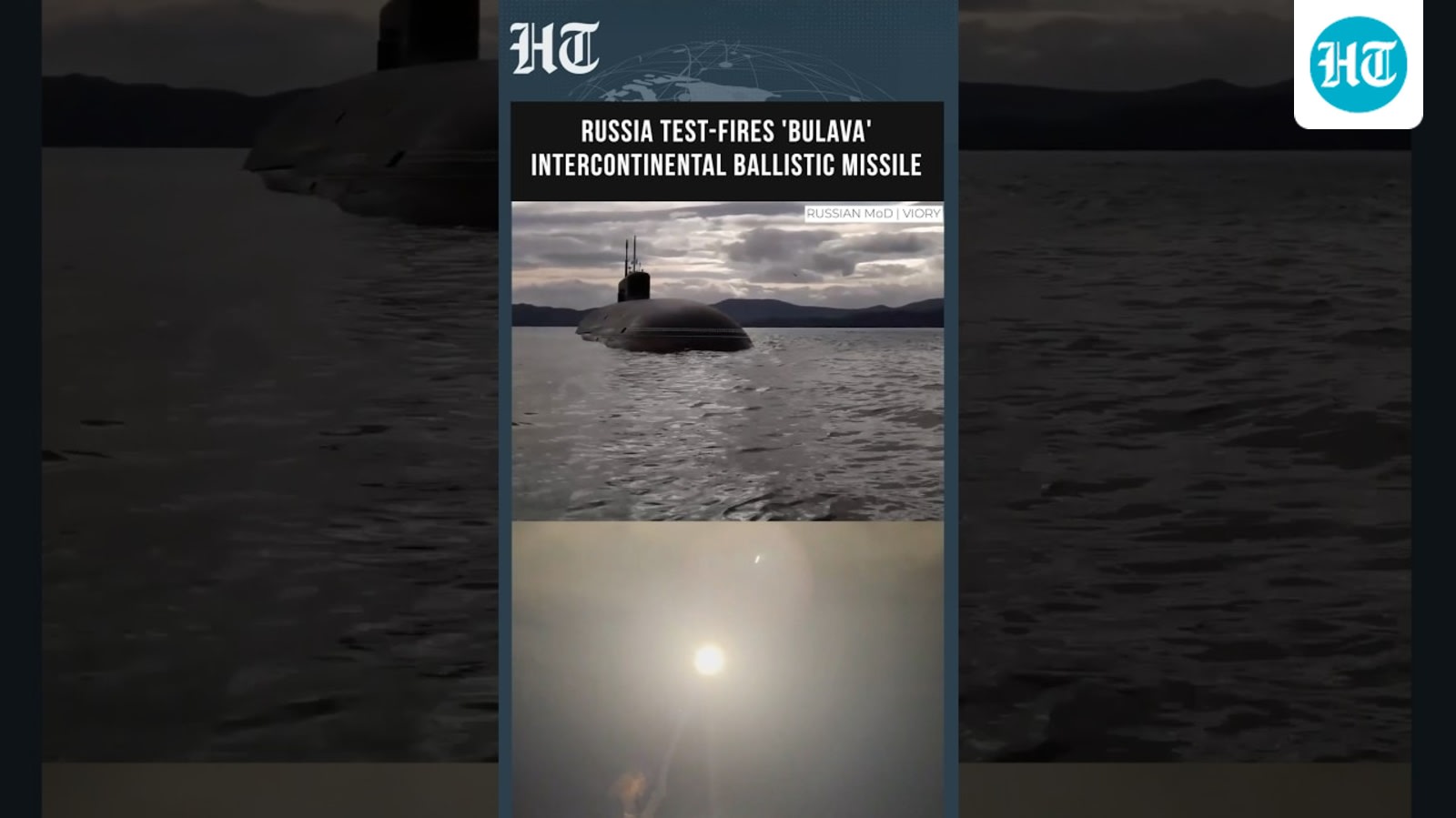
Russia has conducted a test launch of its Bulava intercontinental ballistic missile, a cornerstone of its sea-based nuclear deterrent. This demonstration underscores Moscow's commitment to modernizing its strategic arsenal amid ongoing geopolitical tensions.
Russia’s Strategic Posture: The Bulava Missile Test
Russia’s recent release of footage documenting a test launch of the Bulava intercontinental ballistic missile (ICBM) serves as a potent reminder of the central role sea-based deterrents play in the nation's military doctrine. As a core component of the Borei-class nuclear-powered ballistic missile submarines, the Bulava is engineered to serve as a reliable delivery system for nuclear warheads. This test is not merely a technical exercise but a strategic signaling mechanism intended to project power and operational readiness.
The Role of Sea-Based Deterrence
In the hierarchy of nuclear strategic planning, sea-based assets like the Bulava are prized for their survivability. Unlike land-based silos, which are stationary and potentially vulnerable to preemptive strikes, nuclear-powered submarines provide an elusive, mobile platform that is difficult to track. By continuously testing and showcasing the Bulava, Russia reinforces the credibility of its 'second-strike' capability, ensuring that its strategic deterrent remains a credible threat regardless of the geopolitical environment.
Geopolitical Context and Signaling
This demonstration occurs against a backdrop of significantly heightened tensions between Moscow and Western nations. In the realm of international security, the public release of military test footage is often utilized as a tool of statecraft. By highlighting the capabilities of the Bulava, Russian authorities are signaling the resilience of their defense infrastructure and their commitment to maintaining parity or superiority in strategic weaponry, despite external economic and diplomatic pressures.
Analyzing Official Military Claims
While Russian defense authorities have provided footage and documentation of the launch, it is essential for analysts and the public to view these details through a critical lens. Official military claims regarding the success and performance of such systems are inherently tied to domestic and international messaging strategies. Understanding the Bulava’s role requires distinguishing between the verified technical capabilities of the missile and the political objectives behind the timing of such an announcement.
Broader Strategic Implications
Looking forward, the continued development and testing of the Bulava suggest that Russia intends to keep its sea-based nuclear triad at the forefront of its military modernization program. As global security architectures face increasing strain, the reliance on such high-end strategic assets is likely to persist. The Bulava remains a focal point of these efforts, representing a long-term investment in a capability that Moscow views as the ultimate guarantee of its national sovereignty.
Conclusion
The test of the Bulava ICBM is a significant development that underscores the endurance of Cold War-era strategic concepts in a modern, volatile geopolitical landscape. By emphasizing the capabilities of its submarine-launched ballistic missiles, Russia is asserting its status as a major nuclear power. Moving forward, the international community will likely continue to monitor these tests as a barometer for the broader state of East-West strategic stability.
Verification Required?