Engine parts smashed Ryanair window that man's head was sucked out of, report says
Source Entity
BBC News
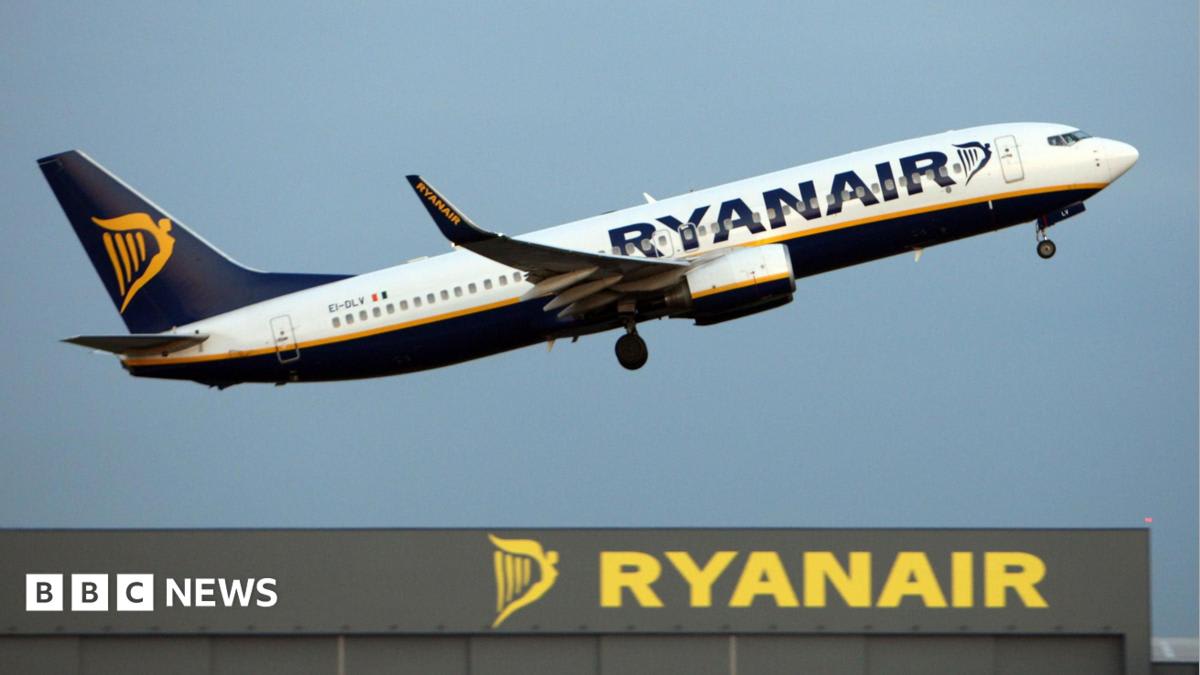
A Ryanair flight from Greece to Germany experienced a severe engine failure when a fan blade broke, shattering a cabin window. A passenger was partially sucked out of the plane but was saved by fellow travelers.
Aviation Safety Incident: The Ryanair Engine Failure
A terrifying mid-air incident occurred on July 10, when a Ryanair flight departing from Thessaloniki, Greece, bound for Memmingen, Germany, suffered a catastrophic engine failure. According to a preliminary report by the National Transportation Safety Board (NTSB), the flight experienced a 'No. 2 (right) engine fan-blade-out (FBO) failure' shortly after takeoff. This mechanical breakdown sent debris flying into the fuselage, shattering a cabin window and creating a vacuum effect that pulled a 61-year-old passenger, identified as Serbian national Ljubisa Karović, partially out of the aircraft.
The Mechanics of the Failure
The NTSB investigation highlights that the engine failure was initiated by a broken fan blade. Crucially, the report notes that investigators discovered bird remains inside the engine, suggesting that a bird strike may have been the catalyst for the blade failure. When an engine fan blade breaks at high speeds, the resulting kinetic energy can propel fragments through the engine cowling and into the aircraft’s fuselage. In this instance, the debris impacted the cabin window with enough force to compromise the integrity of the pressure seal, leading to the rapid decompression and the subsequent life-threatening exposure of the passenger.
Heroic Response and Passenger Safety
The situation could have been fatal had it not been for the immediate intervention of other passengers. The victim's wife, Svetlana Grković Maksimović, along with two other passengers, physically held onto the victim's legs for several minutes to prevent him from being fully ejected from the aircraft. This act of collective bravery highlights the critical role passengers can play in emergency situations. Mr. Karović, who suffered neck and shoulder injuries along with friction burns, was left in a state of serious shock following the ordeal.
Broader Implications for Aviation Safety
This incident underscores the ongoing vulnerability of commercial aviation to bird strikes, a persistent risk factor in aviation safety. While engine containment systems are designed to withstand blade failures, the trajectory of debris remains a complex engineering challenge. The NTSB's involvement in this investigation reflects the global nature of aviation safety standards, where findings from one jurisdiction often lead to mandatory maintenance or design updates for aircraft operators worldwide.
Future Trends and Preventative Measures
Moving forward, this report will likely trigger a review of engine inspection protocols, particularly regarding the durability of fan blades under impact conditions. Airlines and manufacturers may look toward enhanced bird-detection technology at airports or improved engine shielding to mitigate the risk of debris penetration. As the investigation concludes, the aviation industry will closely monitor these findings to ensure that similar mechanical failures do not result in such perilous cabin breaches in the future.