At Quad Meet, S Jaishankar Highlights Importance Of "Maintaining Stability"
Source Entity
NDTV News Search Records Found 1000
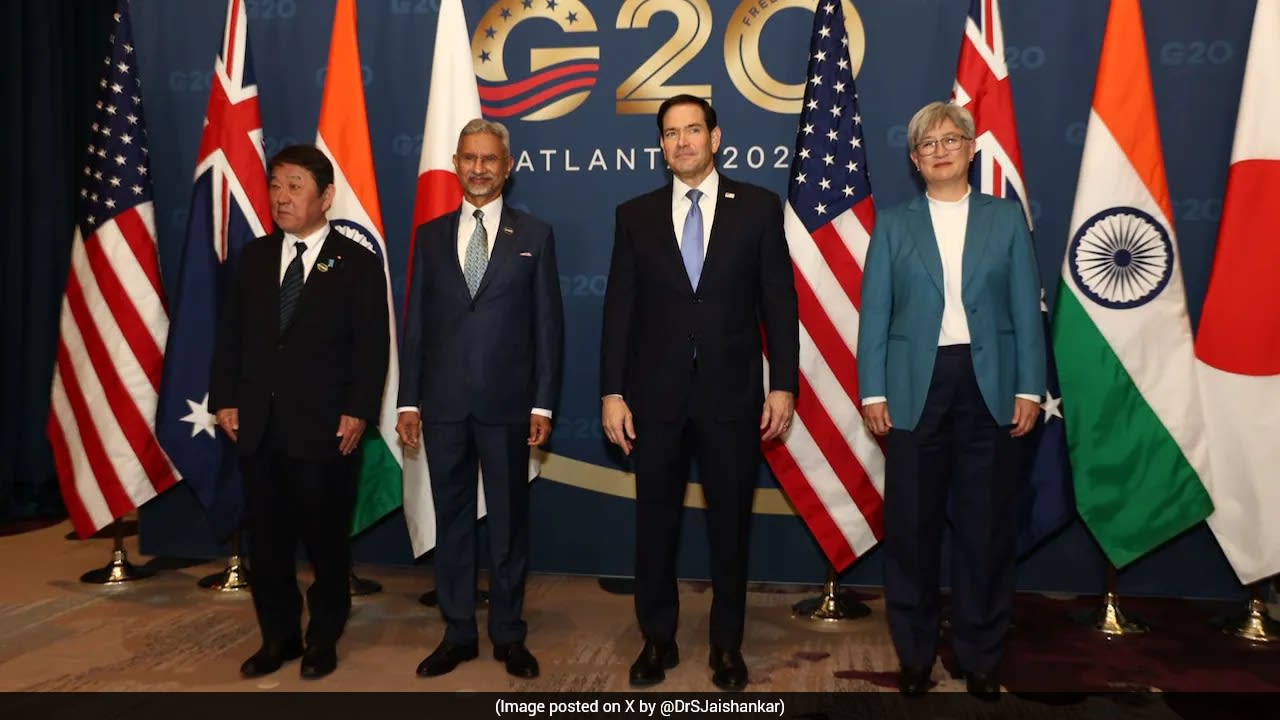
External Affairs Minister S. Jaishankar emphasized the necessity of regional stability during a recent Quad meeting. His comments remained diplomatically broad, avoiding specific geopolitical accusations.
Strategic Stability at the Quad: An Analytical Overview
The Diplomatic Tone of the Quad Meeting
External Affairs Minister S. Jaishankar’s recent participation in the Quad ministerial meeting underscores India’s nuanced approach to multilateral diplomacy. By emphasizing the collective responsibility of "maintaining stability," Jaishankar has signaled India's commitment to a rules-based order within the Indo-Pacific region. This rhetoric serves as a cornerstone for the Quad—comprising India, the United States, Japan, and Australia—as they seek to balance security interests without necessarily escalating regional tensions through aggressive posturing.
The Strategic Value of Ambiguity
It is notable that Jaishankar’s official communications regarding the meeting did not name any country or identify specific practices. In the realm of international relations, this strategic ambiguity is a calculated maneuver. By avoiding explicit naming, India maintains the flexibility to engage in bilateral dialogues while upholding its multilateral commitments. This approach prevents the Quad from being perceived strictly as an exclusionary bloc, instead framing it as a constructive forum dedicated to broader regional stability.
Interpreting the Call for Stability
When a senior diplomat calls for "maintaining stability," it often serves as a coded reference to the preservation of freedom of navigation, maritime security, and the peaceful resolution of territorial disputes. In the context of the Indo-Pacific, these concerns are paramount. By focusing on stability, Jaishankar reinforces the idea that the Quad’s primary objective is not the containment of any single power, but rather the protection of the existing international framework that facilitates trade and diplomatic cooperation.
Regional Implications and Future Trends
Looking ahead, India’s insistence on stability suggests a long-term strategy of "strategic autonomy." As global power dynamics shift, India’s role as a bridge-builder becomes increasingly significant. We can expect future Quad engagements to continue emphasizing economic resilience and maritime security cooperation, moving away from overtly militaristic rhetoric to ensure the participation of other regional stakeholders who may be wary of taking sides in a bipolar power struggle.
Conclusion: A Balanced Foreign Policy
In summary, S. Jaishankar’s recent comments reflect a mature and balanced foreign policy. By focusing on the abstract yet vital concept of stability, India manages to project strength and purpose without inviting unnecessary diplomatic friction. This measured approach is likely to define India’s foreign policy trajectory, ensuring that the Quad remains a relevant and stabilizing force in an increasingly complex global environment.
Verification Required?