'You're damaging his image': Congress counters Amit Shah's 'sideline Patel' charge
Source Entity
ABHISHEK MISHRA
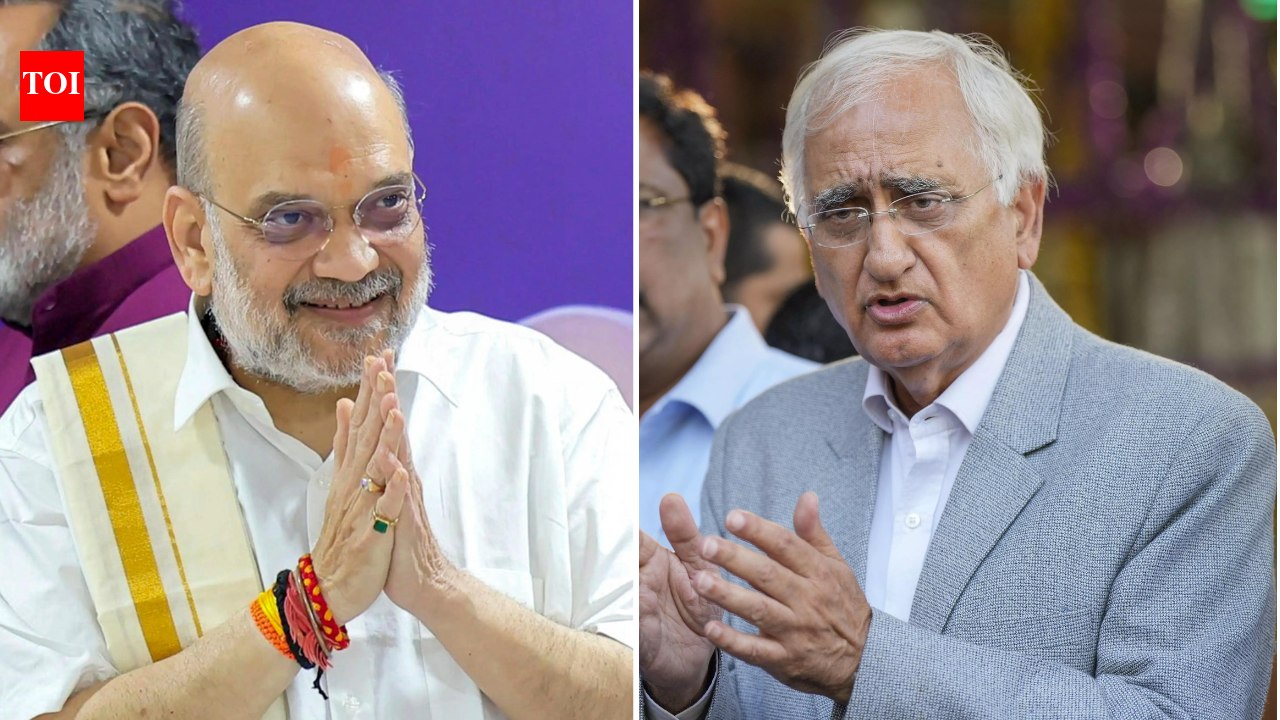
Recent political discourse has seen a clash over the legacy of Sardar Vallabhbhai Patel between the BJP and Congress. While historical analysis highlights Patel's foundational role in modernizing Ahmedabad, current debates focus on his historical treatment by political parties.
The Politicization of a Legacy: Sardar Patel's Enduring Impact
The Historical Foundations of Modern Ahmedabad
Sardar Vallabhbhai Patel’s connection to Ahmedabad is not merely symbolic; it is structural. On October 31, 1950, during his 76th birthday celebration at Lal Darwaja, Patel addressed over two lakh citizens, marking a significant moment in the city's transition into a municipal corporation. His tenure as the president of the municipality laid the groundwork for the modern urban governance seen in Ahmedabad today. The fact that the public, moved by his leadership, gifted him Rs 15 lakh—which he immediately redirected toward public works—underscores the deep, reciprocal bond he shared with the populace.
The Symbolic Weight of the Statue
The historical significance of the Lal Darwaja site was further cemented in December 1959, when then-President Rajendra Prasad unveiled a statue of Patel at the very location of his final Ahmedabad address. This site, now a municipal garden, serves as a physical manifestation of the reverence Patel commanded. It highlights how his influence was institutionalized post-independence, serving as a pillar for the nationalist narrative that helped unify a newly formed Indian state.
Contemporary Political Friction
In recent political developments, the legacy of the 'Iron Man of India' has become a flashpoint for partisan contention. Union Home Minister Amit Shah recently leveled accusations that the Congress party sought to sideline Sardar Patel. This charge reflects a broader strategic effort by the current administration to claim Patel’s ideological heritage, positioning him as an alternative to the Nehruvian school of thought that dominated post-independence politics.
Congress's Defense and Counter-Narrative
In response to these allegations, Congress leader Salman Khurshid has publicly pushed back, asserting that the party has consistently accorded Patel the respect he deserved. This defense is indicative of a wider struggle within the Indian political spectrum to define who truly 'owns' the historical contribution of India's freedom fighters. The Congress party’s stance is a defensive attempt to maintain its historical integrity and refute claims of historical marginalization.
Analyzing the Broader Implications
The debate over Patel’s treatment is not just about historical record-keeping; it is a tactical engagement in the 'battle of icons.' By centering the discourse on how Patel was treated by past administrations, political actors aim to influence the contemporary electorate's perception of institutional history. This trend suggests that historical figures will continue to be central to political legitimacy in India, with both major parties vying to align their platforms with Patel’s reputation for strength and administrative efficiency.
Future Trends in Historical Reinterpretation
Looking forward, we can expect this narrative war to intensify as political campaigns increasingly rely on the appropriation of historical figures to mobilize voters. As the memory of the independence movement fades from the living consciousness of the electorate, the 'curation' of figures like Sardar Patel will become even more critical. The ongoing dialogue surrounding his life—from his municipal contributions in Ahmedabad to his role in national integration—will remain a primary instrument for shaping national identity and political belonging in the coming years.