Microsoft CEO on Wall Street being upset on Chinese open source AI models
Source Entity
TOI TECH DESK
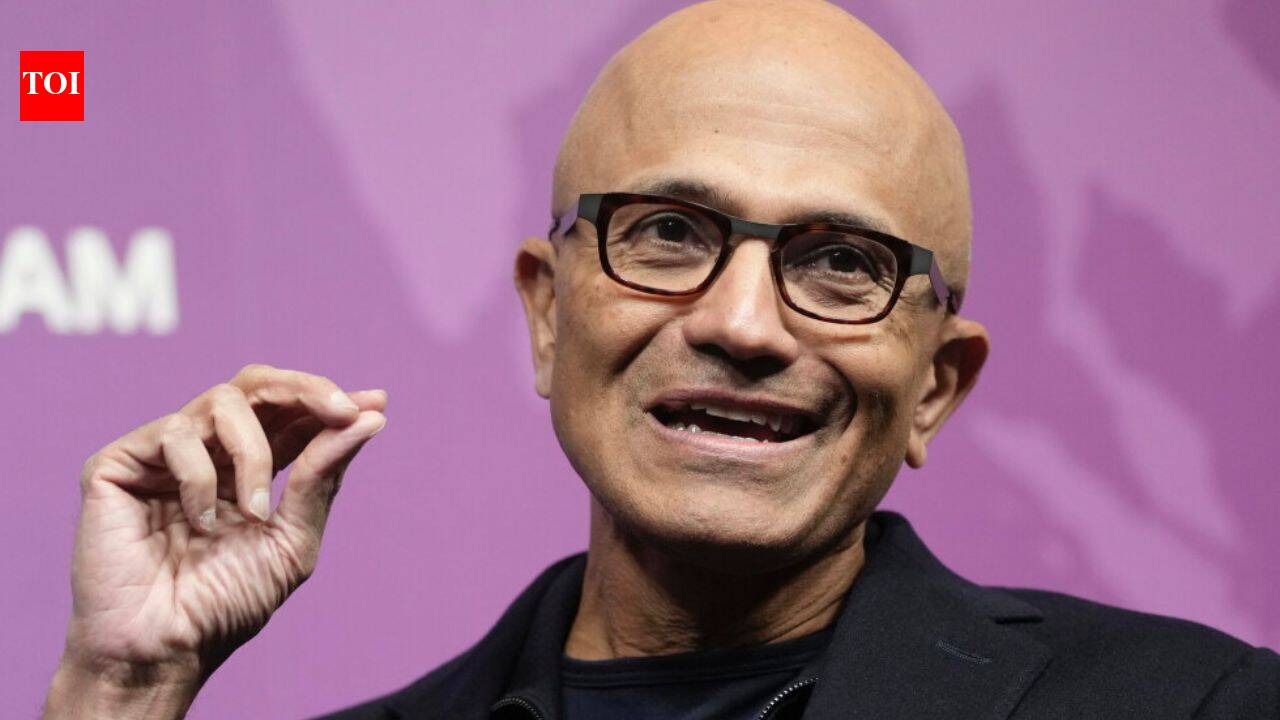
Microsoft CEO Satya Nadella emphasizes that American technological dominance relies on trust and ecosystem stewardship rather than fearing Chinese AI models. He warns businesses that relying solely on external AI providers without infrastructure control risks long-term survival.
The Strategic Pivot in AI Leadership
Microsoft CEO Satya Nadella is recalibrating the narrative surrounding the rapid rise of cost-effective Chinese artificial intelligence models. While Wall Street has expressed anxiety regarding the competitive threat posed by these alternatives, Nadella posits that the current landscape is fundamentally underpinned by American infrastructure. Because these Chinese models frequently operate on American-owned hyperscalers, the United States retains a foundational layer of control and global reach that competitors cannot easily replicate.
The Currency of Trust and Stewardship
At the heart of Nadella’s argument is the concept of trust as a competitive moat. He suggests that the historical success of the American tech sector was built upon creating open ecosystems where global entities could participate with confidence in the stewardship of the platform. This philosophy remains the primary engine of U.S. competitiveness. By maintaining this open-weight, secure ecosystem, the U.S. can ensure that even when external models are utilized, they remain integrated into a framework governed by American standards.
The Peril of Vendor Lock-in
Beyond global competition, Nadella has issued a stark warning to the enterprise sector regarding dependency. He contends that companies relying entirely on proprietary AI labs—without developing their own internal models or implementing AI gateways—are courting obsolescence. This structural vulnerability arises when businesses surrender too much control over their proprietary data and operational prompts to external providers, effectively handing over their intellectual property without a safety net.
The Necessity of AI Gateways and Data Sovereignty
To mitigate these risks, Nadella advocates for the implementation of AI gateways, which act as a buffer between corporate data and the underlying model. By retaining metadata and utilizing it to train internal weights or open-source models, companies can maintain agency over their AI strategy. This shift toward self-governance allows firms to avoid the pitfalls of being locked into a single provider’s ecosystem, ensuring they are not at the mercy of shifting corporate policies or pricing models.
Future Trends in Enterprise AI
Looking forward, the tech industry is likely to see a bifurcation between companies that treat AI as a service and those that treat it as a core competency. Businesses that adopt Nadella’s recommended hybrid approach—securing their data pipelines while leveraging diverse model weights—are positioned to be more resilient against market volatility. As the AI landscape matures, the companies that thrive will be those that treat their AI infrastructure as a sovereign asset rather than a utility provided by a third party.