Keychron announces first open-source firmware for gaming mice
Source Entity
Hacker News
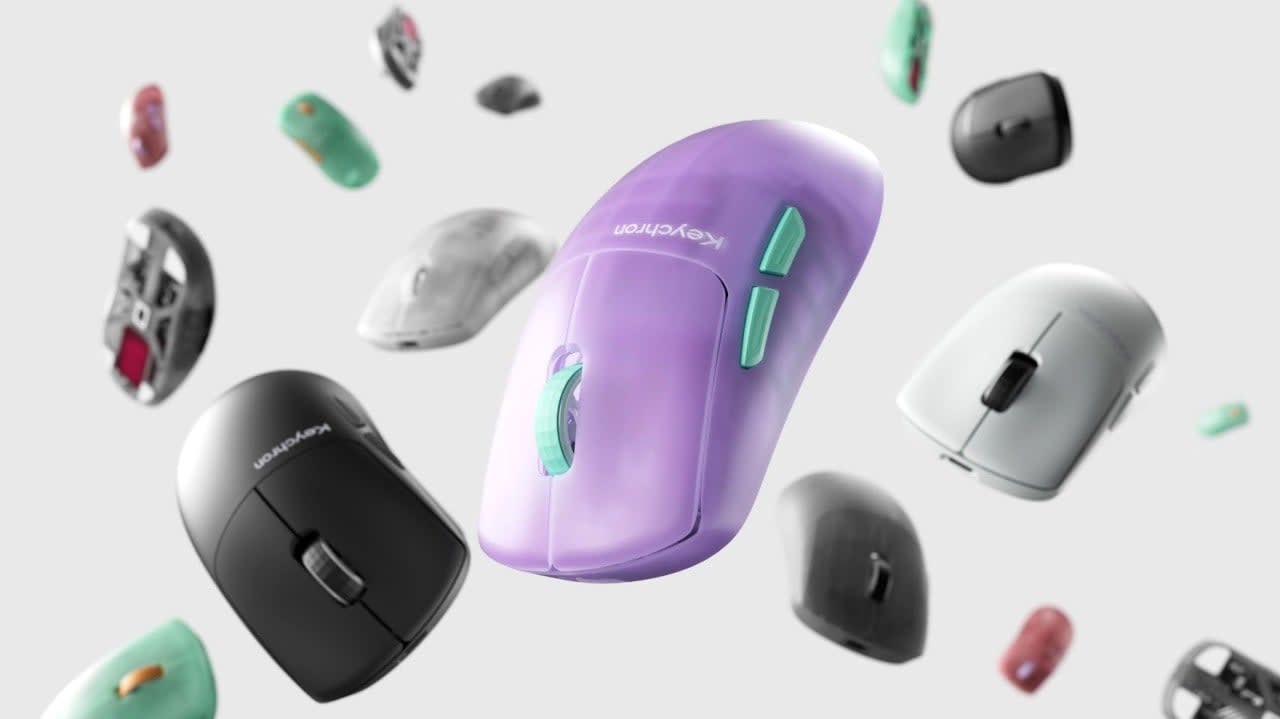
Keychron has announced ZGM, an open-source firmware for its upcoming G6 HE gaming mouse, slated for release in Q1 2027. This initiative aims to provide users with greater customization and control over their hardware, mirroring the flexibility offered by QMK and ZMK for mechanical keyboards.
Keychron Pioneers Open-Source Firmware for Gaming Peripherals
Keychron, a manufacturer widely recognized for its contributions to the mechanical keyboard market, has officially announced its transition into the gaming mouse sector with a focus on open-source accessibility. The company revealed 'ZGM,' a proprietary yet open-source firmware platform designed specifically for its upcoming G6 HE hybrid magnetic switch gaming mouse. This strategic move, scheduled for a Q1 2027 rollout, marks a significant shift in how gaming peripherals are managed, potentially disrupting the industry standard of locked-down, manufacturer-specific software.
Parallels to Keyboard Customization
The ZGM firmware is being positioned as the mouse-based equivalent to the widely respected QMK and ZMK projects. For years, the mechanical keyboard community has utilized these open-source frameworks to bypass restrictive proprietary software, allowing users to remap keys, create complex macros, and optimize power management. By bringing this philosophy to the G6 HE, Keychron is effectively inviting the enthusiast community to take ownership of their hardware performance, a feature historically absent in the high-performance gaming mouse market.
Challenging the Industry Giants
The G6 HE is explicitly aimed at competing with established powerhouses like the Logitech X2 SuperStrike. In the hyper-competitive gaming peripheral landscape, performance is often dictated by sensor precision and click latency. However, Keychron is choosing to differentiate itself not just through hardware specifications—such as the hybrid magnetic switches—but through software freedom. This 'second string to its bow' strategy suggests that Keychron believes user agency and customization will be a key deciding factor for pro-sumers and competitive gamers moving forward.
The Future of Hardware Control
By releasing the ZGM firmware, Keychron effectively eliminates the obligation for users to rely on the manufacturer's preferred software suite. Proprietary software is often criticized for being bloated, tracking user data, or failing to provide granular control over mouse polling rates and lift-off distances. An open-source approach allows for community-driven development, where enthusiasts can contribute fixes and feature requests directly, ensuring the mouse remains relevant and functional long after the manufacturer ceases official support.
Broader Market Implications
This announcement could trigger a broader trend within the hardware industry. If the G6 HE succeeds, other peripheral manufacturers may face pressure to open their firmware to remain competitive with the enthusiast crowd. The democratization of peripheral software removes a significant barrier to entry for power users who demand total control over their input devices. As we look toward 2027, the success of ZGM will likely hinge on the ease of use of the accompanying tools and how effectively Keychron integrates community feedback into their development cycle.
Conclusion
Keychron’s move to introduce ZGM for the G6 HE is a bold step that aligns with the evolving demands of the gaming community. By bridging the gap between high-end hybrid magnetic switch hardware and community-driven firmware, the company is positioning itself as a leader in user-centric peripheral design. If this project achieves the same level of adoption as keyboard-based open-source firmware, it could fundamentally redefine the expected standards for gaming mouse utility and longevity.