Pumping life into Mecca Pact? Saudi, Turkey, Pak plan meet against Houthis threat
Source Entity
RAJEEV SINGH
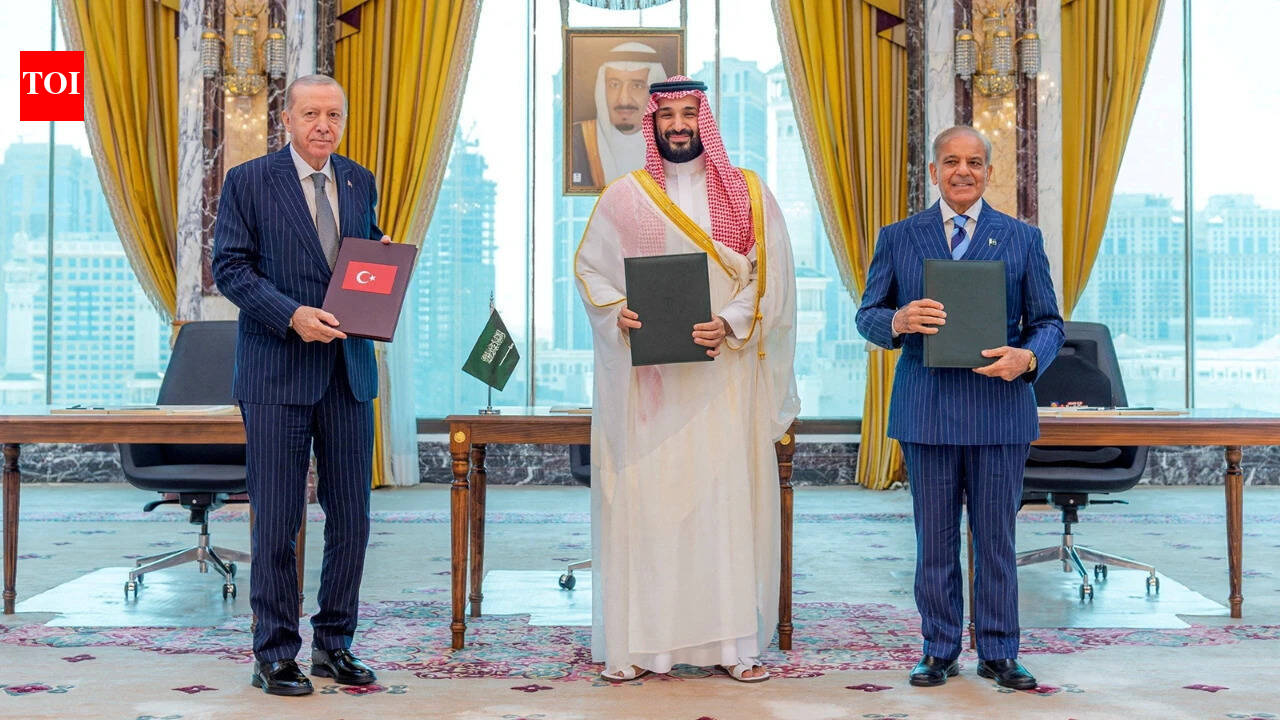
Saudi Arabia, Turkey, and Pakistan are convening an urgent meeting under their newly signed Mecca Pact to address escalating security threats from Houthi forces. The alliance aims to fortify regional stability through collective defense measures and high-level military coordination.
The Mecca Pact: A New Security Architecture in the Middle East
Recent geopolitical developments have seen Saudi Arabia, Turkey, and Pakistan move toward a more integrated security framework, formalized by the 'Mecca Pact' signed on August 7. This trilateral agreement has gained immediate urgency following intensified attacks by Yemen’s Houthi forces, which threaten the stability of the region and the sanctity of critical sites. The recent meeting in New York between Saudi Foreign Minister Prince Faisal bin Farhan, Turkish Foreign Minister Hakan Fidan, and Pakistan’s Deputy Prime Minister Ishaq Dar marks a significant escalation in diplomatic and military cooperation among these three major Islamic powers.
Defining the 'Red Line'
The rhetoric emerging from the United Nations General Assembly highlights the gravity of the situation. Pakistan’s Prime Minister has explicitly drawn a 'red line' regarding the security of Mecca, signaling that any threat to the Kingdom is viewed as a provocation against the broader Muslim world. By framing the defense of Saudi Arabia as a collective responsibility, the signatories are signaling to non-state actors like the Houthis that regional security is no longer the sole burden of Riyadh, but a shared commitment of a powerful military coalition.
Military Coordination and Strategic Depth
The operationalization of the pact is already underway, with the Turkish Ministry of Defence confirming that General Selcuk Bayraktaroglu, Turkey's Chief of General Staff, is scheduled to travel to Saudi Arabia. This high-level military summit, which will include Saudi and Pakistani counterparts, suggests a move toward tactical integration. By pooling the strategic depth of Pakistan’s military experience, Turkey’s advanced drone and defense manufacturing capabilities, and Saudi Arabia’s logistical and regional influence, the alliance aims to create a robust deterrent against irregular warfare.
Historical Context and Regional Implications
Historically, the Middle East has relied on Western-led security guarantees. The formation of the Mecca Pact represents a shift toward regional self-reliance. This trilateral cooperation is not merely a reactionary measure against Houthi strikes but a long-term strategic realignment. It reflects a growing consensus that regional powers must take the initiative to secure their own borders and critical infrastructure, particularly in the face of persistent maritime and aerial threats that disrupt global trade and regional peace.
Future Trends and Challenges
The success of this pact will depend on the signatories' ability to maintain a unified front despite their distinct national interests. As the Houthis continue to challenge regional security, the Mecca Pact will likely evolve from a diplomatic agreement into a permanent coordination body. Observers should monitor the upcoming military meetings for signs of joint exercises or shared intelligence protocols, which would indicate that the pact is moving beyond rhetoric into a functional, operational military alliance. This development marks a pivotal moment in the shifting power dynamics of the Islamic world.
Multiple Citing Sources