A red carpet and military flyover - How Trump welcomed Xi
Source Entity
BBC News
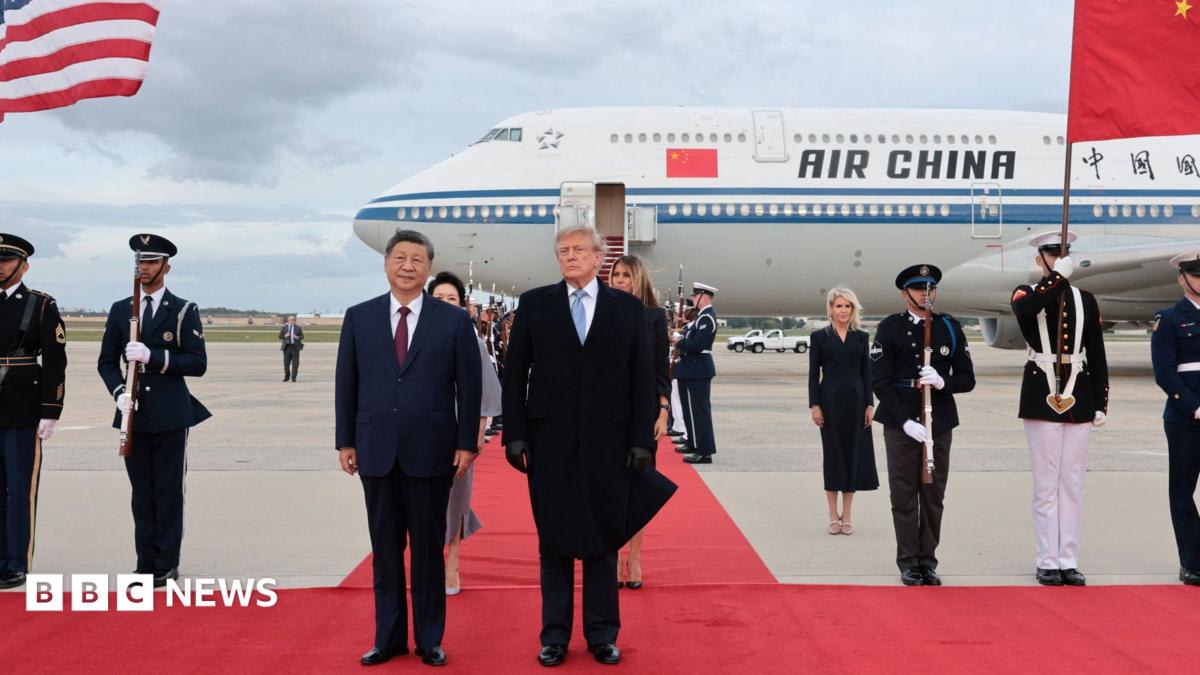
President Donald Trump welcomed Chinese President Xi Jinping to the United States with a significant military display at Joint Base Andrews. The arrival featured a red carpet ceremony and a flyover by two supersonic B-1 bombers, marking the beginning of a three-day state visit.
A Display of Strategic Pomp: Analyzing the Xi-Trump Welcome
The Optics of Diplomatic Arrival
President Donald Trump’s decision to welcome Chinese President Xi Jinping at Joint Base Andrews with a high-profile military ceremony signals a clear intent to blend traditional statecraft with displays of American military might. By utilizing a red carpet alongside a coordinated aerial maneuver, the administration sought to project strength and hospitality simultaneously. This approach serves as a deliberate messaging tool in international relations, where the scale of a welcome ceremony often reflects the strategic importance of the relationship between the two nations.
The Role of the B-1 Lancer
The inclusion of two B-1 bombers in the flyover was a specific tactical choice for the arrival ceremony. As supersonic heavy bombers, these aircraft represent a cornerstone of the United States' long-range strike capabilities. Their presence, noted for producing a notoriously loud roar, serves as a sensory reminder of American combat power. In the context of a high-level diplomatic summit, such a display is rarely accidental; it is a calculated performance designed to underscore the gravity of the discussions to follow over the next three days.
Contextualizing the Three-Day Visit
The three-day duration of President Xi's visit suggests a comprehensive agenda that likely spans trade, regional security, and bilateral cooperation. By hosting the arrival at Joint Base Andrews rather than a traditional civilian airport, the U.S. government established a tone of strategic partnership and security-focused engagement. This setting emphasizes that the conversations held throughout the visit are expected to address the most critical aspects of the U.S.-China relationship.
Historical Precedents and Symbolic Value
Historically, U.S. administrations have utilized military pageantry to set the stage for complex diplomatic negotiations. The use of Joint Base Andrews for such arrivals has long been a hallmark of high-level state visits, but the specific choice to feature combat-ready supersonic bombers elevates the symbolic nature of the event. This move demonstrates a desire to communicate directly with the visiting delegation through the medium of hardware and logistical precision.
Future Implications for U.S.-China Relations
As the two leaders move from the tarmac to the negotiating table, the memory of this arrival will likely serve as an implicit backdrop for their discussions. When world powers engage in such high-visibility exchanges, the symbolic weight of the welcome acts as a precursor to the intensity of the policy debates. Observers should monitor the subsequent outcomes of this three-day trip to see if the pomp of the arrival translates into tangible breakthroughs on the contentious issues currently defining the U.S.-China dynamic.