SIR Enumeration Form may have violated electoral rules prescribing Form-4 for collecting voter details
Source Entity
India Latest News: Top National Headlines Today & Breaking News | The Hindu
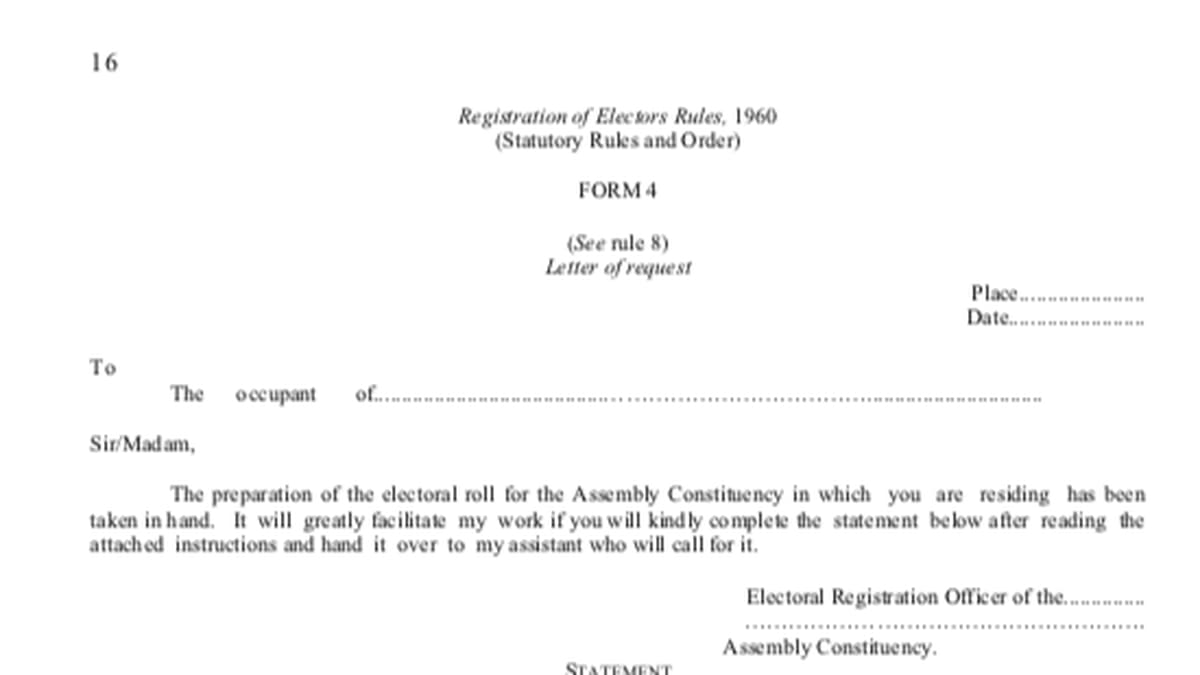
Concerns have emerged that the SIR Enumeration Form used for electoral roll revisions may violate Rule 8 of the Registration of Electors Rules, 1960. Legal experts argue that only Form-4, as prescribed by the ECI, holds the mandate for collecting voter data, casting doubt on the validity of current enumeration processes.
Legal Scrutiny of Electoral Roll Revisions
The integrity of the electoral process in India rests upon strict adherence to statutory frameworks, specifically the Registration of Electors Rules (RER), 1960. Recent developments have brought attention to the 'SIR Enumeration Form' used during the ongoing Special Intensive Revision (SIR) of electoral rolls. There is growing concern that this specific form may lack the necessary legal standing, potentially bypassing the mandatory procedures established by the Election Commission of India (ECI) to ensure transparency and accountability in voter registration.
The Mandatory Requirement of Form-4
At the heart of this issue is Rule 8 of the RER, 1960. This rule explicitly dictates that Electoral Registration Officers (EROs) must utilize 'Form-4' when collecting details from occupants of dwelling-houses. The regulation is designed to standardize the collection of voter information across all forms of roll revisions, whether they are classified as Special Summary Revisions or Special Intensive Revisions. By failing to utilize this specific, legally prescribed document, the use of alternative enumeration forms raises significant questions regarding the procedural validity of the data collected.
Broader Implications for Electoral Integrity
The use of an unauthorized format is not merely a bureaucratic oversight; it carries profound implications for the democratic process. Voter rolls serve as the bedrock of Indian elections, and any deviation from the statutory process could lead to the erroneous inclusion or exclusion of eligible citizens. If the ECI’s authority to use non-standardized forms is successfully challenged, it could create legal vulnerabilities that might be exploited to contest the legitimacy of the entire electoral roll in affected constituencies.
Historical Context and Administrative Oversight
Historically, the RER, 1960 has been the guiding instrument for maintaining the electoral integrity of the world’s largest democracy. The provision of Form-4 was specifically instituted to ensure that every citizen, regardless of their location, is approached through a uniform and legally recognized channel. The current controversy suggests a potential disconnect between administrative convenience and the strict letter of the law, forcing a re-evaluation of how ECI field staff conduct large-scale intensive revisions.
Future Trends and Judicial Oversight
Moving forward, this discrepancy is likely to invite judicial intervention or a formal clarification from the Election Commission. As political stakeholders become more vigilant about the technicalities of roll preparation, the ECI will likely face increased pressure to harmonize its field operations with the RER, 1960. Future revisions will almost certainly require a stricter adherence to Form-4 to prevent challenges to the draft rolls, ensuring that the administrative process remains immune to accusations of procedural irregularity.
Conclusion
In summary, the utilization of the SIR Enumeration Form creates a significant legal ambiguity that threatens the sanctity of the electoral revision process. By deviating from the statutory requirement of Form-4, the ECI risks undermining the very rules intended to protect the rights of electors. Resolving this issue through formal compliance or legal alignment is essential to maintaining public trust in the accuracy and inclusivity of the national electoral rolls.
Verification Required?