'Didn't want to live apart': 3 sisters marry their social media cameraman in UP's Amroha
Source Entity
RAHUL SINGH
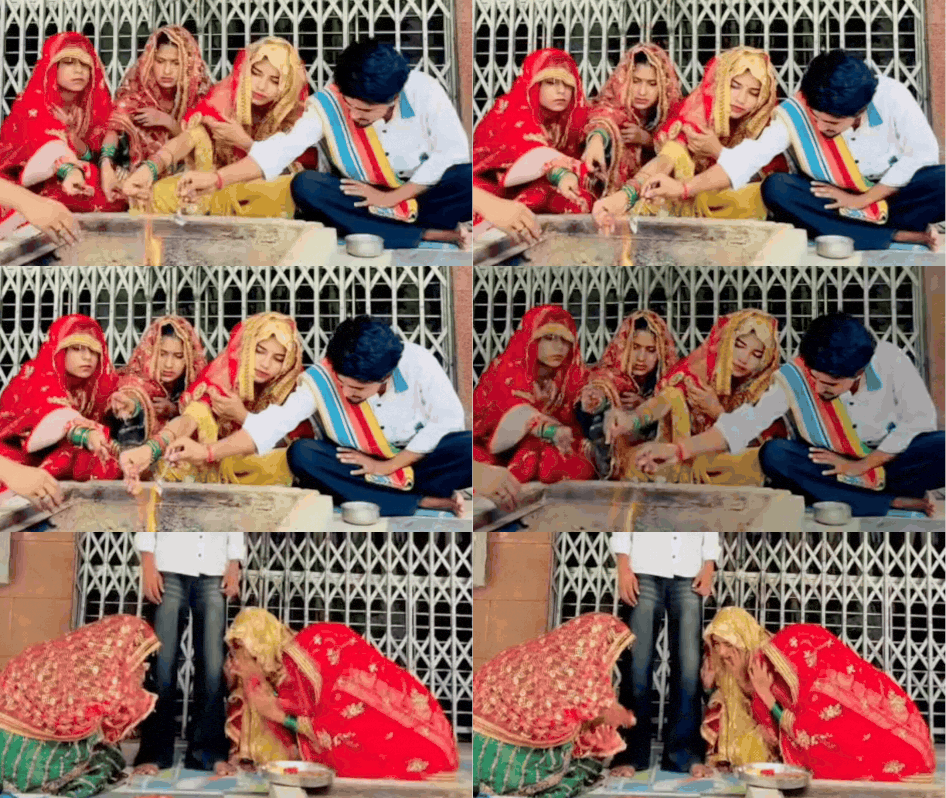
Three sisters in Uttar Pradesh's Amroha district married their social media cameraman to maintain their close bond and avoid separation. The unconventional union has sparked public debate and legal scrutiny regarding its validity under Hindu law.
An Unconventional Union in Amroha
A highly unusual marriage has surfaced from the Amroha district of Uttar Pradesh, where three young women—identified as sisters Saroj, Savitri Rani, and Santosh Khadakvanshi—have entered into a matrimonial arrangement with their social media cameraman, Vikas Khadakvanshi. The trio, who are regular content creators, reportedly chose this path to ensure they would never have to live apart, a sentiment driven by their deep familial and emotional bond. This event highlights the evolving intersection of social media influence and traditional social structures in rural India.
The Dynamics of the Relationship
For the past six months, Vikas Khadakvanshi, known as 'Vikky,' served as the cameraman for the sisters' social media videos. During this period, he frequently portrayed the role of a husband in their scripted content, effectively blurring the lines between their professional collaboration and personal lives. The transition from on-screen chemistry to a real-life marriage reflects a unique phenomenon where digital personas and real-world domestic desires begin to merge, particularly among youth who are deeply immersed in the creator economy.
Motivations and Social Context
The primary driver cited by the women for this collective marriage was the fear of separation. In many traditional Indian households, marriage often necessitates a daughter leaving her natal home to join her husband’s family, which can lead to the fragmentation of close sibling units. By marrying the same individual, these women have attempted to circumvent the social expectation of individual marital dispersion. This decision underscores a strong desire for communal living and sisterly solidarity, albeit through a method that challenges conventional societal norms.
Legal and Societal Implications
While the marriage was documented through rituals performed at the Chamunda Mata Temple, legal experts have been quick to clarify that such an arrangement holds no recognition under the Hindu Marriage Act. Under current Indian law, bigamy and polygamy are strictly prohibited for Hindus, and a marriage involving multiple spouses is not legally binding. Consequently, this union exists primarily as a social event rather than a legally enforceable contract, raising questions about the future social and economic security of the parties involved.
Broader Trends and Future Outlook
The incident in Amroha serves as a case study for how social media platforms influence the life choices of younger generations. By normalizing 'husband' roles in digital content, the boundaries of intimate relationships are being renegotiated in the digital space. As these creators continue to navigate their personal and professional lives, this event will likely remain a point of significant public discourse regarding the influence of internet culture on traditional family values and the limits of personal expression in a conservative legal framework.