India becomes 3rd nation with private orbital launch after Vikram-1 success
Source Entity
Latest News: Today's Latest News Headlines from India & World | Hindustan Times | Hindustan Times
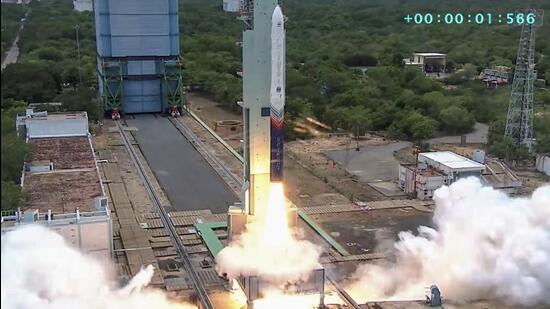
Skyroot Aerospace successfully launched the Vikram-1 rocket from Sriharikota, marking India's entry as the third nation with private orbital launch capabilities. The historic 'Mission Aagaman' mission successfully deployed technology payloads and symbolic postcards into low earth orbit.
India's Private Space Frontier: The Vikram-1 Breakthrough
India has officially entered a new era of space exploration with the successful launch of Vikram-1, a four-stage rocket developed by Skyroot Aerospace. This mission, dubbed 'Mission Aagaman' (Arrival), represents the first time a private Indian entity has achieved an orbital launch. Departing from the Satish Dhawan Space Centre in Sriharikota, the mission successfully placed various technology demonstration payloads and symbolic items, including postcards from Prime Minister Narendra Modi, into low earth orbit.
A Historic Milestone for Private Enterprise
This achievement positions India as only the third country in the world to reach orbit via a privately developed launch vehicle. By successfully executing this mission, Skyroot Aerospace has transitioned from a startup to a key player in the global aerospace landscape. The event serves as a testament to the maturation of India's space policy, which has increasingly focused on deregulating the sector to foster innovation and competition among private domestic firms.
Navigating Technical Hurdles
The launch was not without its moments of tension; the mission experienced a 'planned hold' mere minutes before the initial takeoff window. Such procedures are standard in aerospace engineering, designed to ensure safety and mission integrity. The resilience shown by the mission control team in resetting the launch sequence to 12:05 p.m. highlights the technical rigor required to operate in the high-stakes environment of orbital flight.
The Strategic Importance of Vikram-1
Vikram-1 is engineered specifically for rapid, cost-effective launch services, catering to the growing demand for small satellite deployments. The four-stage design offers the versatility needed to place diverse payloads into precise orbits. This capability is crucial for India’s future in the global satellite market, where the ability to launch on demand is becoming a significant competitive advantage.
Broader Implications and Future Trends
Prime Minister Modi’s commendation of the 'talent of youth' underscores the government's commitment to building a self-reliant space ecosystem. Looking ahead, this success is likely to catalyze further investment in the Indian private space sector. As more companies follow in Skyroot’s footsteps, we can expect to see an increase in satellite constellations, improved connectivity infrastructure, and a more robust pipeline of aerospace talent emerging from Indian technical institutions.
Conclusion
'Mission Aagaman' is more than just a successful rocket launch; it is a fundamental shift in how India approaches space technology. By proving that private companies can reliably reach orbit, India has expanded its national capacity, promising a future where space access is more frequent, affordable, and innovative. This milestone solidifies the nation's status as a top-tier space power, bridging the gap between state-led initiatives and commercial spaceflight.
Multiple Citing Sources
Verification Required?