10 Big Firsts Of Vikram-1 And 'Mission Aagaman' By Skyroot
Source Entity
NDTV News Search Records Found 1000
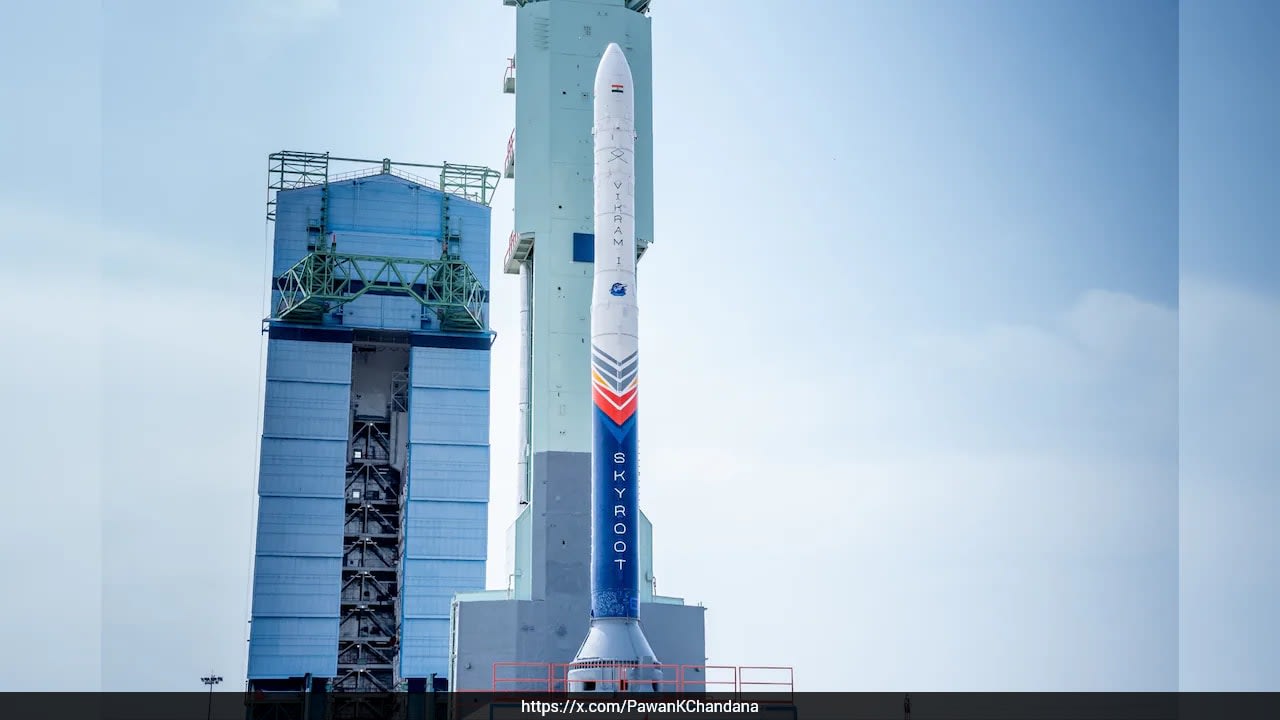
Skyroot Aerospace has successfully launched India's first privately developed orbital rocket, Vikram-1, from Sriharikota. This milestone marks India as the third nation globally to achieve private orbital launch capability, signaling a transformative shift in the country's space economy.
A New Era for Indian Space Exploration
India has officially entered a historic new frontier in space exploration with the successful maiden orbital launch of the Vikram-1 rocket. Developed by the private firm Skyroot Aerospace, this mission—officially dubbed 'Mission Aagaman'—represents a paradigm shift in how India approaches celestial logistics. By successfully placing technology demonstration payloads and symbolic postcards into low earth orbit from the Satish Dhawan Space Centre, India has cemented its status as a burgeoning global hub for private aerospace innovation.
The Significance of 'Mission Aagaman'
The success of Vikram-1 is not merely a technical triumph but a structural milestone for the nation. As the first privately developed orbital rocket to achieve this feat, Skyroot Aerospace has propelled India into an elite, three-nation club of countries possessing private orbital launch capabilities. This achievement underscores the effectiveness of the government’s recent policy reforms aimed at opening the space sector to private enterprise, moving beyond the traditional state-led monopoly held by the Indian Space Research Organisation (ISRO).
Technological Prowess and Design
Vikram-1 is a sophisticated four-stage rocket specifically engineered to provide rapid, cost-effective launch services. The vehicle's design philosophy prioritizes agility and modularity, which are essential for meeting the growing global demand for small-satellite deployments. By demonstrating the ability to successfully execute an orbital injection, Skyroot has validated the viability of its launch architecture, proving that Indian private startups can compete on the international stage with established legacy contractors.
Overcoming Operational Hurdles
The road to this achievement was not without its challenges. The mission experienced a 'planned hold' in the final minutes of the initial countdown, a standard yet nerve-wracking safety protocol in aerospace engineering. The team's ability to troubleshoot, reschedule, and ultimately execute a flawless liftoff at 12:05 p.m. reflects a high level of operational maturity. Such resilience is critical for any private entity looking to secure long-term commercial launch contracts in the highly risk-averse satellite industry.
Broader Economic and Geopolitical Implications
Prime Minister Narendra Modi’s vocal support for this mission highlights the strategic importance the Indian government places on the private space sector. By fostering an ecosystem where startups like Skyroot can thrive, India is positioning itself to capture a larger share of the multi-billion dollar global space economy. This launch is expected to attract increased venture capital interest and accelerate the development of indigenous space-tech infrastructure, creating a robust supply chain that supports both national security and commercial interests.
Looking Toward the Future
The success of Vikram-1 acts as a catalyst for future innovation. As India continues to integrate private sector capabilities into its national space strategy, we can expect to see more frequent launches, lower costs for satellite operators, and increased democratization of access to space. The 'talent of youth' hailed by the Prime Minister serves as the driving force behind this transformation, suggesting that the next decade will likely see India emerge as a dominant, diversified leader in both government-led deep space missions and private-sector orbital logistics.
Multiple Citing Sources
Verification Required?