Knowledge Nugget | Somnath Temple in news: History, architecture and key facts
Source Entity
The Indian Express
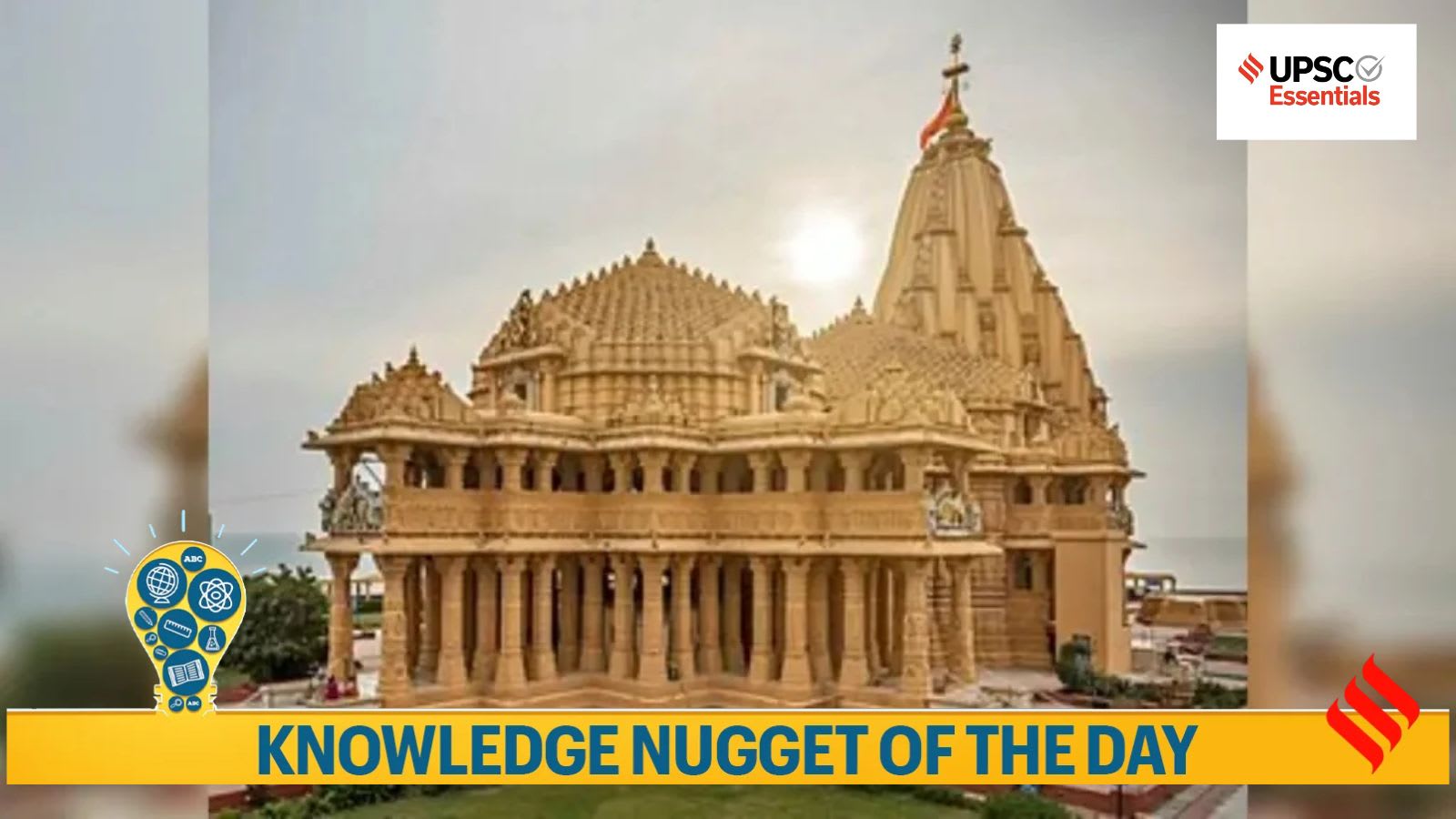
The Gujarat High Court has reinstated a ban on the sale and distribution of non-vegetarian food near the Somnath Temple. This follows an urgent appeal by the state government, effectively pausing a brief period where the restrictions had been lifted.
The Judicial Conflict Over Somnath Temple Regulations
The recent legal developments surrounding the Somnath Temple highlight a complex intersection between secular governance, religious sentiment, and public administrative authority in India. On October 30, the Gujarat High Court initially issued a ruling that struck down long-standing restrictions on the sale, storage, and preparation of non-vegetarian food within a 500-metre radius of the temple. This decision, prompted by petitions from six local restaurant owners, sought to challenge the administrative boundaries placed on commercial activities in the proximity of a significant religious site.
The Rapid Reversal of Judicial Orders
The legal landscape shifted dramatically within a mere four-hour window. Following the initial decision by a single judge, the Gujarat government moved quickly to file an urgent appeal. A Division Bench of the High Court subsequently stayed the previous order, effectively restoring the ban on non-vegetarian food in the specified zones. This rapid sequence of events underscores the sensitivity of the issue and the government's commitment to maintaining the existing status quo around religious precincts.
Contextualizing the Administrative Ban
To understand the significance of this event, one must consider the historical and cultural weight carried by the Somnath Temple. As one of the most prominent religious landmarks in India, its management often involves balancing the interests of local businesses, the sentiments of the visiting faithful, and state-level policy. The 500-metre restriction is not merely a zoning regulation; it is an expression of the state's role in preserving the sanctity of religious sites through controlled commercial environments.
Implications for Religious Tourism and Zoning
The tension between the rights of business owners to operate freely and the state's prerogative to enforce restrictions near religious sites is a recurring theme in Indian jurisprudence. By challenging the ban, the restaurant owners brought to the forefront questions about the reach of administrative power and the definition of a 'religious zone.' The state government's swift intervention suggests that such restrictions are viewed as essential for maintaining public order and cultural decorum in high-traffic pilgrimage areas.
Broader Trends in Indian Governance
This case serves as a microcosm for broader trends regarding the regulation of public spaces in India. As temple tourism continues to grow, the pressure to maintain specific cultural environments around these sites often leads to friction between stakeholders. Future judicial reviews will likely need to balance individual commercial liberties against the state's authority to protect the character of religious institutions, ensuring that legal precedents remain consistent with constitutional rights while respecting local customs.
Conclusion
In summary, the temporary lifting and subsequent reinstatement of the food ban near Somnath Temple demonstrate the volatility of legal disputes involving religious geography. While the immediate outcome favors the restoration of the ban, the underlying legal challenge brought by the restaurant owners ensures that the debate over the regulation of commercial activities in proximity to religious landmarks remains a pertinent issue in current Indian administrative and judicial discourse.