Congress MP Pawan Khera visits Sonam Wangchuk, slams ‘insensitive’ Centre
Source Entity
The Indian Express
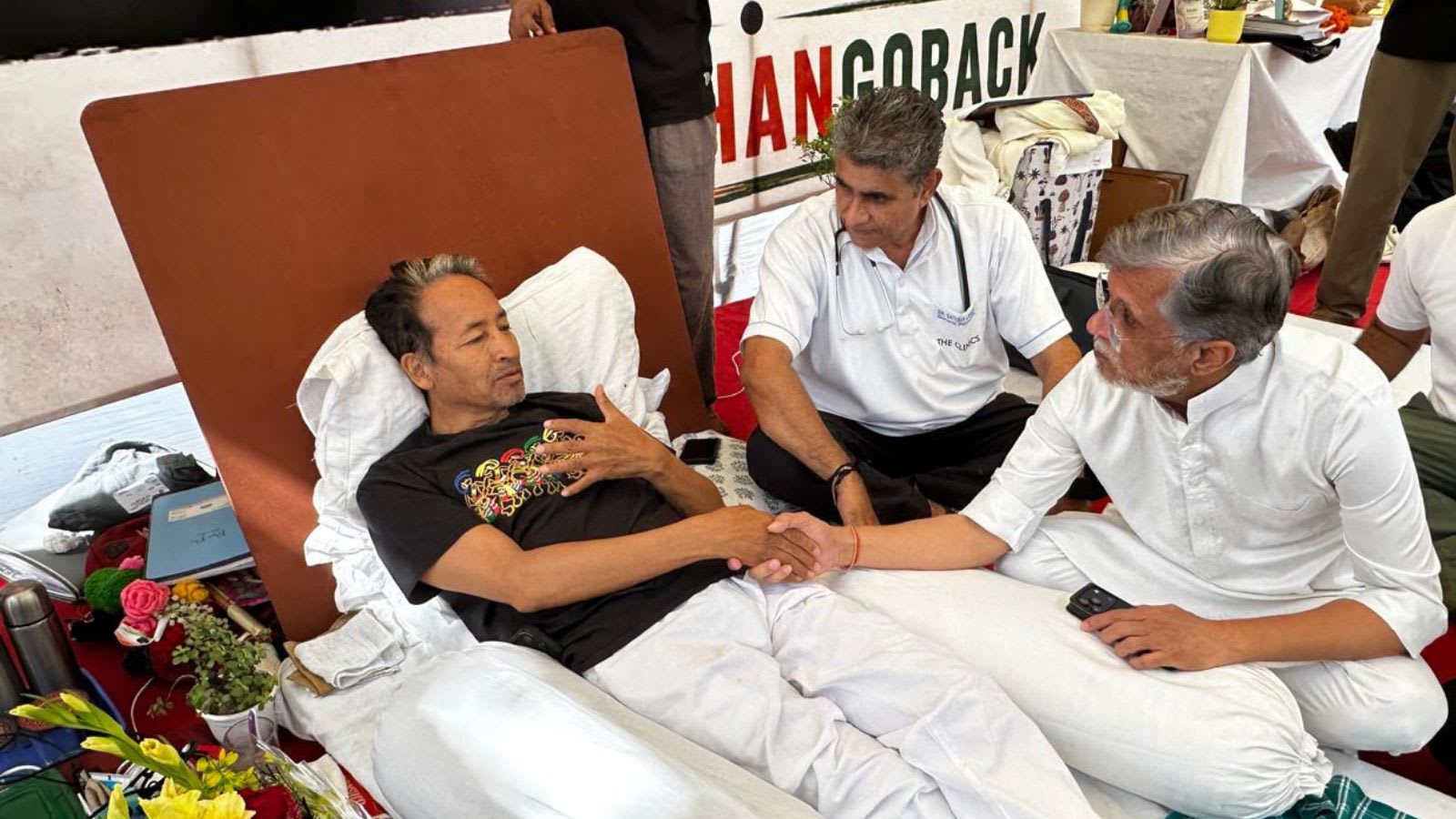
Activist Sonam Wangchuk and AISA student leaders are in critical condition after a 20-day hunger strike at Jantar Mantar. Despite medical warnings of potential organ failure, the protesters refuse to end their fast before the scheduled July 20 Parliament march.
The Escalating Hunger Strike at Jantar Mantar
The ongoing protest at Jantar Mantar has reached a critical inflection point as climate activist and educator Sonam Wangchuk, alongside three student activists from the All India Students' Association (AISA), enters the third week of an indefinite hunger strike. The protest, which has drawn national attention, centers on demands for government accountability and systemic reform. As of mid-July 2026, the physical toll on the participants has become severe, with medical professionals issuing urgent warnings regarding the long-term health implications of such prolonged fasting.
Medical Implications and Physical Decline
The medical data surrounding the protesters is alarming. Sonam Wangchuk has reportedly lost over 9.5 kg, with doctors noting that his body has begun to consume muscle tissue, raising the specter of impending organ failure. Similarly, AISA activists Neha, Manish, and Aameen are facing a high-risk situation, with Neha specifically showing signs of dangerous fluctuations in blood sugar levels. Medical practitioners at the site have emphasized that the situation could turn critical at any moment, necessitating the Delhi High Court’s intervention to order the Union and Delhi governments to ensure constant health monitoring.
The Politics of Protest: The Cockroach Janta Party
The protests are being conducted under the banner of the newly formed 'Cockroach Janta Party' (CJP). This movement has utilized the hunger strike as a vehicle to challenge the current administration, with AISA leaders specifically calling for the resignation of Union Education Minister Dharmendra Pradhan. The demands are rooted in frustration over recent exam leaks and perceived administrative irregularities, which the activists argue reflect a deeper 'hunger for power' within the government.
Strategic Objectives and the July 20 Deadline
Central to the resolve of the protesters is the upcoming date of July 20, which coincides with the commencement of the monsoon session of Parliament. Both Wangchuk and the AISA activists have expressed a determination to remain alive and active until this date, viewing it as a pivotal moment for their cause. The CJP has organized a planned march to Parliament on this day, intending to leverage the visibility of the protest to force a governmental response to their demands.
Broader Implications and Political Support
The protest has transcended local student activism, drawing support from various political figures, including AAP national convenor Arvind Kejriwal, who visited the site to express solidarity. This indicates a growing consolidation of opposition sentiment surrounding the issues raised by the CJP. The government's perceived lack of response has been characterized by activists as 'heartless,' further deepening the divide between the protesters and the administration.
Conclusion: A Standoff of Will
As the July 20 deadline approaches, the situation at Jantar Mantar remains a high-stakes standoff. The resilience of the activists, contrasted against the severe warnings of medical professionals, suggests that the protest is unlikely to dissipate without a significant political intervention. The outcome of the scheduled march to Parliament will likely serve as a litmus test for the effectiveness of hunger strikes as a tool for political advocacy in the current national climate.
Multiple Citing Sources