Why was Wangchuk forcibly taken to hospital by Delhi police? CJP reveals the truth, police says...
Source Entity
Latest News: Today's Latest News Headlines from India & World | Hindustan Times | Hindustan Times
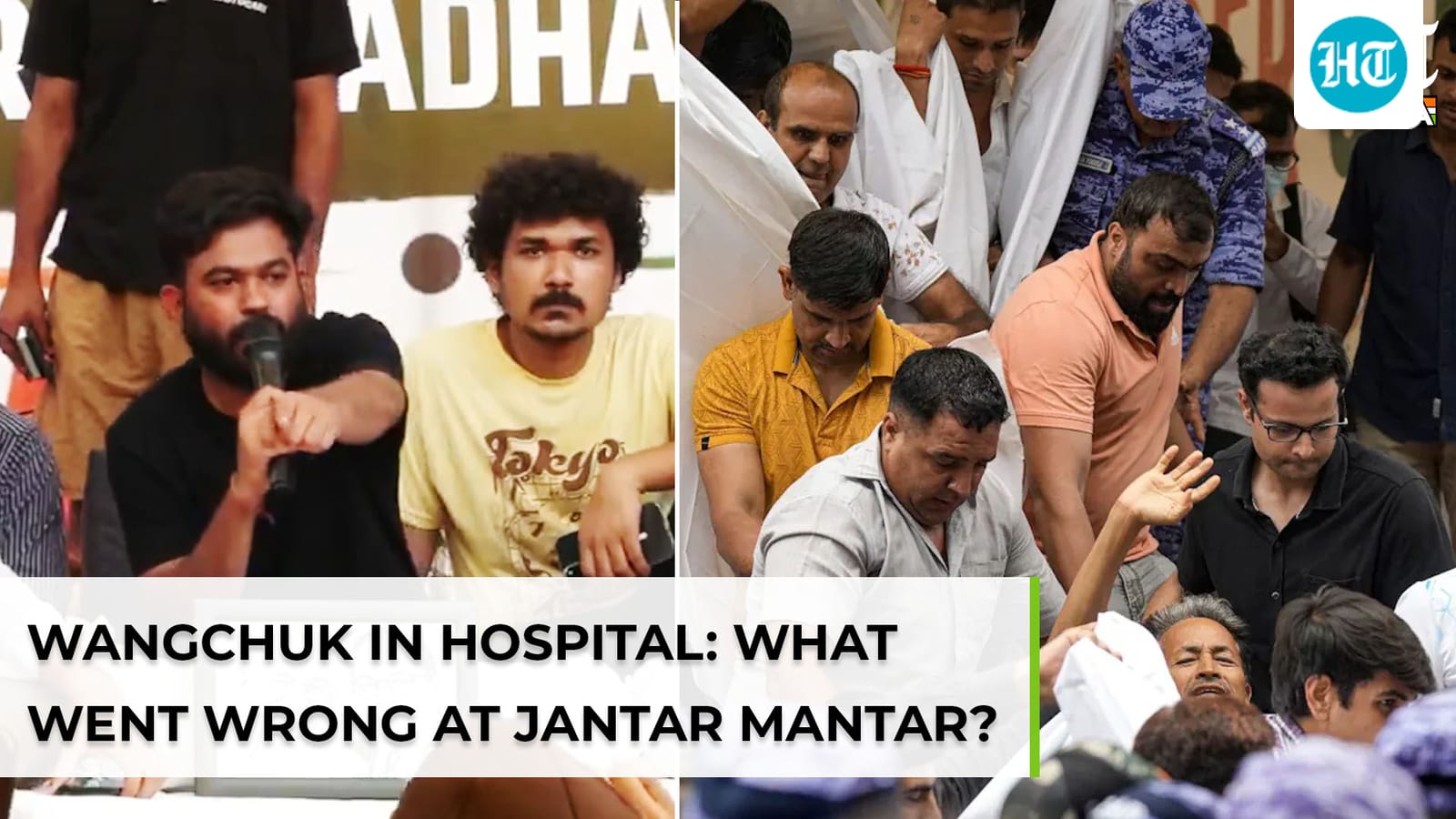
Climate activist Sonam Wangchuk has been shifted to Safdarjung Hospital by Delhi Police after his hunger strike entered its 21st day. The hospitalization follows Delhi High Court orders due to his deteriorating health condition.
Medical Intervention in High-Stakes Activism: The Hospitalization of Sonam Wangchuk
On July 18, 2026, the prolonged protest led by educator and climate activist Sonam Wangchuk reached a critical turning point. After an indefinite hunger strike spanning over 20 days, Mr. Wangchuk's health deteriorated to a point that necessitated urgent medical intervention. Consequently, the Delhi Police shifted him to Safdarjung Hospital to ensure he received essential medical care. This move was not merely an administrative decision but was executed under the specific orders of the Delhi High Court and based on expert medical advice, highlighting the legal complexities that arise when a high-profile activist's life is put at risk during a public demonstration.
The Criticality of Health and Consent
As the strike entered its 21st day, the physiological toll of prolonged fasting became evident. While reports indicate that Mr. Wangchuk remains conscious and his vitals are currently stable, the urgency of the hospitalization underscores the severity of his condition. A significant point of tension has emerged regarding his medical treatment; his wife, Gitanjali J. Angmo, has explicitly stated that no medication—whether oral or intravenous—should be administered without the express consent of the family and the doctors who have been monitoring his health throughout the 20-day period. This insistence on consent reflects a deep distrust or a desire for autonomy over the activist's physical state amidst state-mandated medical care.
Civil Unrest and the Role of the 'Cockroach Janta Party'
The environment surrounding the protest site at Jantar Mantar has been marked by volatility. The emergence of the 'Cockroach Janta Party' adds a unique socio-political layer to the event, transitioning from social media satire into a catalyst for one of India's significant protests. However, this mobilization has been met with friction; the party has accused the Delhi Police of using force, specifically alleging that students at the protest site were lathi-charged. These allegations suggest a broader pattern of confrontation between the youth-led support base of the activist and the law enforcement agencies tasked with maintaining order in the capital.
Legal Mandates and State Responsibility
The intervention by the Delhi High Court serves as a pivotal legal anchor in this narrative. By ordering the shift to Safdarjung Hospital, the judiciary stepped in to balance the fundamental right to protest with the state's obligation to preserve life. This dynamic often surfaces in Indian political history during hunger strikes, where the state must navigate the fine line between allowing democratic expression and preventing a fatality that could trigger widespread civil unrest. The involvement of the New Delhi DCP’s office in coordinating the move confirms that the operation was a synchronized effort between the police and the judiciary.
Broader Implications and Future Outlook
The forced hospitalization of a leader during a hunger strike often acts as a double-edged sword for a movement. While it ensures the survival of the activist, it can also be perceived by supporters as an attempt by the state to neutralize the momentum of the protest. Given the stability of his vitals, the focus will now shift toward whether the medical intervention leads to a cessation of the strike or if the protest continues through other representatives. The role of digital satire, as seen with the Cockroach Janta Party, indicates a shift in how modern protests are organized and sustained in India, blending irony with earnest political demand.
Summary of Current Status
In conclusion, Sonam Wangchuk's transition from the protest site to Safdarjung Hospital marks a shift from a voluntary fast to a state-managed medical recovery. While the activist is stable, the atmosphere remains charged due to allegations of police brutality against students and the strict conditions set by the family regarding his treatment. The event stands as a testament to the intersection of climate activism, judicial oversight, and the evolving nature of public dissent in New Delhi.
Multiple Citing Sources
Verification Required?