From ice stupas to hunger strikes: The journey of Sonam Wangchuk
Source Entity
India Latest News: Top National Headlines Today & Breaking News | The Hindu
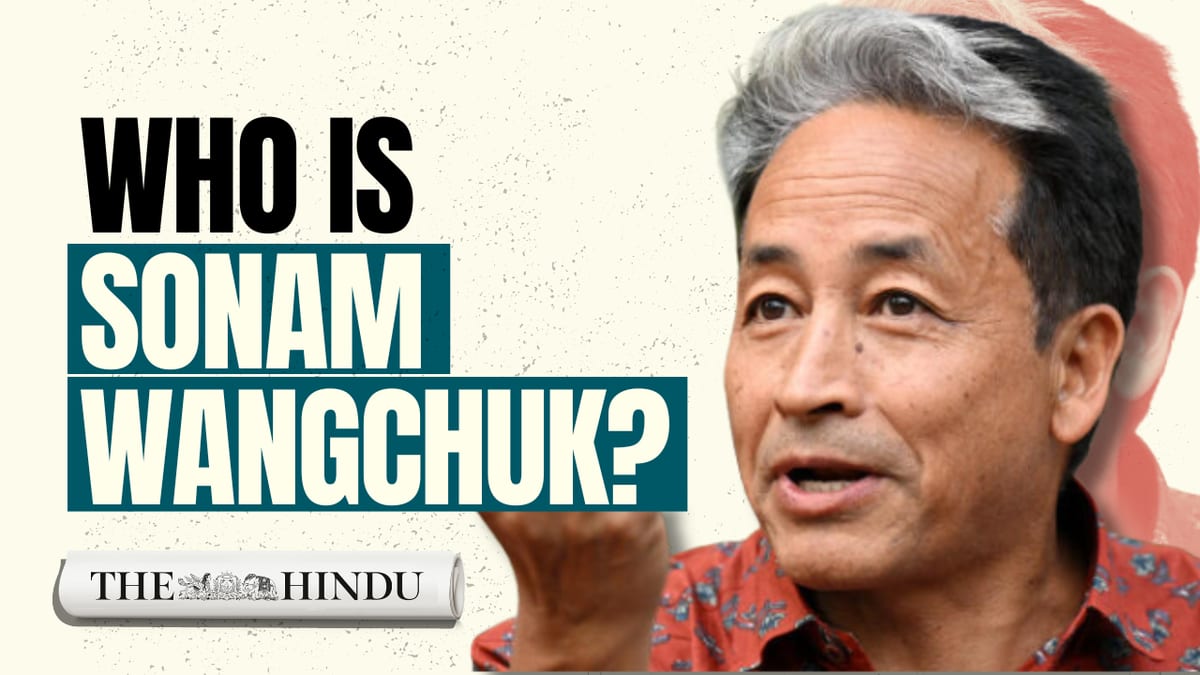
Climate activist Sonam Wangchuk is on a prolonged hunger strike at Jantar Mantar, sparking national concern. Amidst this, actor Aamir Khan has clarified that his character in '3 Idiots' was not based on Wangchuk, drawing criticism from political figures like Manoj Jha.
The Intersection of Celebrity Influence and Civil Activism
Climate activist and educator Sonam Wangchuk has currently entered a critical phase of his indefinite hunger strike at Jantar Mantar, marking his 20th day of protest. His movement, which highlights concerns regarding alleged irregularities in the NEET examination and broader issues related to Ladakh’s constitutional safeguards, has garnered significant attention from the public and prominent cultural figures. The protest serves as a focal point for current discussions on the role of civil dissent in contemporary India, emphasizing the pressure placed on the Union government to initiate a meaningful dialogue with the activist.
The '3 Idiots' Connection: A Cultural Myth Debunked
For over a decade, a widely held belief among the Indian public has been that Sonam Wangchuk served as the primary inspiration for the character 'Rancho' (Phunsukh Wangdu) in the 2009 blockbuster 3 Idiots. However, during a recent event at the London Indian Film Festival, actor Aamir Khan explicitly addressed this, stating that neither he nor the film’s writers, Rajkumar Hirani and Abhijat Joshi, were aware of Wangchuk at the time the film was developed. This clarification has sparked a new layer of public discourse, separating the cinematic myth from the reality of Wangchuk’s actual life work.
Political Reactions and the Weight of Public Stance
Following Aamir Khan’s public clarification, Rashtriya Janata Dal (RJD) MP Manoj Jha questioned the timing of the actor's statement. Jha suggested that the denial might reflect the difficulty of maintaining a firm stance against the state in the current political climate. This political interpretation underscores how celebrity statements are often scrutinized through the lens of political alignment, with critics and observers debating whether such clarifications are intended to distance public figures from controversial activist movements.
Solidarity Amidst Deteriorating Health
Despite the controversy over the character inspiration, there remains a unified consensus among many public figures regarding the urgency of Wangchuk’s health. Filmmaker Kiran Rao, among other academics and artists, has signed an open letter calling for the government to engage with Wangchuk. Rao, specifically, has expressed deep concern over the activist's physical condition, mirroring the sentiments of Aamir Khan himself, who, despite the denial of the character connection, has publicly stated his desire for Wangchuk to end his fast safely.
Beyond Cinema: The Scope of Wangchuk's Activism
It is essential to recognize that Sonam Wangchuk’s influence persists independently of his association with Bollywood. As an engineer and educator, his contributions—ranging from his innovative 'Ice Stupa' project to his leadership in Ladakh’s movement for constitutional protections—have cemented his status as a significant public voice. His current hunger strike is an extension of this long-standing commitment to climate action and regional reform, moving well beyond the pop-culture narrative that initially brought him wider national recognition.
Future Implications for Activism and Governance
As the hunger strike continues, the situation poses a test for the government's approach to public dissent. The government has signaled a willingness to provide medical assistance based on clinical reports, yet the demand for a broader policy dialogue remains unmet. The intersection of this high-profile protest with celebrity commentary highlights a broader trend where the lines between cultural influence, political accountability, and social activism are increasingly blurred, setting a precedent for how future civic movements might be navigated in the public eye.
Multiple Citing Sources
Verification Required?