AI cheating scandal rattles South Korea as annual college exam looms
Source Entity
Agencies
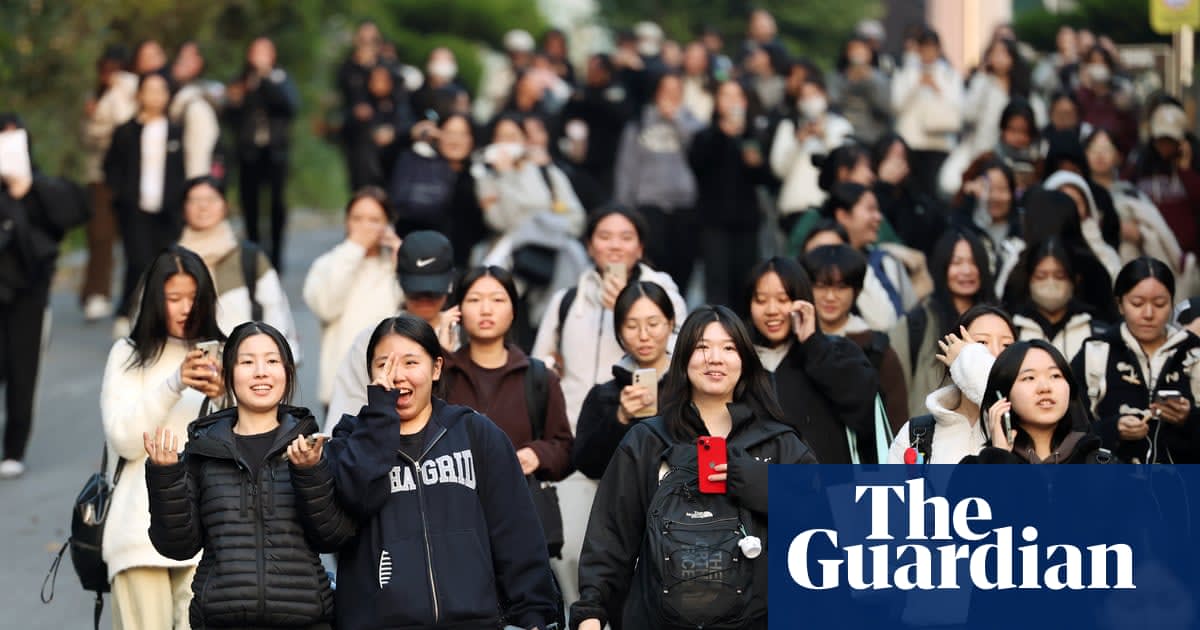
A top-scoring candidate in South Korea's tax accountancy exam has confessed to using generative AI and hidden cameras to cheat. This scandal has heightened security concerns ahead of the nation's high-stakes annual college entrance exam.
The Integrity Crisis: South Korea's Tax Exam Scandal
South Korea has been rocked by a significant academic integrity scandal following the confession of Han Won-seok, a 34-year-old candidate who achieved the top score on the nation's certified tax accountancy exam. Han admitted to utilizing a sophisticated combination of hidden miniature cameras, mobile devices, and generative AI to secure near-perfect marks. Scoring 397.5 out of 400 points in the first round—missing only a single question out of 160—Han’s performance initially drew intense skepticism from the public and fellow examinees, eventually leading to his admission on the YouTube channel of his legal counsel, Lee Don-ho.
The Mechanics of the Deception
The methodology employed by Han highlights a growing vulnerability in high-stakes testing environments. By leveraging hidden camera technology to transmit exam questions in real-time, he was able to feed data into generative AI tools to produce correct answers. This bypasses traditional proctoring methods that focus on physical notes or human communication, demonstrating the evolving threat that advanced technology poses to standardized testing. Han’s confession to both the Seoul Metropolitan Police Agency and the public confirms that his results were not the product of academic merit, but rather an orchestrated technological breach.
Cultural Context and High-Stakes Testing
In South Korea, standardized national tests are not merely academic hurdles; they are fundamental determinants of career trajectories and social mobility. The immense pressure to succeed in these exams creates a hyper-competitive environment where the temptation to manipulate results is significant. The tax accountancy exam is a gateway to a prestigious professional life, making the integrity of the testing process a matter of national importance. When the system is compromised, it undermines the public trust in the professional credentials of those tasked with managing the nation's fiscal affairs.
Implications for the Suneung
The timing of this revelation is particularly critical, as it coincides with the approach of South Korea’s annual college entrance exam, known as the Suneung. This exam is a massive logistical undertaking that effectively pauses parts of the country, with government officials often rescheduling flights and traffic patterns to ensure silence and punctuality. The scandal involving Han has forced organizers to heighten security protocols, as the incident proves that existing countermeasures are insufficient to combat the integration of AI and miniaturized hardware.
Future Trends in Exam Security
As generative AI becomes more sophisticated and hardware more discreet, educational institutions face an arms race. Future testing environments will likely require more invasive surveillance, such as signal-jamming technology, more rigorous physical screening, and potentially a shift toward proctored, closed-network digital environments that prevent any external communication. The case of Han Won-seok serves as a cautionary tale for global education systems, signaling that the era of traditional proctoring is rapidly coming to an end.
Conclusion
The confession of Han Won-seok is a stark reminder of the fragility of modern examination systems. While the immediate focus remains on the legal repercussions for the individual, the broader consequence is a necessary national reckoning regarding how South Korea safeguards its meritocratic ideals in an age of artificial intelligence. Moving forward, the balance between maintaining a fair, competitive environment and implementing intrusive security measures will remain a dominant challenge for the nation's educators and policymakers.