SpaceX eyes tower catch for next Starship after auspicious end to 13th flight
Source Entity
Stephen Clark
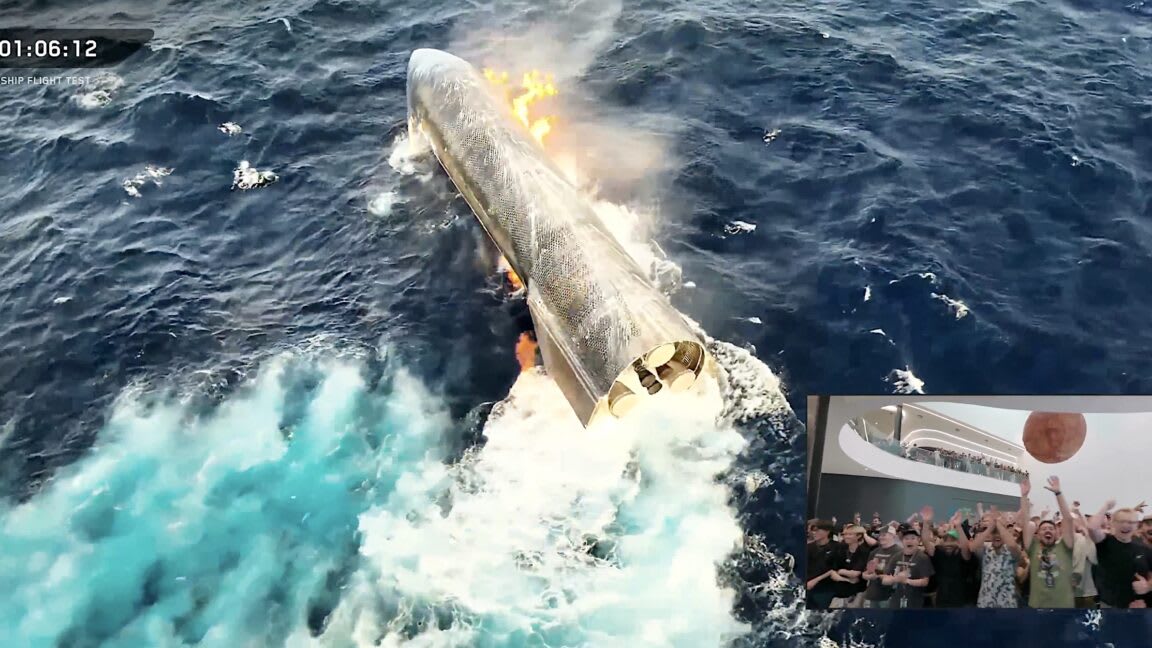
SpaceX successfully completed its 13th Starship test flight with an intact splashdown in the Indian Ocean. The company now plans to attempt a tower catch at the launch pad for the upcoming flight.
A Milestone in Reusability: Analyzing SpaceX's Starship Success
SpaceX has achieved a significant milestone in its ambitious Starship development program following the successful completion of its 13th full-scale test flight. By sending the massive vehicle halfway around the world from South Texas to a precise, intact splashdown in the Indian Ocean, the company has demonstrated unprecedented control over the craft's reentry and terminal descent phases. This success marks a stark departure from previous test flights, which typically concluded in violent conflagrations upon water impact, and provides the engineering team with a pristine vehicle to study.
Advancing Heat Shield Technology
One of the most critical aspects of this flight was the performance of the thermal protection system. The Starship is shielded by over 18,000 ceramic tiles designed to withstand the extreme temperatures of atmospheric reentry. By maintaining the vehicle in a buoyant, stable state post-splashdown, SpaceX engineers were able to utilize drones to conduct a high-fidelity inspection of the heat shield’s condition. This data is invaluable for refining the material composition and mounting techniques required to ensure the ship can survive multiple orbital reentries without significant degradation.
The Shift Toward Tower Catches
Building on the success of this gentle landing, SpaceX has signaled its intent to attempt a tower catch at the launch site during the next flight. This transition from water-based splashdowns to mechanical capture represents the core of SpaceX's rapid-reusability philosophy. By catching the vehicle directly back at the launch mount, the company aims to minimize the logistical burden of ocean recovery, thereby drastically reducing the turnaround time between missions and lowering the overall cost-per-kilogram of payload delivered to orbit.
Engineering Precision and Operational Maturity
Historically, the Starship program has operated on an iterative 'fail-fast' methodology, where each flight provided data to correct previous failures. The fact that this 13th flight resulted in an intact vehicle floating west of Australia suggests that the platform is reaching a level of operational maturity. The precise control demonstrated during the descent indicates that the guidance, navigation, and control systems have been refined to handle the complex aerodynamic stresses of trans-oceanic transit.
Broader Implications for Space Exploration
The successful recovery of the Starship airframe has profound implications for the future of space exploration. As SpaceX prepares for more complex missions, including lunar and Martian trajectories, the ability to land and reuse hardware with high reliability becomes the primary bottleneck to overcome. The transition to a tower-catch recovery system is not merely an engineering convenience; it is a prerequisite for the high-frequency launch cadence required to build sustainable infrastructure in space.
Conclusion: The Road Ahead
In summary, the 13th flight of Starship serves as a validation of the current design and a bridge to the next generation of recovery operations. By moving away from destructive testing and toward controlled mechanical retrieval, SpaceX is setting the stage for a new era of space flight. The data gathered from the tiles and the structural integrity of the stainless steel airframe will undoubtedly dictate the parameters for the upcoming attempt to catch the booster or ship at the pad, marking a pivotal moment in aerospace history.