SpaceX launches 13th Starship test flight, deploys 20 next-generation Starlink satellites
Source Entity
TOI WORLD DESK
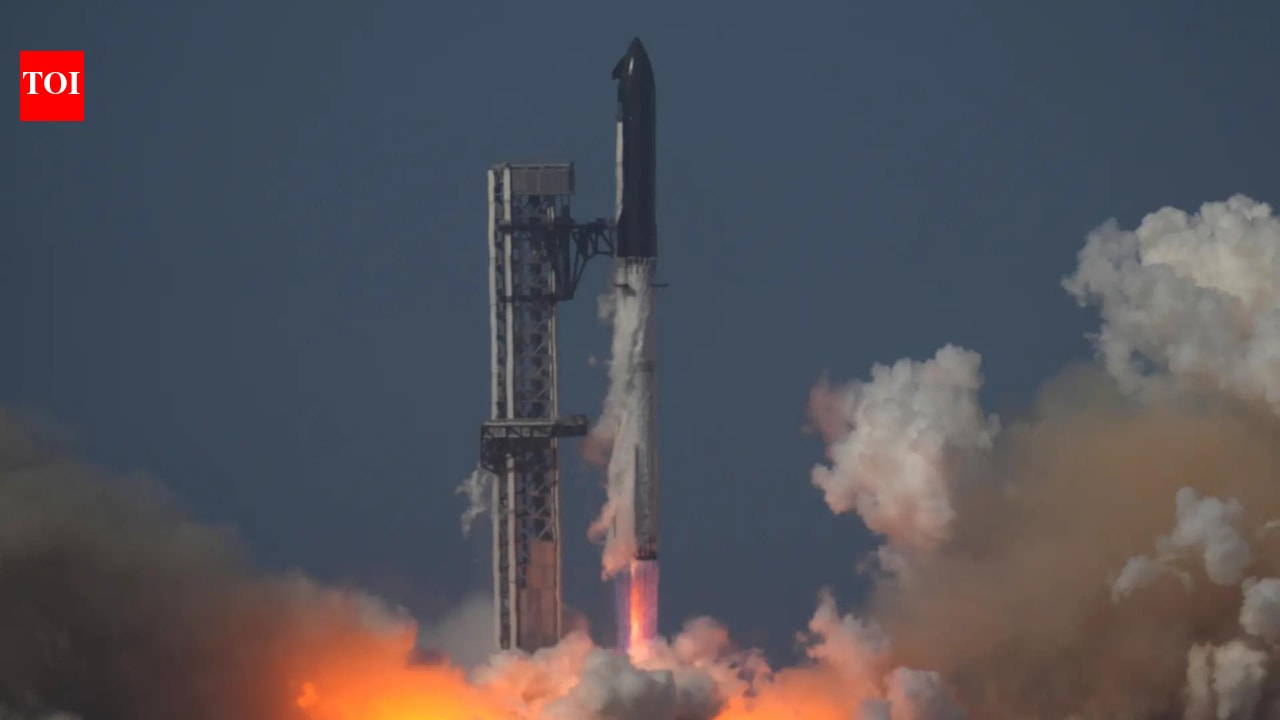
SpaceX successfully completed the 13th test flight of its Starship rocket from Starbase, Texas, deploying 20 next-generation Starlink satellites. The mission confirms the reliability of the upgraded Starship V3 following a previously aborted launch attempt.
SpaceX Achieves Milestone with 13th Starship Test Flight
SpaceX has successfully executed the 13th test flight of its Starship launch vehicle, marking a significant advancement in the company's ambitious aerospace roadmap. Launching from the Starbase facility in southern Texas, the 407-foot rocket—recognized as the world's largest and most powerful launch vehicle—ascended to orbit carrying 20 next-generation Starlink satellites. This mission serves as a critical proof-of-concept for the Starship V3 design, demonstrating the company's ability to iterate rapidly through complex engineering challenges.
Overcoming Technical Hurdles
The success of this mission follows a period of intense troubleshooting. An earlier launch attempt was scrubbed due to a failure in the first-stage booster, where six engines failed to ignite during the pre-launch sequence. SpaceX’s engineering team performed a rapid replacement of the faulty hardware, showcasing the agility and modularity of their Starbase operations. This successful turnaround highlights the company’s 'fail-fast' philosophy, which prioritizes real-world data collection over prolonged ground-based testing.
Advancing Starlink Infrastructure
Beyond demonstrating the rocket’s raw power, this flight served a functional utility by deploying 20 next-generation Starlink satellites. By integrating payload delivery into its test regime, SpaceX is effectively subsidizing its research and development costs while simultaneously expanding its global satellite internet constellation. These next-generation satellites are integral to increasing the bandwidth and lowering the latency of the Starlink network, which is essential for competing in the global telecommunications market.
Operational Success and Recovery
The mission profile included the successful splashing down of the first-stage booster in the Gulf of Mexico and the completion of the spacecraft's planned re-entry. The ability to recover the booster is a cornerstone of SpaceX's long-term economic model, which relies on the rapid reuse of launch infrastructure to lower the cost-per-kilogram of orbital delivery. This flight confirms that the structural and thermal protections of the Starship V3 are performing as intended during the high-stress phases of flight.
Future Implications for Lunar and Martian Exploration
This test flight is a vital stepping stone toward NASA’s Artemis program and SpaceX’s own long-term objectives for Mars colonization. By consistently launching the world's most powerful vehicle, SpaceX is refining the precise maneuvers required for heavy-lift deep-space missions. As the frequency of these flights increases, the data gathered will be foundational in certifying Starship for human-rated missions, eventually transitioning from cargo delivery to crewed exploration of the Moon and beyond.
Conclusion
In summary, the 13th test flight of the Starship rocket represents a triumph of modern aerospace engineering. By successfully navigating previous technical setbacks and achieving its mission objectives, SpaceX has reinforced its position at the forefront of the commercial space industry. The integration of satellite deployment and robust re-entry testing signals that Starship is evolving from a prototype into a reliable workhorse for the next era of orbital and interplanetary logistics.
Multiple Citing Sources