Spain's PM Sanchez calls snap election after housing crisis protests
Source Entity
US Top News and Analysis
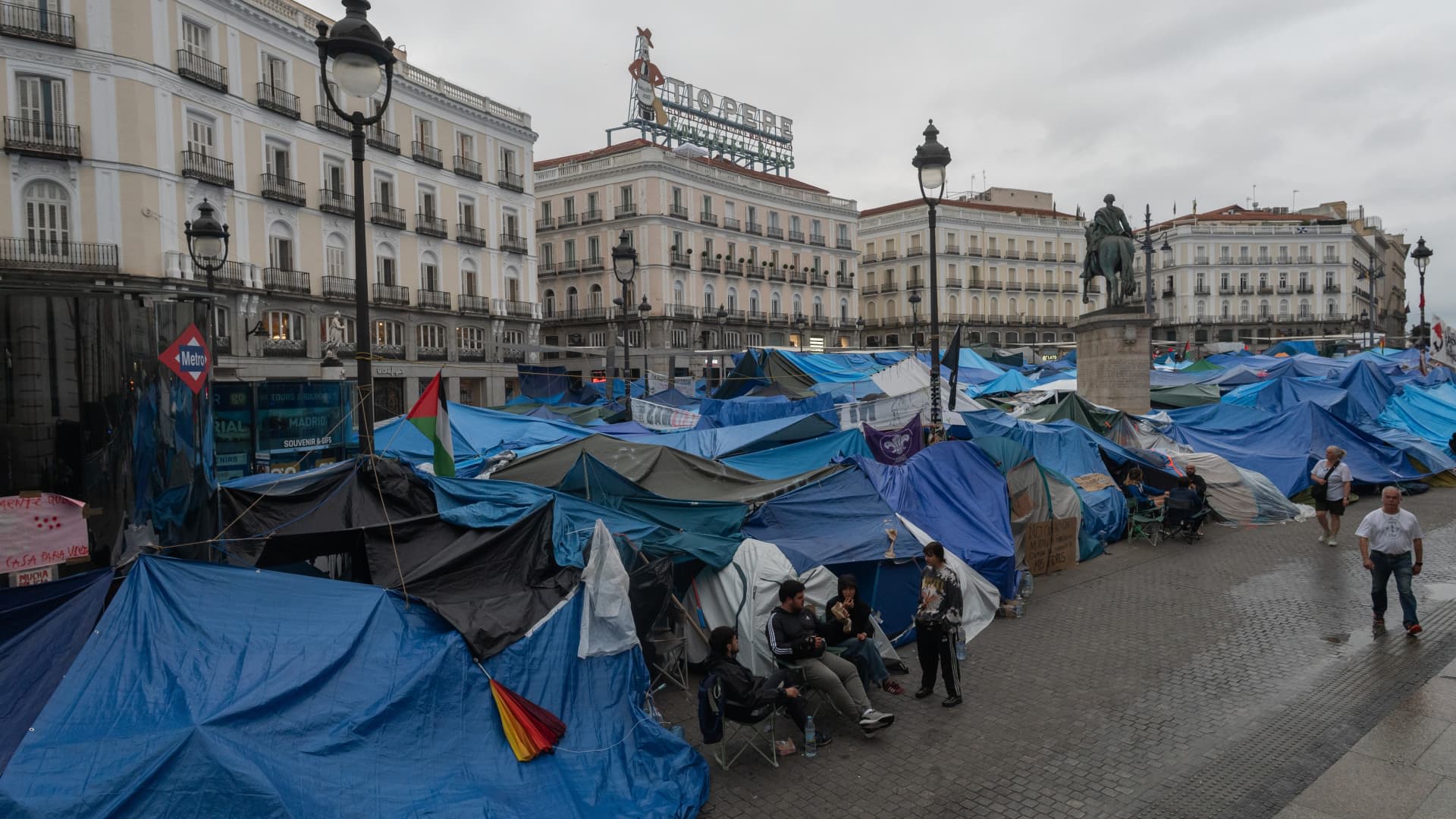
Spanish Prime Minister Pedro Sánchez has called a snap general election for November 29 following the failure of his government's housing reforms in Congress. The decision follows massive protests over housing speculation and the controversial eviction of an elderly resident, amid broader political instability.
The Collapse of Consensus: Spain’s Path to Snap Elections
Spain is facing a period of profound political turbulence following Prime Minister Pedro Sánchez’s decision to call a snap general election for November 29. This maneuver follows the stinging defeat of his government’s proposed housing reforms in the Spanish Congress, a legislative failure that has left his minority coalition government in a precarious position. The catalyst for this instability traces back to a growing national outcry over housing speculation and the persistent lack of affordable shelter, which has pushed the electorate to the breaking point.
The Human Face of a National Crisis
The tension on the streets of Madrid has been building for weeks, culminating in a protest camp at the iconic Puerta del Sol. More than 1,000 tents have been erected in front of the Presidency of the Community of Madrid, serving as a visceral symbol of public anger. The movement gained significant momentum following the September eviction of an 87-year-old disabled woman, who was removed from a home she had occupied for 70 years. This incident served as a potent rallying cry, drawing tens of thousands of citizens into the streets and leading to sporadic clashes with law enforcement.
Parliamentary Defeat and Political Fragility
The legislative defeat on Friday was the final blow to a government already operating on thin ice. Prime Minister Sánchez’s Socialist party, which leads a fragile left-wing coalition formed only in November 2023, struggled to secure the necessary consensus to implement measures aimed at cooling the housing market. The inability to pass these reforms highlighted the limitations of his minority government and invited immediate scrutiny from political opponents who argue that the administration has lost its mandate to govern effectively.
The Shadow of Corruption and Opposition Gains
Beyond the housing crisis, the administration is currently besieged by mounting pressure from corruption scandals involving individuals within the Prime Minister's inner circle. These allegations have further eroded public trust, providing ammunition to the conservative People’s Party, which currently leads in the polls. Analysts expect the People’s Party to seek a coalition with the far-right Vox party, a prospect that has defined the central narrative of the upcoming election cycle as a battle for the soul of Spanish governance.
A Divided Future: The Ideological Stakes
In his announcement, Prime Minister Sánchez framed the upcoming election as a defensive stand against what he termed an "extreme-right wave" currently sweeping through various global political landscapes. By positioning Spain as a beacon of "peace, feminism, and prosperity," he is attempting to mobilize his base against the prospect of a conservative-populist alliance. The result of the November 29 vote will likely determine whether Spain continues its current left-wing trajectory or shifts toward a more nationalist and conservative coalition, effectively ending the experiment of the current coalition government.