Ugly brawl breaks out between Argentina and Spain players after World Cup final
Source Entity
The Indian Express
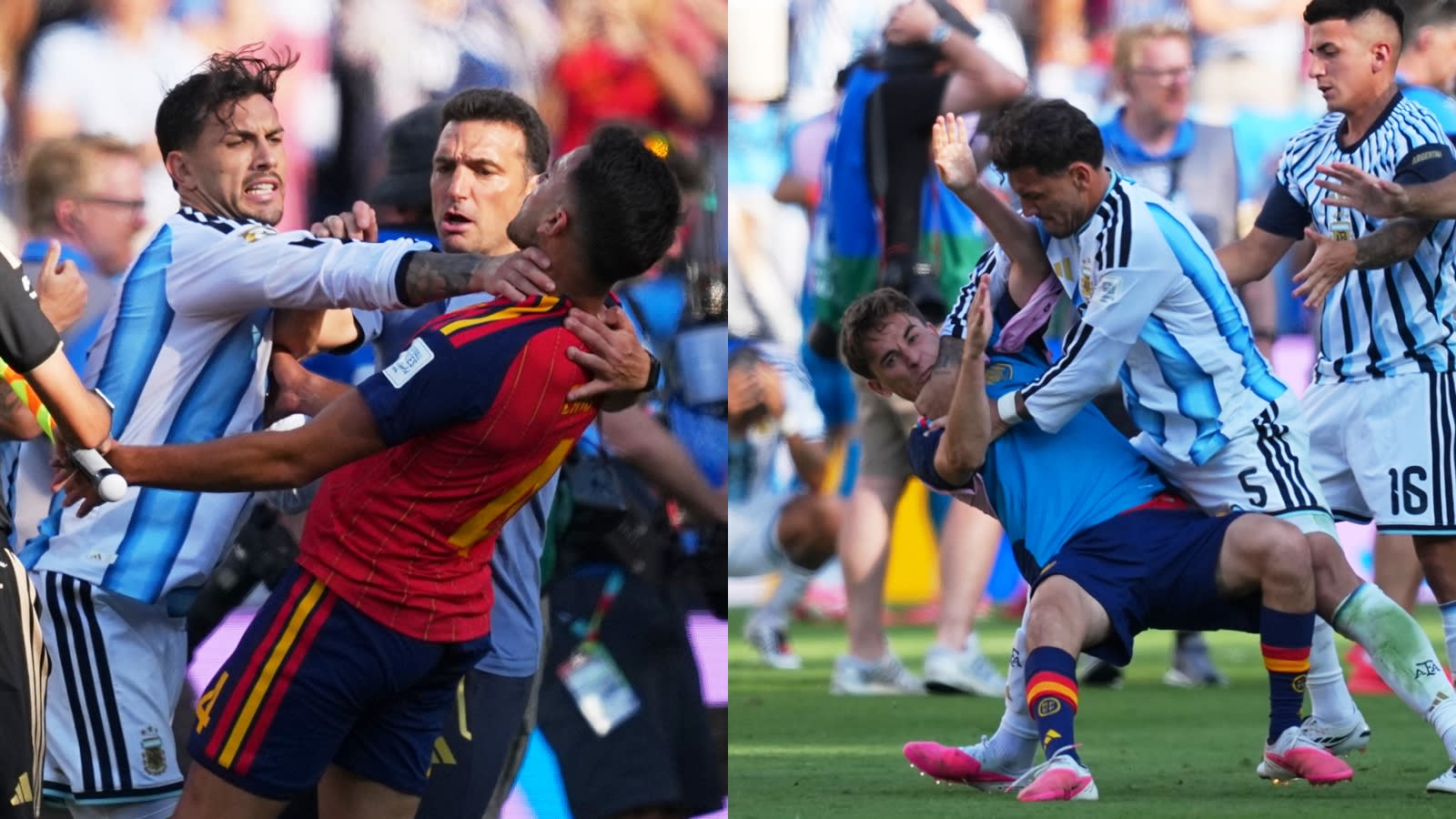
Ferran Torres scored an extra-time goal to lead Spain to a 1-0 victory over Argentina in the World Cup final. The match was marked by high tension and a red card for Argentina's Enzo Fernandez.
A Historic Triumph: Spain Claims Second World Cup Title
In a dramatic conclusion to the tournament, Spain has secured its second World Cup title, defeating reigning champions Argentina in a tense, high-stakes final. The match, which remained scoreless through regulation time, was decided by a decisive strike from Ferran Torres during the second half of extra time. This victory marks a significant milestone for Spanish football, echoing their previous championship win in 2010 against the Netherlands.
The Turning Point and Tactical Discipline
The final was characterized by a distinct lack of offensive rhythm from the Argentine squad. Despite the presence of global icon Lionel Messi, Argentina struggled to generate meaningful pressure, failing to mount a consistent challenge against the Spanish defense. Analysts noted that Messi had minimal impact throughout the match, contributing to a one-sided narrative where Spain largely dictated the flow of play despite the narrow scoreline.
A Bad-Tempered Finale
The intensity of the match often spilled over into aggression, resulting in a "bad-tempered" encounter. The turning point occurred during second-half stoppage time when Argentina’s Enzo Fernandez was issued a second yellow card for a reckless challenge on Spain defender Pau Cubarsi. The collision, which saw the defender sent cartwheeling into the air, left Argentina with only 10 men for the remainder of the extra-time period, significantly altering the tactical landscape.
The Decisive Moment
With Argentina reduced to ten men, the Spanish side capitalized on the numerical advantage. The match remained deadlocked until Ferran Torres, currently playing for Barcelona, found the back of the net in the second half of extra time. His goal not only broke the stalemate but also effectively sealed the trophy for Spain. Furthermore, the match saw a promising opportunity for Lamine Yamal, who nearly extended the lead with a free kick from 22 yards out shortly after play resumed following the red card incident.
Historical Context and Future Implications
This victory cements Spain’s status as a dominant force in modern international football. By securing a second World Cup title, Spain joins an elite group of nations to have lifted the trophy multiple times. For Argentina, the loss represents a difficult end to their reign as world champions. The match highlights the evolving tactical discipline in international play, where defensive rigidity and capitalizing on disciplinary lapses—such as the Fernandez red card—often prove more critical than individual brilliance.
Multiple Citing Sources