What happens to mathematics when AI becomes an oracle?
Source Entity
Jennifer Ouellette
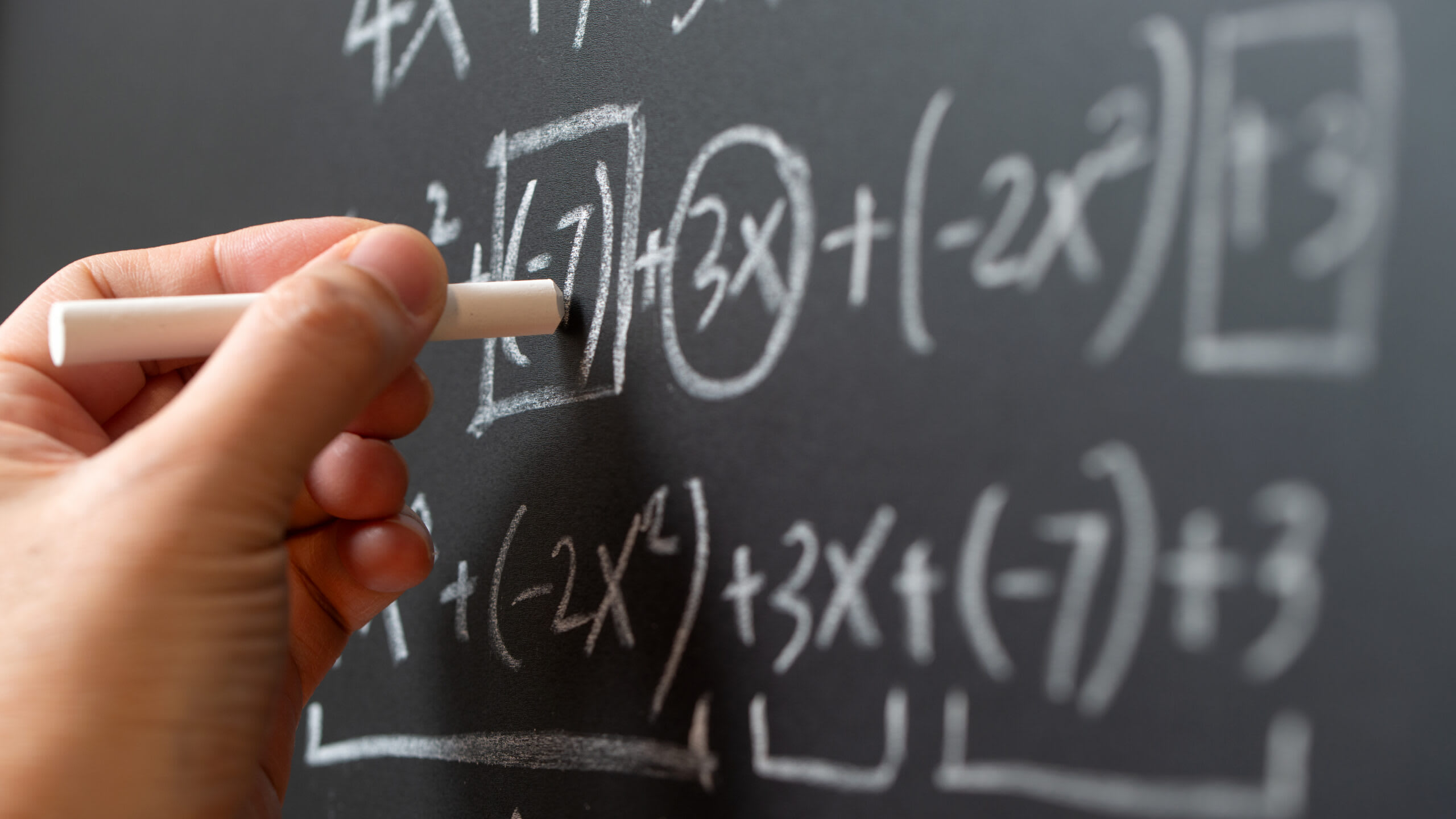
Mathematicians Steven Strogatz and Alex Townsend explore the societal impact of 'big math' in their new book. They examine how AI and emerging computational power are shifting the boundaries between human cognition and machine-driven complexity.
The Expanding Frontier of Computational Mathematics
Mathematics has long served as the silent architecture of modern civilization, underpinning everything from the logistical precision of global package delivery systems to the intricate predictive models used in meteorology. In their latest work, Big Math: The Hidden Codes That Run Our World, mathematicians Steven Strogatz and Alex Townsend argue that we are entering a transformative era. The traditional paradigm of mathematics, which relies on human intuition and logical deduction, is increasingly being augmented—and in some cases superseded—by the sheer computational force of artificial intelligence.
The Shift from Calculation to Oracle
Historically, the rise of digital computing allowed humanity to transcend the limitations of the human brain, enabling us to process numerical datasets of unprecedented scale. However, Strogatz and Townsend suggest that the emergence of large language models and the looming integration of quantum computing represent a qualitative shift. We are moving from a world where math is a tool wielded by experts to a reality where AI functions as an 'oracle,' solving problems with a complexity that human minds can no longer fully parse or verify through traditional step-by-step reasoning.
Historical Context: From Small-Worlds to Big Data
To understand the significance of this shift, one must look at the intellectual trajectory of the authors. Steven Strogatz is a prominent figure in the field of nonlinear dynamics, most notably recognized for his 1998 collaboration with Duncan Watts on the 'small-world' phenomenon. This seminal research revolutionized our understanding of complex networks, providing the mathematical framework for how information and diseases spread. His transition from studying these foundational network dynamics to addressing the existential implications of AI-driven math highlights a natural progression in how we interpret interconnected systems.
The Hidden Codes of Modern Life
'Big Math' is not merely an abstract academic concept; it is the infrastructure of daily life. From the algorithms that curate social media feeds to the medical imaging technologies that detect pathologies invisible to the naked eye, mathematical models are embedded in the fabric of society. Strogatz and Townsend contend that as these systems become more autonomous, the 'hidden codes' governing our world become less transparent. This opacity poses significant challenges for how society maintains oversight and accountability in an era of machine-led discovery.
Adapting to the Algorithmic Future
As we stand on the precipice of a future defined by quantum leaps in processing power, the central question shifts from 'what can we calculate?' to 'how do we interpret the output?' The authors emphasize that adaptation is necessary. We must develop new ways to interface with computational oracles, ensuring that the reliance on machine-generated solutions does not lead to a total loss of mathematical literacy or critical oversight.
Concluding Thoughts on Human Agency
Ultimately, Big Math serves as both a celebration of human ingenuity and a cautionary tale. While the ability to outstrip the cognitive capacity of our own biological hardware is a testament to our progress, the authors remind us that we remain the architects of these systems. As AI continues to evolve, the challenge for the next generation of mathematicians will be to ensure that these powerful tools remain aligned with human values and understandable within the broader context of scientific inquiry.