CJP calls for nationwide stir today, firm on Pradhan’s exit
Source Entity
Latest News: Todays Latest News Headlines from India & World | Hindustan Times | Hindustan Times
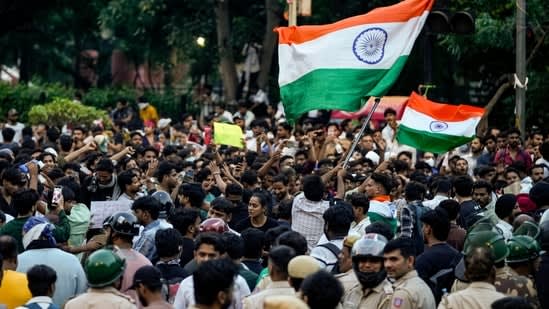
Student organizations are staging widespread protests against alleged examination irregularities and police conduct in Delhi. Simultaneously, activist Sonam Wangchuk's family has expressed concern as he navigates a high-stakes hunger strike.
Growing Unrest Over Examination Integrity
The recent wave of student protests across India, centered around allegations of paper leaks and examination scams, signifies a deepening crisis of confidence in the nation's educational governance. Organizations such as the Naujawan Bharat Sabha (NBS) and the Disha Students’ Organisation have mobilized near key administrative hubs, including the Gandhi statue near the GVMC office, to voice their opposition to the perceived systemic failures of the National Testing Agency (NTA). These demonstrations are not isolated incidents but reflect a broader, nationwide demand for transparency and accountability within the recruitment and testing frameworks that dictate the futures of millions of Indian youth.
The Demand for Ministerial Accountability
Central to the protestors' grievances is the call for the resignation of Union Education Minister Dharmendra Pradhan. The political discourse has intensified, with figures like CJP founder Abhijeet Dipke publicly challenging the Minister to engage directly with the demonstrators at Jantar Mantar. By framing the Minister’s absence as a lack of political responsibility, student leaders are attempting to elevate the protest from a local grievance to a national political issue. The demand for the abolition of the NTA further underscores the intensity of the distrust, as students argue that the current oversight mechanisms are fundamentally incapable of preventing large-scale examination fraud.
Solidarity and the Response to Police Action
The protests have expanded beyond specific exam-related complaints to include strong condemnations of the Delhi Police's recent actions against students at Jantar Mantar. Activists like Avinash of the Disha Students’ Organisation have articulated that the movement will persist until specific political consequences are meted out. This solidarity, stretching from the national capital to regional centers, highlights a growing coalition of youth-led groups that are increasingly willing to use public demonstrations to challenge state policy and the perceived heavy-handedness of law enforcement.
Parallel Struggles: The Case of Sonam Wangchuk
While student movements dominate the headlines in the capital, other forms of civil protest are simultaneously unfolding. The case of activist Sonam Wangchuk, who has been engaged in a sustained hunger strike, adds another layer to the current climate of dissent. His brother, Dorjey, has publicly communicated the family's anxiety regarding the duration and impact of the fast, noting that Wangchuk had initially intended to conclude his protest on July 20. This intersection of various protest movements suggests a period of heightened civil activism where diverse groups are leveraging public endurance to draw attention to their respective causes.
Future Implications and Policy Trends
Looking ahead, the government faces a precarious balancing act. The combination of student-led demands for educational reform and the persistent visibility of civil society activists creates a complex political landscape. If the administration continues to resist calls for structural changes to the NTA or refuses to engage in dialogue, the likelihood of sustained, long-term agitation increases. The future of these movements will depend on whether the state chooses to address the underlying systemic issues through policy reform or whether it continues to rely on containment strategies, which currently appear to be fueling further resentment among the youth and activist communities.
Multiple Citing Sources
Verification Required?