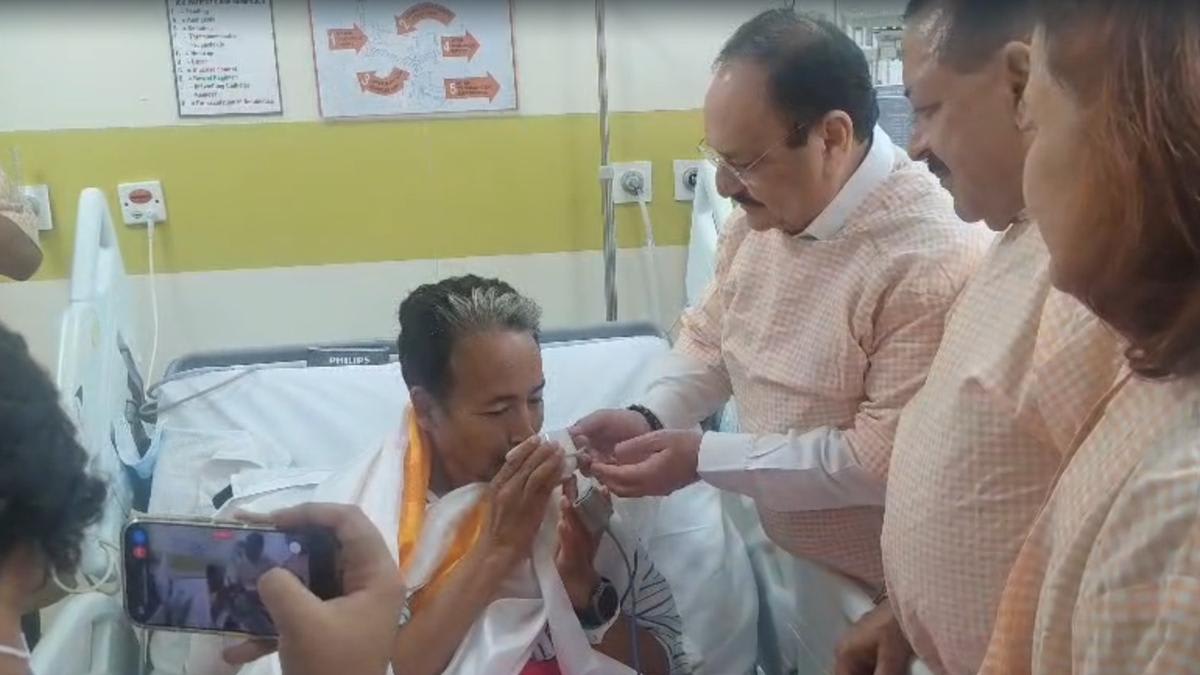
Sonam Wangchuk has broken his fast, says Leh Apex Body co-convenor
Source Entity
India Latest News: Top National Headlines Today & Breaking News | The Hindu
Student organizations and activists are protesting against alleged exam irregularities and police actions in Delhi. Demands include the resignation of Education Minister Dharmendra Pradhan and the dissolution of the National Testing Agency.
The Growing Student-Led Movement Against Examination Irregularities
The landscape of Indian student activism is currently witnessing a significant surge, fueled by widespread allegations of paper leaks and examination scams. The recent protests organized by the Naujawan Bharat Sabha (NBS) and the Disha Students’ Organisation highlight a deep-seated frustration among the youth regarding the integrity of the National Testing Agency (NTA). These demonstrations, echoing across various regions, serve as a mirror to the agitation occurring at Jantar Mantar in New Delhi, where students have been vocal about their grievances.
Accountability and the Demand for Ministerial Resignation
At the heart of these protests lies a demand for institutional accountability. Activists like Avinash of the Disha Students’ Organisation have explicitly called for the resignation of Union Education Minister Dharmendra Pradhan, arguing that the leadership must take responsibility for systemic failures in the examination process. This sentiment is echoed by members of the NBS, who have demanded the total abolition of the NTA. The movement is no longer limited to isolated incidents but has evolved into a broader call for a complete overhaul of how national entrance examinations are conducted and regulated.
Solidarity and the Response to Police Action
The protests have gained momentum due to a shared sense of outrage regarding the Delhi Police's handling of demonstrators at Jantar Mantar. The participants in the recent protests near the Gandhi statue have expressed firm solidarity with their counterparts in the national capital, condemning what they characterize as an assault on the democratic right to dissent. By connecting local protests to the national agitation, student groups are attempting to build a unified front against what they perceive as state-sponsored suppression of student voices.
The Role of Activism and Political Engagement
Figures such as CJP founder Abhijeet Dipke have become instrumental in amplifying these concerns, openly challenging government officials like Dharmendra Pradhan to engage directly with the protesters at Jantar Mantar. This call for dialogue represents a critical juncture in the movement, where activists are pushing for direct engagement rather than passive observation. The persistence of these groups indicates that the student community is prepared for a long-drawn struggle, as evidenced by their commitment to continue the movement until clear accountability is fixed.
Broader Implications for National Policy
The ongoing unrest underscores the fragility of public trust in national testing bodies. When student organizations demand the dissolution of the NTA, they are essentially calling for a fundamental restructuring of the educational assessment framework. Future trends suggest that if these demands for transparency and reform remain unaddressed, the student movement may continue to expand, potentially influencing political discourse and forcing a legislative review of the mechanisms currently governing high-stakes testing in India.
Conclusion
As the nation watches the unfolding events, the convergence of localized protests and national-level agitation paints a picture of a student body that is increasingly organized and politically conscious. Whether through the persistent advocacy of figures like Abhijeet Dipke or the grassroots mobilization of the NBS and Disha Students’ Organisation, the message remains clear: the demand for academic integrity and ministerial accountability is now a central pillar of contemporary student discourse.
Multiple Citing Sources
Verification Required?