Jantar Mantar protest LIVE: CJP delegation will meet with government Ministers today, says sources
Source Entity
India Latest News: Top National Headlines Today & Breaking News | The Hindu
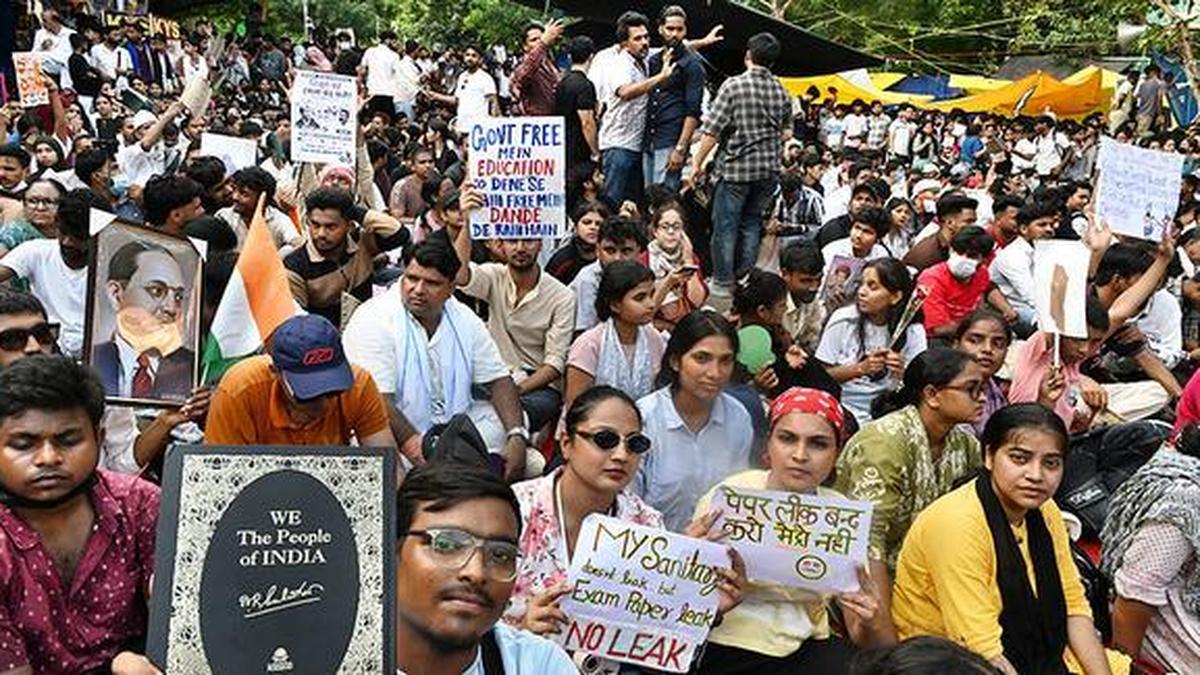
Student organizations are protesting across India against examination irregularities and police conduct in the capital. Meanwhile, activist Sonam Wangchuk has concluded his fast following concerns over his health.
Growing Student Unrest Over Examination Integrity
The recent wave of protests across India, spearheaded by groups like the Naujawan Bharat Sabha (NBS) and the Disha Students’ Organisation, signals a deepening crisis of confidence in the nation's examination infrastructure. Demonstrations near the Gandhi statue and the GVMC office serve as a direct response to widespread allegations of paper leaks and examination scams that have plagued recent academic cycles. These students are not merely venting frustration; they are demanding a systemic overhaul of the National Testing Agency (NTA), which they view as fundamentally compromised.
Accountability and the Demand for Ministerial Resignation
Central to the agitation is a demand for structural accountability. Activist and CJP founder Abhijeet Dipke has publicly challenged Union Education Minister Dharmendra Pradhan to engage directly with protesters at Jantar Mantar. This call for transparency is mirrored by the firm stance taken by student leaders like Avinash and Sujan, who have explicitly linked the continuation of their movement to the resignation of the Education Minister. The protesters argue that without high-level political responsibility, the integrity of competitive examinations cannot be restored.
The Role of Police Conduct in Escalating Tensions
Beyond the issues of paper leaks, the protests have been fueled by outrage over the Delhi Police’s handling of demonstrators at Jantar Mantar. The participants view the alleged police assault on students as an infringement on their democratic right to dissent. By staging protests in solidarity with those in the national capital, regional student groups are attempting to transform a localized grievance into a nationwide campaign against what they perceive as state-sponsored suppression of student voices.
The Intersection of Activism and Policy Reform
This movement highlights the growing influence of student-led advocacy in shaping national policy narratives. The demand for the abolition of the NTA reflects a fundamental distrust in existing bureaucratic mechanisms. If these organizations continue to gain momentum, the government may face significant pressure to either reform the NTA's operational protocols or risk prolonged instability in the academic sector, which could have long-term implications for the credibility of India’s competitive examination system.
Parallel Movements: The Case of Sonam Wangchuk
While student groups focus on examination reforms, other forms of public protest continue to highlight the broader climate of dissent in India. The recent conclusion of Sonam Wangchuk's fast, as noted by his brother Dorjey, underscores the personal toll and physical risks associated with these forms of advocacy. Though the objectives of Wangchuk’s movement differ from those of the student unions, both share a common thread of citizens utilizing non-violent protest to challenge government policy and demand greater accountability from elected officials.
Multiple Citing Sources
Verification Required?