Sturgeon Moon 2026: Date, timings and what it means in spirituality
Source Entity
Latest News: Todays Latest News Headlines from India & World | Hindustan Times | Hindustan Times
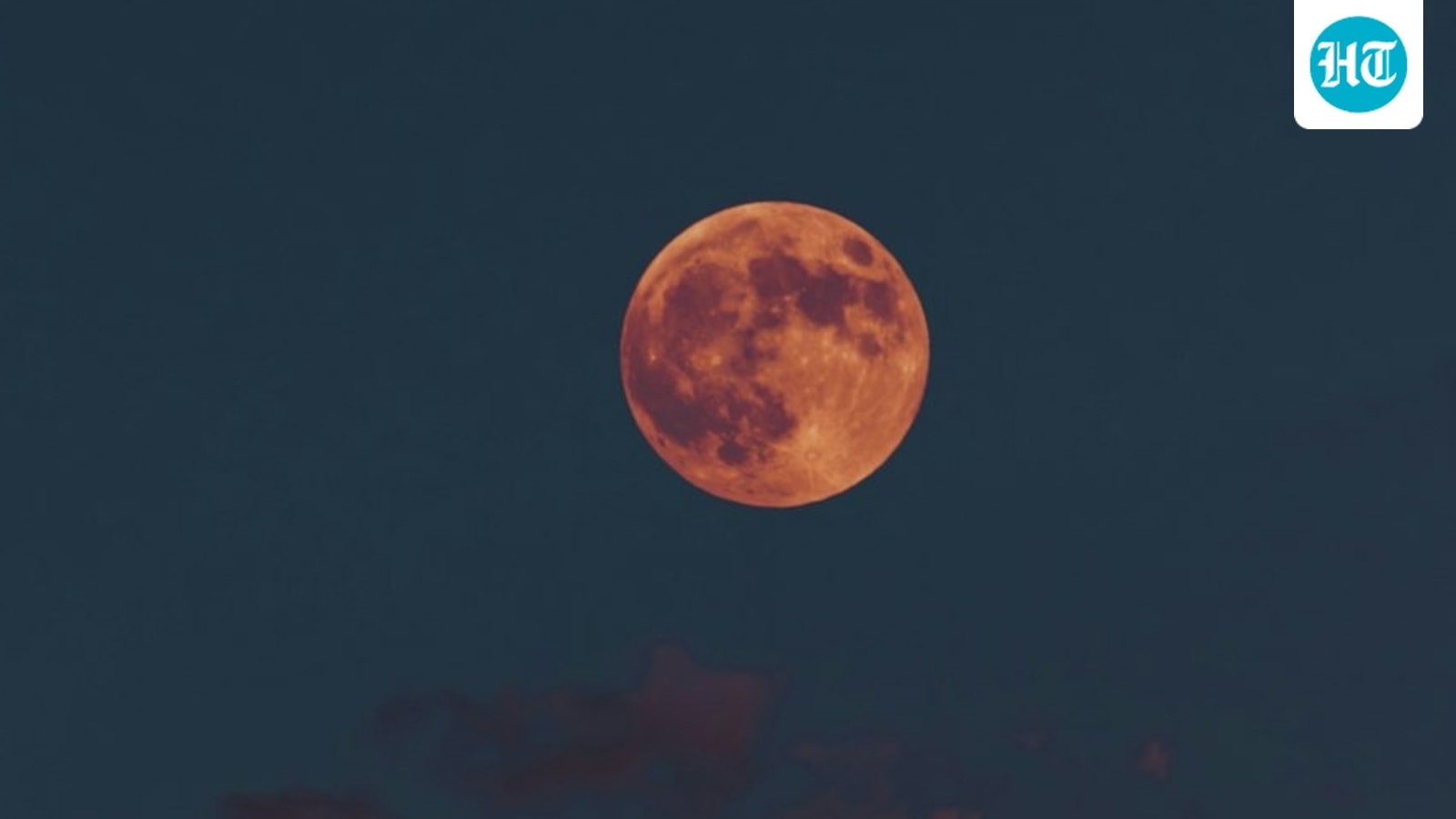
The Sturgeon Moon on August 28, 2026, will coincide with a rare, deep partial lunar eclipse. NASA estimates that 96.3% of the Moon will enter Earth's umbra, creating a significant celestial event visible across the Americas.
The Celestial Convergence of August 2026
As the calendar turns to late August 2026, skywatchers are preparing for a significant astronomical event: the Sturgeon Moon, which reaches its peak illumination at 12:18 a.m. ET on August 28. This annual lunar phenomenon, traditionally associated with the late-summer harvest, is set to be exceptionally unique this year as it coincides with a rare, deep partial lunar eclipse.
Understanding the Mechanics of the Eclipse
A partial lunar eclipse occurs when the Earth passes between the Sun and the Moon, but the three celestial bodies do not align in a perfectly straight line. Because of this slight misalignment, only a portion of the Moon enters the Earth’s darkest shadow, known as the umbra. In this specific event, NASA has confirmed that approximately 96.3% of the lunar disk will be obscured by the Earth's shadow, making it a notably deep partial eclipse.
Timing and Global Visibility
The timing of this event is critical for observers. While the peak illumination is officially set for the early hours of August 28, many residents in the United States will find that the best viewing conditions occur on the evening of Thursday, August 27. The visibility of the eclipse extends across the Americas, as well as portions of western Europe and western Africa, providing a wide geographic window for observation.
The Impact of Recent Solar Activity
This lunar event is particularly noteworthy as it follows closely on the heels of a solar eclipse that occurred earlier in the month, on August 12, 2026. Astronomers and enthusiasts alike have noted that August 2026 is an exceptionally active month for celestial mechanics. The rapid succession of a solar eclipse followed by a deep partial lunar eclipse underscores the dynamic nature of our orbital neighborhood.
Visual Characteristics and Scientific Significance
As the Moon moves deeper into the umbra, observers may witness the lunar surface take on a striking coppery-red hue. This phenomenon is caused by the scattering of sunlight through the Earth's atmosphere, a process often referred to as Rayleigh scattering. While the Moon will not be entirely eclipsed as it would be during a total lunar eclipse, the nearly total coverage of 96.3% will offer a dramatic visual experience that differs significantly from a standard full moon.
Conclusion: A Moment for Reflection
Beyond the scientific measurements and the precise timing provided by organizations like The Old Farmer's Almanac and NASA, this event holds cultural and spiritual significance for many. Whether viewed through the lens of astrology, such as the observations surrounding Rakhi Purnima, or through the objective lens of astronomy, the Sturgeon Moon of 2026 serves as a reminder of the intricate and predictable clockwork of our solar system. Observers are encouraged to prepare for the late-night viewing on August 27 and the early morning peak on August 28 to fully appreciate this rare celestial alignment.
Verification Required?