Worst-case glacial lake flood scenarios in a transboundary Himalayan basin 2022
Source Entity
Hacker News
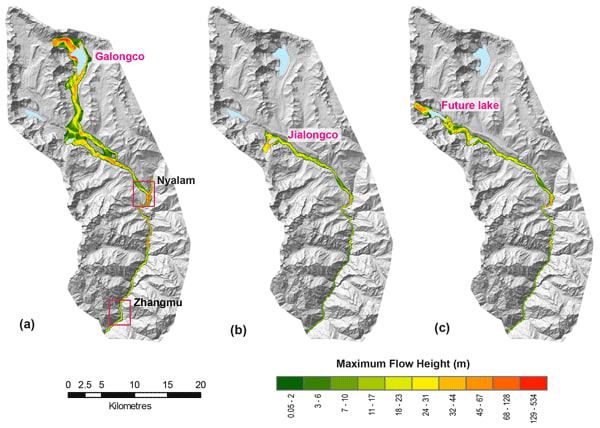
Researchers have analyzed potential Glacial Lake Outburst Flood (GLOF) scenarios for the Jialongco and Galongco basins. The study focuses on lake susceptibility and the magnitude of downstream impacts under worst-case conditions.
Assessing Himalayan GLOF Risks: A Scientific Overview
The study focusing on the Jialongco and Galongco glacial lakes highlights a critical environmental concern in the transboundary Himalayan region. As global temperatures rise, the stability of high-altitude glacial lakes has become a focal point for researchers concerned with Glacial Lake Outburst Floods (GLOFs). These events occur when the natural dams holding back glacial meltwater fail, leading to catastrophic downstream surges that threaten communities, infrastructure, and ecosystems.
Analyzing Lake Susceptibility
The research centers on determining the susceptibility of specific lakes—Jialongco, Galongco, and a potential future lake—to outburst events. By establishing a susceptibility framework, the study evaluates the likelihood of a GLOF by considering various conditioning and triggering factors. This methodology is essential for moving beyond general observations toward a systematic understanding of why certain lakes pose a higher danger than others under specific environmental conditions.
The Role of Worst-Case Scenario Simulation
By focusing on worst-case scenarios, the researchers aim to identify the upper limits of potential damage. While the report acknowledges that a full, comprehensive hazard and risk assessment—including the entire spectrum of outburst possibilities and detailed vulnerability mapping—is beyond the immediate scope of this specific study, the current results provide a vital baseline. Modeling these extreme events is crucial for disaster preparedness and informing regional water management policies.
Transboundary Implications and Challenges
The transboundary nature of the Himalayan basin adds a layer of complexity to these findings. Because glacial water systems do not respect political borders, the potential impacts of a GLOF in these basins necessitate international cooperation. The susceptibility of these lakes is not merely a local geological issue but a regional security concern that requires shared data and coordinated response strategies between neighboring jurisdictions.
Future Trends and Methodological Limitations
Moving forward, the integration of quantitative and qualitative data will be necessary to refine these risk assessments. The study emphasizes that likelihood is always specific to a given magnitude and time frame, which underscores the dynamic nature of these glacial environments. As climate change continues to alter the cryosphere, ongoing monitoring and the development of predictive models will be essential to mitigate the risks associated with these volatile high-altitude water bodies.