‘Too old’ to Asian Games MMA medallist: Suchika Tariyal’s journey from judo to glory
Source Entity
VINEET RAMAKRISHNAN
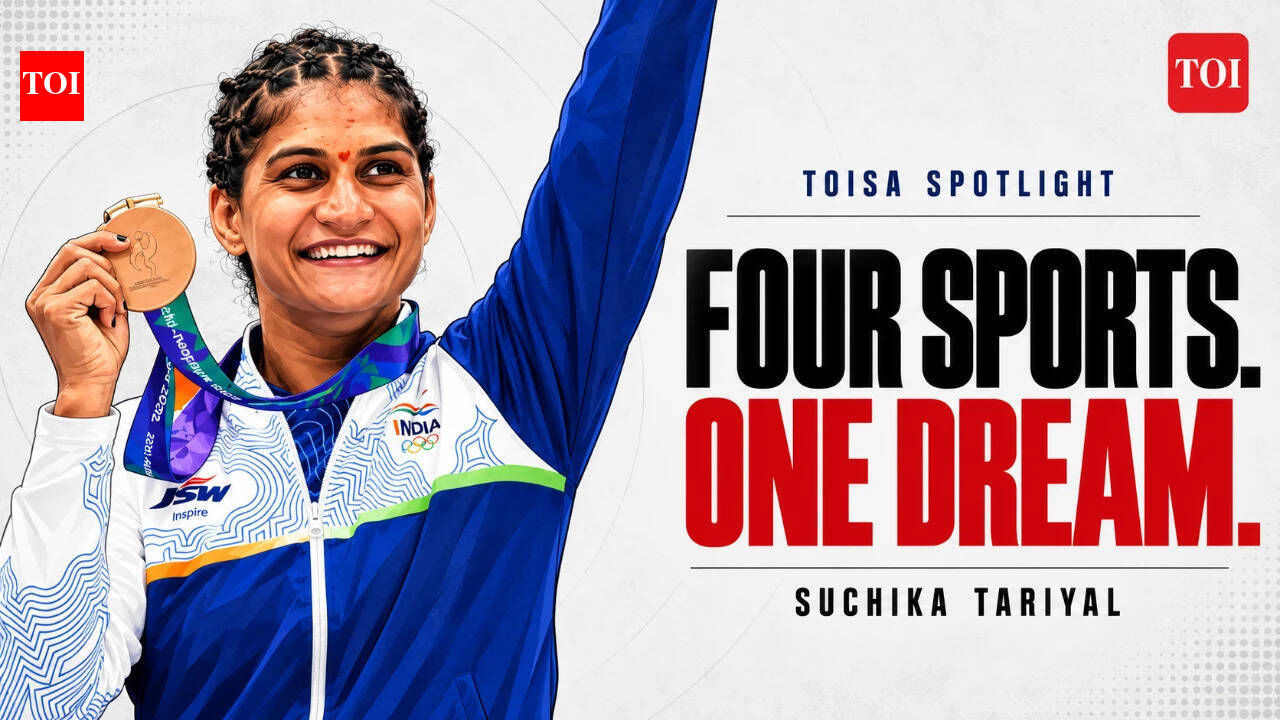
Suchika Tariyal has made history as India's first-ever Asian Games medalist in Mixed Martial Arts. Her achievement at age 36 follows a decorated career in judo and ju-jitsu, overcoming significant age-related skepticism and financial hardship.
The Unprecedented Rise of Suchika Tariyal
In a historic milestone for Indian combat sports, 36-year-old Suchika Tariyal has emerged as the nation’s first-ever Asian Games medalist in Mixed Martial Arts (MMA). Her journey to the podium is not merely a story of athletic prowess, but a profound testament to persistence in the face of systemic skepticism. Often told she was 'too old' to compete at the highest levels, Tariyal defied conventional retirement timelines to claim glory, proving that tactical experience and mental fortitude can transcend the biological assumptions often held in elite sports.
A Legacy Built on Versatility
Tariyal’s success in MMA is the culmination of a lifelong dedication to martial arts. Before her transition to the cage, she established herself as an eight-time national judo champion and a world champion in ju-jitsu. This extensive background provided her with the technical foundation necessary to navigate the complex, multifaceted requirements of MMA. Her ability to pivot between disciplines highlights the importance of multi-sport athleticism, where skills learned on the judo mat translate directly into the grappling and transition sequences required for modern competitive fighting.
Overcoming Financial and Social Hurdles
The path to the Asian Games was fraught with significant obstacles, including persistent financial strain and intense scrutiny regarding her age. In the high-pressure world of professional athletics, funding and institutional support are often funneled toward younger prospects, leaving veteran athletes like Tariyal to rely on personal grit and private support systems. Her training environment—a modest gym featuring a makeshift mat and a cage—stands in stark contrast to the state-of-the-art facilities often associated with international medalists, underscoring a narrative of grassroots determination.
The Role of Support Systems
A critical, yet often overlooked, component of Tariyal’s success is the unwavering support of her husband, Kapil Hooda. As a partner in both life and training, Hooda’s role in managing their shared gym, owned by Vikas Dahiya, provided the stability necessary for Tariyal to focus entirely on her craft. When they reached the point where they ceased asking for outside help, their self-reliance became their greatest asset. This partnership illustrates how personal support networks can bridge the gap where institutional infrastructure fails, allowing athletes to continue their pursuit of excellence well into their thirties.
The Margins of Victory
Perhaps the most poignant moment of her campaign was the narrow margin that separated her from the final round in Aichi-Nagoya. Missing a spot in the final by a mere 700 grams serves as a sobering reminder of the razor-thin margins in elite combat sports. This detail highlights the extreme physical discipline required to compete at an international level, where weight management and minute performance variations dictate the trajectory of an entire career. Despite this near-miss, the medal remains a resounding victory for Indian sports.
Future Trends and Legacy
Suchika Tariyal’s achievement is likely to serve as a catalyst for the growth of MMA in India, particularly for athletes who have transitioned from traditional martial arts. Her success challenges the ageist biases prevalent in the scouting systems of many national federations. As the sport of MMA continues to gain formal recognition at major international events like the Asian Games, Tariyal’s legacy will be that of a pioneer who proved that the 'age limit' is often a psychological barrier rather than a physical one. Her career path provides a blueprint for future generations of Indian fighters to pursue longevity and success across multiple disciplines.