The Superrich Aren’t Just Buying Mansions—They Want the Entire Block
Source Entity
Latest News: Today's Latest News Headlines from India & World | Hindustan Times | Hindustan Times
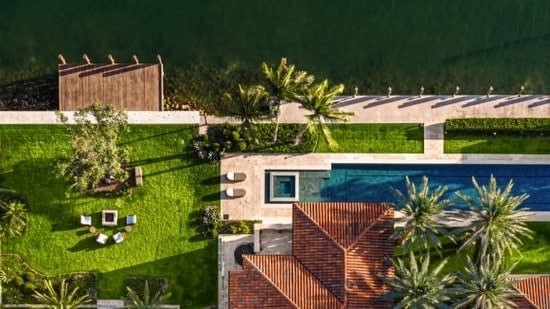
Ultra-high-net-worth individuals are adopting a strategy known as 'landmaxxing,' where they purchase not only a primary luxury residence but also all surrounding properties to create vast, hyper-private compounds and maintain total territorial control.
The Rise of 'Landmaxxing': The New Frontier of Ultra-Luxury Real Estate
In the upper echelons of global wealth, the definition of a 'dream home' has shifted. It is no longer sufficient for the ultra-wealthy to own a sprawling mansion with an expansive backyard; the current trend, colloquially termed 'landmaxxing,' involves the strategic acquisition of entire city blocks or clusters of neighboring properties. High-profile figures such as Ken Griffin, the founder of Citadel, and Larry Ellison, the Oracle co-founder, have become avatars for this movement, treating real estate not just as a place of residence, but as a means of establishing total territorial sovereignty. This shift represents a transition from ostentatious luxury to a more calculated pursuit of absolute privacy and security.
The Psychology of the Buffer Zone
The primary driver behind landmaxxing is the creation of a 'buffer zone.' For billionaires, the risk of paparazzi, unsolicited visitors, or simply the proximity of other people constitutes a breach of their perceived sanctuary. By purchasing the homes immediately adjacent to their primary residence, these individuals effectively eliminate the possibility of a neighbor installing a security camera that overlooks their yard or a stranger walking their dog too close to the perimeter. This strategy transforms a residential plot into a fortress, where the owner controls every square inch of the surrounding environment, ensuring that their private life remains entirely shielded from the public eye.
Economic Implications and Market Distortion
From a business perspective, landmaxxing has profound implications for local real estate markets. When a single buyer with virtually unlimited capital decides to 'clear' a block, it creates an artificial demand spike that can distort local property valuations. This 'vacuum effect' often prices out long-term residents and smaller investors, as the superrich are willing to pay significant premiums over market value to ensure no one else can occupy the space. In luxury hubs like Palm Beach or Manhattan, this trend accelerates gentrification, turning once-diverse neighborhoods into sterile, high-security enclaves where the density of inhabitants drops while the total asset value of the land skyrockets.
Historical Parallels and the Modern Compound
While landmaxxing may seem like a modern phenomenon, it echoes the Gilded Age estates of the late 19th and early 20th centuries, where families like the Vanderbilts and Rockefellers built massive country houses. However, the modern iteration differs in its urban application and its reliance on technology. While the Gilded Age estates were often about social signaling and hosting the elite, today's compounds are designed for exclusion. The integration of advanced surveillance, biometric access, and sophisticated perimeter security makes these modern blocks more akin to private diplomatic missions than traditional family homes.
Future Trends: Toward Private Urban Enclaves
Looking forward, it is likely that landmaxxing will evolve beyond individual blocks into the creation of small, private urban enclaves. As security concerns grow and the wealth gap widens, the superrich may seek to create 'micro-cities' where they control not only the housing but also the infrastructure, security, and maintenance of the surrounding area. This could lead to a fragmented urban landscape where 'dark zones' of private ownership exist within public cities, further insulating the global elite from the social and economic realities of the general population.
Conclusion
Landmaxxing is more than a real estate trend; it is a manifestation of the desire for total control in an increasingly transparent and connected world. By acquiring entire blocks, figures like Griffin and Ellison are rewriting the rules of luxury, prioritizing invisibility and isolation over traditional displays of wealth. As this trend continues, it will likely reshape the geography of the world's most expensive cities, turning residential neighborhoods into a series of disconnected, private fortresses.
Verification Required?