Rath Yatra: SC upholds temporary stay on animated movie, clears release after festival
Source Entity
Latest News: Today's Latest News Headlines from India & World | Hindustan Times | Hindustan Times
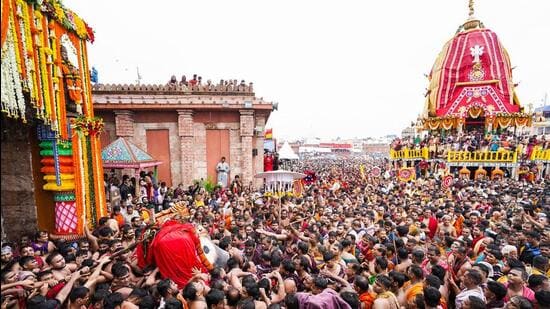
The Supreme Court has permitted the release of the animated film 'Mahaprabhu Jagannath' starting July 28, following the conclusion of the Puri Rath Yatra. Meanwhile, the annual chariot procession in Puri resumed after an overnight pause due to darkness and ritual delays.
The Intersection of Faith and Media: The 'Mahaprabhu Jagannath' Film Dispute
The Supreme Court of India recently intervened in a legal dispute concerning the animated film Mahaprabhu Jagannath, balancing freedom of expression with the profound religious sentiments surrounding the Puri Rath Yatra. A bench consisting of Justices BV Nagarathna and R Mahadevan ruled that the film could be released on or after July 28, 2026, effectively upholding a temporary stay until the conclusion of the sacred festival on July 27. The court emphasized that the “balance” of the situation necessitated this delay, ensuring that the sanctity of the ongoing religious festivities remained undisturbed.
Legal Context and Procedural Hurdles
The legal friction arose from concerns regarding the film’s content, specifically that suggested changes requested by the Shree Jagannath Temple Administration (SJTA) and the Gajapati Maharaja had not been fully incorporated. While the Orissa High Court had initially set an August 5 hearing date, the Supreme Court’s intervention provided a pragmatic compromise. By allowing the release immediately following the festival, the court avoided an indefinite delay while acknowledging the importance of addressing the temple authorities' grievances regarding the representation of the deities.
The Rath Yatra: Rituals and Logistics
The Rath Yatra, a historic event centered at the 12th-century Shree Jagannath Temple, faced unique logistical challenges in 2026. The procession, which began on July 16, was forced to pause overnight as darkness fell before the chariots of Lord Jagannath, Lord Balabhadra, and Devi Subhadra could reach the Gundicha Temple. The delay was compounded by extended 'Pahandi' rituals. Gajapati Maharaja Dibyasingha Deb, the primary servitor, clarified that there was no spiritual impropriety in the chariots remaining stationed overnight, ensuring that the resumption of the journey on July 17 proceeded with the full support of the religious establishment.
Crowd Management and Public Participation
Massive crowds, estimated between 8 to 12 lakh devotees, gathered on the Grand Road to participate in the pulling of the chariots. The scale of the event necessitated significant administrative intervention, including special arrangements to manage rainwater drainage on the Grand Road to ensure the safety and movement of the massive wooden structures. The divergence in crowd estimates between the SJTA and the Chief Minister’s Office highlights the immense scale of the event and the complexities of managing such a significant pilgrimage in modern times.
Broader Tensions: Tradition vs. Globalized Observance
The controversy surrounding the film also mirrors broader tensions within the Jagannath tradition regarding the autonomy of the Puri temple rituals. There has been long-standing resentment in Puri regarding the International Society for Krishna Consciousness (ISKCON) organizing Rath Yatra processions globally on dates that differ from the centuries-old ritual calendar maintained by the Puri temple. This reflects a growing dialogue between the preservation of ancient, localized ritualistic integrity and the expanding, globalized nature of modern religious movements.
Conclusion: Respecting the Sanctity of Tradition
The Supreme Court’s decision serves as a definitive marker in how the judiciary navigates the intersection of creative media and religious heritage. By mandating that the film Mahaprabhu Jagannath wait until the conclusion of the festival, the court effectively reinforced the principle that while artistic expression is protected, the cultural and religious context of long-standing traditions like the Rath Yatra remains a paramount consideration in the public sphere. As the festival concludes on July 27, the focus shifts back to the preservation of the temple's ritualistic authority and the orderly completion of the deities' journey.
Verification Required?