Column | Why Indian consumer law holds doctors accountable, not lawyers
Source Entity
The Indian Express
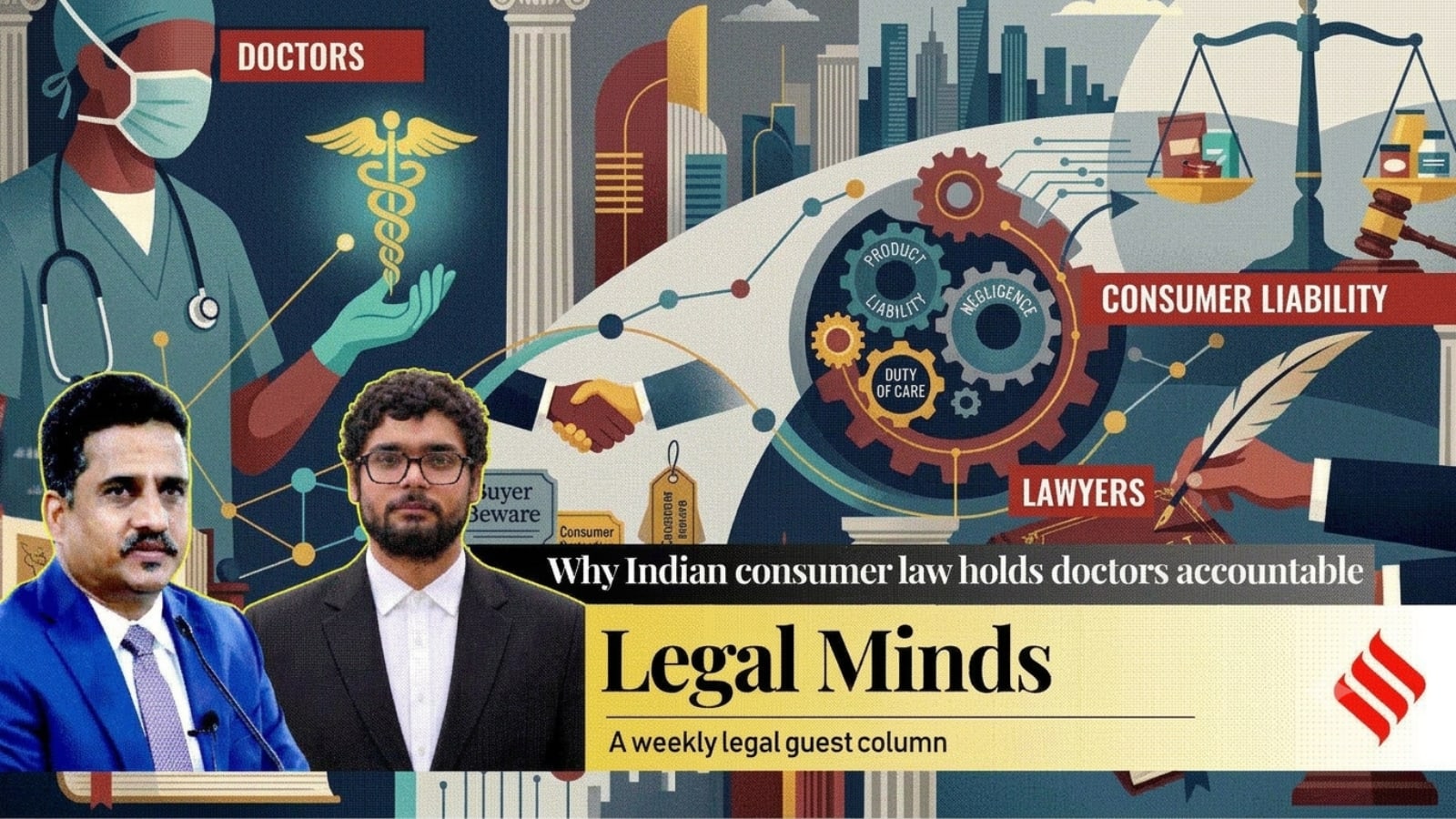
The Supreme Court's decision to maintain the exclusion of lawyers from consumer protection laws while keeping doctors liable has reignited legal debates. This disparity stems from historical judicial precedents that distinguish the nature of services provided by the two professions.
The Legal Dichotomy: Doctors vs. Lawyers in Consumer Protection
The recent refusal by the Supreme Court of India to hear a curative petition in the case of Medico Legal Society of India v. Bar of Indian Lawyers & Ors. on September 9, 2026, has brought a long-standing legal inconsistency back into the spotlight. By declining to hear the matter in open court, the judiciary has effectively reinforced the status quo: medical practitioners remain subject to consumer protection laws for services rendered, while the legal profession enjoys a distinct exemption. This decision serves as a pivotal moment for those questioning the equitable application of the Consumer Protection Act across different professional domains.
Historical Precedents and the Judicial Foundation
To understand why this variance exists, one must analyze the historical trajectory of professional negligence litigation in India. Judicial interpretation has historically categorized medical treatment as a service susceptible to consumer scrutiny, citing the need for accountability in life-altering procedures. Conversely, the legal profession has been largely shielded from such liability through various judicial interpretations that prioritize the unique, adversarial nature of legal advocacy. The current impasse is not merely a modern administrative issue but the result of decades of jurisprudence that have carved out separate paths for these two pillars of society.
Defining the Professional Service Gap
At the heart of this controversy is the definition of 'service' under consumer law. The legal argument posited by the Medico Legal Society of India suggests that if both doctors and lawyers provide professional services for remuneration, the standard of accountability should theoretically align. However, the courts have maintained that the duty of care in medicine, which directly impacts physical health and life, carries a different weight than the duty of an advocate to a client. This distinction remains the primary hurdle for those seeking a uniform application of consumer protection statutes.
The Role of the Curative Petition
It is important to note that the curative petition is an exceptional post-review remedy, intended to be used only in the most egregious cases of judicial failure or systemic miscarriage of justice. By refusing to hear this petition in open court, the Supreme Court has signaled that it does not see the current exemption status of lawyers as a constitutional or procedural error requiring rectification. This decision effectively exhausts the highest level of judicial recourse for the petitioners in this matter.
Broader Implications for Professional Accountability
This case highlights a broader tension regarding how professional bodies are regulated in India. While medical practitioners are governed by bodies like the National Medical Commission (NMC), lawyers operate under the Bar Council of India. The disparity in how these professions are held accountable to the public suggests that the 'consumer' status of a client or patient is interpreted differently depending on the nature of the professional relationship. As the law stands, the medical community remains uniquely exposed to litigation under the Consumer Protection Act, a reality that continues to influence the practice of medicine in India.
Future Trends and Concluding Thoughts
Moving forward, this decision will likely serve as a foundational reference for future debates on professional liability. While the medical community may continue to push for parity, the judiciary's reliance on established precedents indicates that change may require legislative intervention rather than judicial review. The conclusion of this curative petition underscores the stability of the current legal framework, ensuring that for the foreseeable future, the divide between the liability of doctors and lawyers remains firmly entrenched in Indian law.