Supreme Court lauds scrapped MGNREGA as a ‘good, effective scheme’
Source Entity
India Latest News: Top National Headlines Today & Breaking News | The Hindu
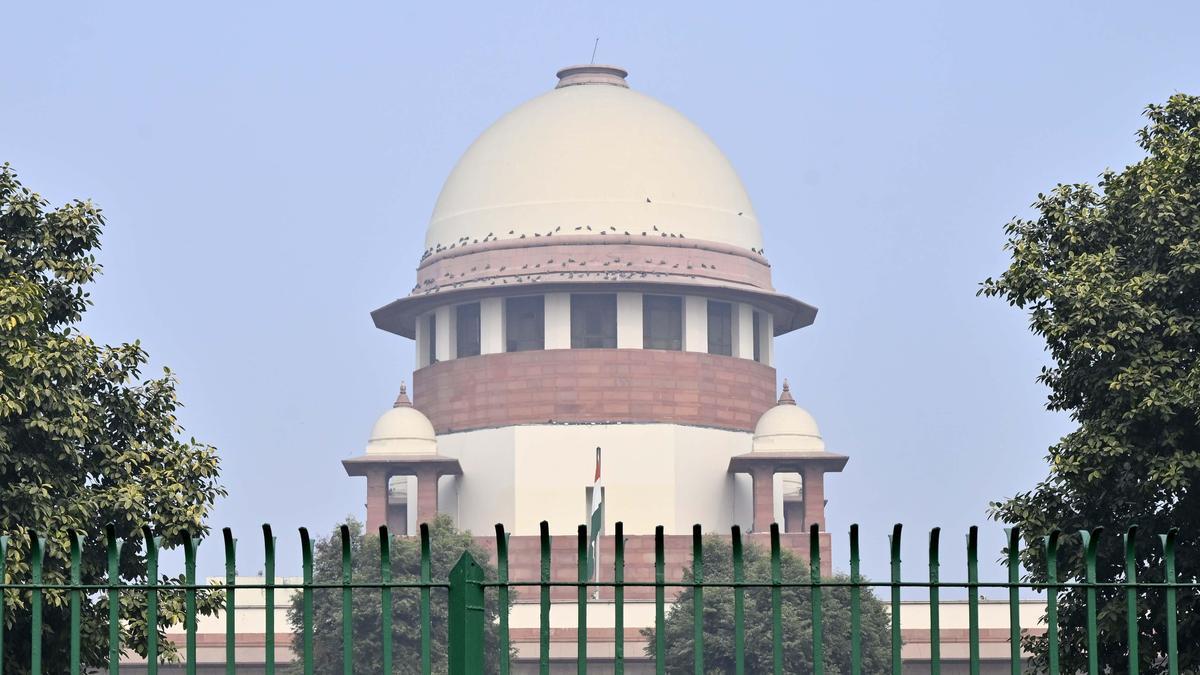
The Supreme Court has lauded the defunct MGNREGA as an effective, rights-based scheme during hearings on wage delays. Critics argue that its successor, the VB-G RAM G Act, has caused a 50% drop in employment despite increased work day guarantees.
The Supreme Court’s Appraisal of MGNREGA
In a significant legal development on August 21, 2026, the Supreme Court of India offered a rare commendation for the repealed Mahatma Gandhi National Rural Employment Guarantee Act (MGNREGA). A three-judge Bench, while presiding over a petition concerning persistent wage delays under the now-defunct scheme, characterized the legislation as a “salutary scheme.” The court explicitly rejected the notion that the program functioned as a mere “freebie” or a vehicle for worker exploitation, instead positioning it as a vital instrument of social welfare.
Transition to the VB-G RAM G Act
The judicial commentary arrives at a contentious juncture as civil society organizations raise alarms regarding the performance of the MGNREGA’s successor: the Viksit Bharat Guarantee for Rozgar and Ajeevika Mission (Gramin), or the VB-G RAM G Act. While the new legislation increased the guaranteed work threshold from 100 to 125 days per household annually, petitioners argue that the practical application of the law has been deeply flawed, resulting in a staggering 50% decline in employment generation compared to its predecessor.
Structural Shifts in Governance
The fundamental friction between the two schemes lies in their underlying philosophy. MGNREGA was rooted in a demand-driven, rights-based framework that empowered rural laborers to claim work as a legal entitlement. In contrast, the VB-G RAM G Act represents a pivot toward a more centrally controlled model. This shift has fundamentally altered the mechanism of rural employment, moving away from the grassroots-demand architecture that defined the original Act’s success in poverty alleviation.
Financial Burdens and Federalism
Beyond the operational decline, the fiscal architecture of the new scheme has introduced significant strain on state governments. The funding ratio, previously set at a 90:10 split between the Union and the States, has been recalibrated to 60:40. This three-fold increase in the fiscal burden on state treasuries has sparked concerns regarding the long-term sustainability of the program, particularly in economically disadvantaged regions that rely heavily on federal assistance for rural welfare initiatives.
Legal Implications and the Right to Work
The current petition before the Supreme Court is not limited to mere wage arrears; it seeks a more profound judicial intervention: the elevation of the 'right to work' to a fundamental right. By anchoring this request in the legacy of MGNREGA, petitioners are challenging the state to rethink the current trajectory of employment policy. As the Court continues its deliberations, the tension between administrative control and the rights-based approach of the past remains the central theme of this constitutional debate.
Verification Required?