Is using abusive words like ‘motherf***ker’ punishable under obscenity law? What Supreme Court says
Source Entity
Latest News: Today's Latest News Headlines from India & World | Hindustan Times | Hindustan Times
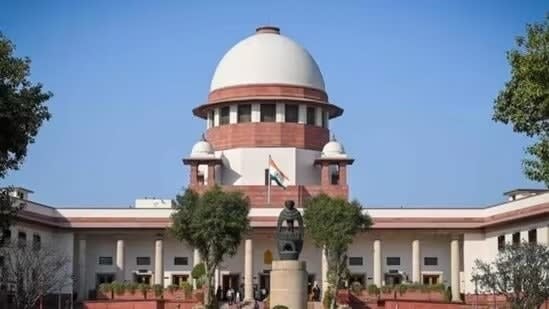
The Supreme Court of India ruled that using abusive language does not automatically constitute criminal obscenity. The court clarified that such insults must be lascivious and incite prurient interests to be punishable under law.
Supreme Court Clarifies Legal Threshold for Obscenity
In a significant legal development, the Supreme Court of India has provided much-needed clarity on the intersection of abusive language and criminal obscenity laws. The bench, comprising Justices Sanjay Karol and Vipul M. Pancholi, addressed the issue while partly allowing an appeal filed by a man convicted of obscenity for using vulgar expletives during an August 2017 land dispute in Tamil Nadu. This ruling serves as a vital precedent for lower courts struggling to distinguish between uncivil behavior and criminal conduct.
The Legal Definition of Obscenity
The court’s core observation centers on the interpretation of what constitutes 'obscenity' within the framework of the Indian Penal Code. The justices emphasized that while language like 'motherf**ker' or 'son of a whre' is undeniably offensive, uncivil, and derogatory, these qualities alone are insufficient to meet the legal threshold for an obscenity charge. For a statement to be classified as legally obscene, it must meet specific criteria: it must be lascivious, possess the intent to appeal to prurient interests, and demonstrate a tangible tendency to deprave or corrupt those exposed to the utterance.
Contextualizing the 2017 Land Dispute
The origins of this case lie in a localized altercation concerning agricultural land in Tamil Nadu. The incident serves as a classic example of how intense personal or property disputes can escalate into criminal litigation. By examining the specific context of the altercation, the Supreme Court highlighted the necessity of separating the 'heat of the moment' verbal abuse from actions that genuinely threaten public morality or safety under the guise of obscenity.
Narrowing the Scope of Criminal Liability
By establishing this three-pronged test—lascivious, prurient, and corruptive—the court has effectively narrowed the scope of criminal liability. This move prevents the misuse of obscenity laws in routine verbal altercations where the primary intent is insult rather than sexual provocation. This judicial restraint is essential for preventing the clogging of the legal system with cases that, while morally objectionable, lack the criminal elements required for a conviction under existing statutes.
Broader Implications for Judicial Precedent
This ruling carries significant weight for future litigation involving verbal abuse. It reinforces the principle that the law is not a tool to sanitize public discourse of all profanity, but rather a mechanism to protect society from content that is inherently corruptive. Future trends in Indian jurisprudence will likely see lower courts applying this 'prurient interest' filter more rigorously, potentially leading to a decline in convictions for mere verbal insults.
Concluding Summary
Ultimately, the Supreme Court’s decision marks a shift toward a more nuanced interpretation of criminal obscenity. By distinguishing between offensive language and legally punishable obscenity, the bench has clarified that constitutional protections for speech, even when vulgar, remain intact unless the specific criteria for corruption and prurience are met. This ruling provides a clear roadmap for defense attorneys and prosecutors alike to evaluate the merits of obscenity charges in the future.
Verification Required?