Watch: Karur Stampede: Supreme Court stay on govt. jobs for victims’ families| Above the Fold| 14.08.2026
Source Entity
India Latest News: Top National Headlines Today & Breaking News | The Hindu
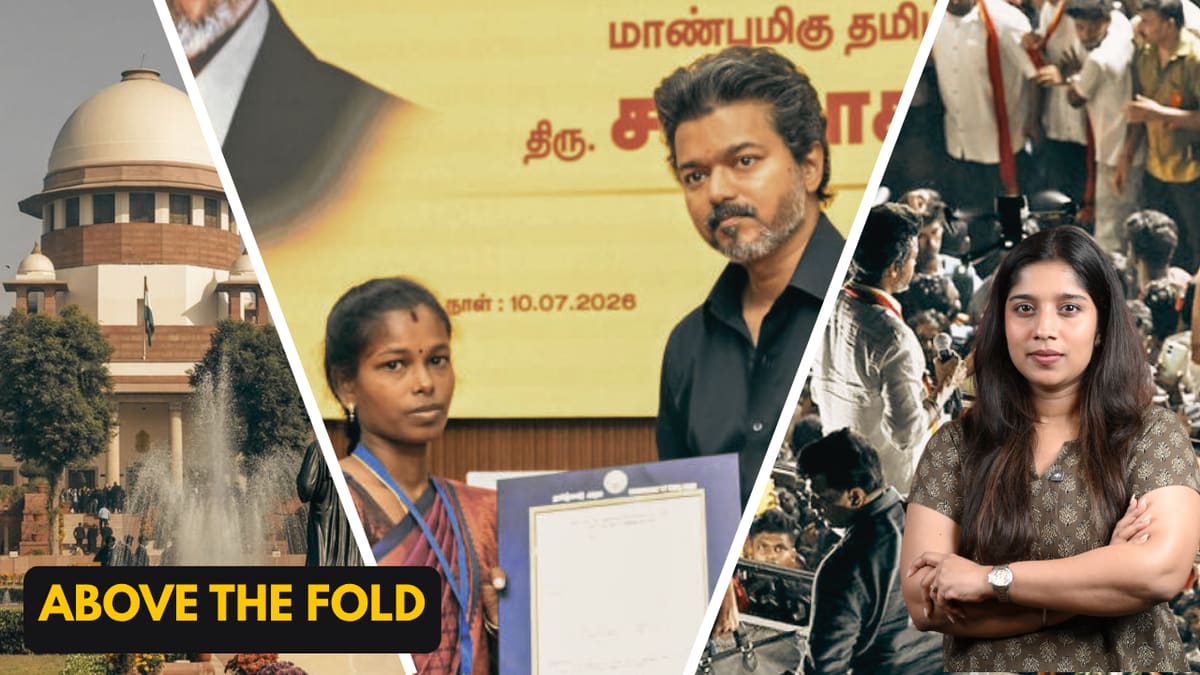
The Supreme Court has stayed a Madras High Court order granting government jobs to families of the Karur stampede victims. This decision coincides with other major legal and environmental developments, including the Chamoli tunnel tragedy and a hate speech ruling regarding Rahul Gandhi.
Legal Intervention in Karur Stampede Compensation
The Supreme Court of India has issued a stay on a previous Madras High Court directive that mandated government employment for the families of victims involved in the Karur stampede. This intervention highlights the ongoing legal complexities surrounding state-sponsored compensation models following mass casualty events. While the High Court had sought to provide immediate financial and social security to the affected families, the Supreme Court's stay suggests a critical re-evaluation of the legal precedent regarding automatic employment schemes for disaster victims.
Broader Context of National Tragedies
This legal development occurs against a backdrop of several high-profile incidents currently under national scrutiny. The Chamoli tunnel tragedy, which resulted in the loss of seven workers, continues to raise questions regarding industrial safety standards and the oversight of infrastructure projects in ecologically sensitive zones. Similarly, the issue of waste management during the Kanwar Yatra has sparked intense debate over the environmental impact of large-scale religious and public gatherings, pressing authorities to balance cultural traditions with public health and sanitation mandates.
Geopolitical and Economic Scrutiny
Beyond domestic social issues, the current news cycle is heavily influenced by international economic pressures. A recent report issued by the White House has formally flagged India regarding the evasion of tariffs by China. This development signals potential shifts in Indo-US trade relations and underscores the challenges India faces in monitoring transshipment and supply chain integrity. Such international scrutiny often necessitates a tightening of domestic trade regulations to ensure compliance with global standards.
Legal Precedents and Political Discourse
Simultaneously, the Supreme Court has made a significant ruling in the legal arena by quashing a hate speech case against Rahul Gandhi. The case, which centered on remarks made regarding V.D. Savarkar, has been a point of contention in the Indian political landscape. By quashing the case, the judiciary has once again highlighted the boundaries of political discourse and the protections afforded to speech under the constitution, marking a pivotal moment in the ongoing legal battles involving prominent political figures.
Conclusion and Future Outlook
These events, ranging from the judicial review of compensation policies in Karur to international trade policy and political litigation, illustrate the multifaceted nature of governance in India. The Supreme Court's role remains central in mediating these diverse issues, ensuring that administrative actions remain within the bounds of national law. Moving forward, the resolution of these cases will likely establish new benchmarks for how the state manages disaster relief, industrial accountability, and political expression in a complex democratic framework.
Verification Required?