Supreme Court to examine whether persons deleted from voter list in SIR can be denied welfare schemes
Source Entity
India Latest News: Top National Headlines Today & Breaking News | The Hindu
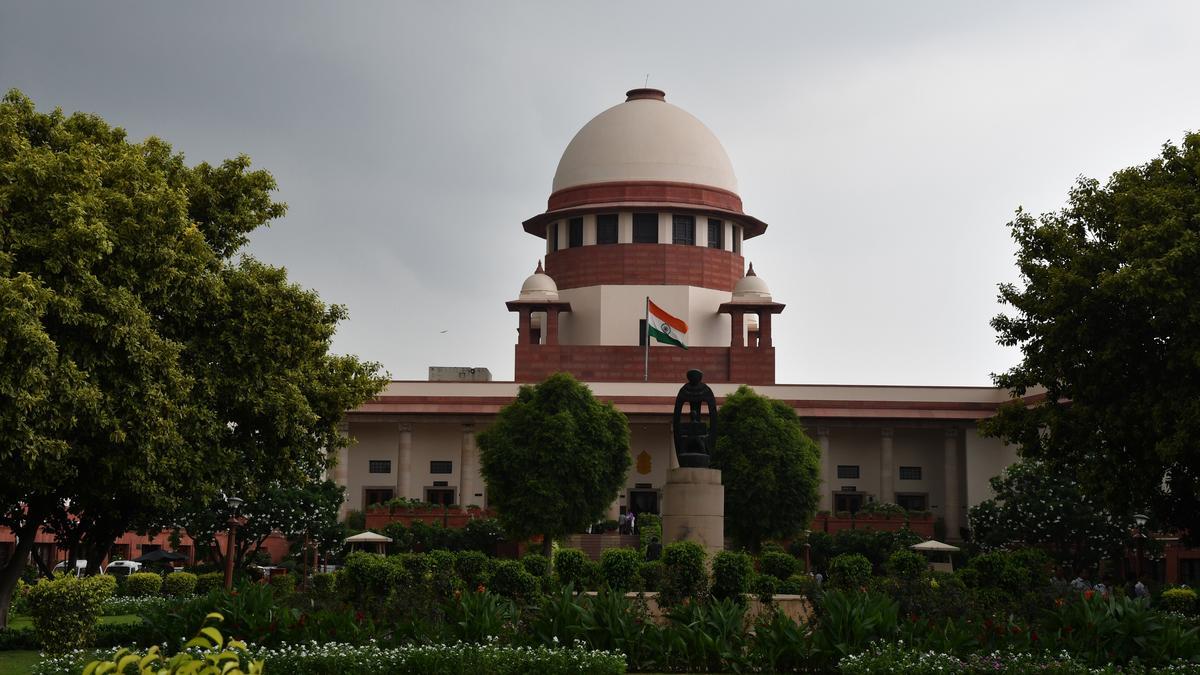
The Supreme Court has issued notice to the ECI and West Bengal government regarding the denial of welfare benefits to individuals removed from electoral rolls. The petition challenges the automatic exclusion of these citizens from essential social schemes following Special Intensive Revision (SIR) proceedings.
The Intersection of Electoral Rolls and Social Welfare Rights
The Supreme Court’s recent decision to issue notice to the Election Commission of India (ECI) and the West Bengal government marks a critical juncture in the interpretation of citizenship rights versus administrative processes. The core of the matter, brought forward by petitioner Prasenjit Bose, addresses the potential humanitarian crisis triggered when individuals are purged from electoral rolls following the Special Intensive Revision (SIR) exercise. At the heart of this legal challenge is the contention that the loss of electoral standing should not serve as an automatic trigger for the forfeiture of fundamental social entitlements.
The Impact of Administrative Deletion
The consequences of being purged from electoral rolls extend far beyond the right to vote. As argued by Mr. Sankaranarayanan, the exclusion from the electoral register has become a de facto barrier to accessing essential government welfare, including the Public Distribution System (PDS) and the Annapurna scheme. This creates a precarious situation where administrative errors or unresolved bureaucratic disputes within the SIR process effectively penalize vulnerable populations by stripping them of their basic sustenance and social security benefits.
Structural Limitations of Special Tribunals
A significant portion of the petitioner’s grievance focuses on the procedural inadequacy of the Special Tribunals tasked with handling appeals. With only 19 tribunals currently operational and a history of judicial resignations, the system appears overwhelmed and ill-equipped to provide timely justice to those contesting their exclusion. The petitioner’s plea for greater transparency in these tribunals highlights a growing concern that the current appellate framework lacks the necessary oversight to prevent arbitrary deletions or to ensure that appellants receive a fair hearing before their names are removed.
Judicial Precedent and the Bihar Connection
During the proceedings, Justice Bagchi referenced the Supreme Court’s previous judgment concerning the Bihar SIR exercise, suggesting that the court has historically recognized the potential for overreach in such identification processes. The petitioner’s submission—that neither the court nor the petitioners originally anticipated that welfare schemes would be weaponized or withheld due to electoral roll status—underscores a shift in how administrative data is being utilized by the state. This legal battle now seeks to decouple electoral registration from the broader social contract of welfare delivery.
Broader Implications and Future Trends
This case sets a precedent for how administrative databases are managed in the digital age. If the Supreme Court rules in favor of the petitioner, it would establish a vital safeguard, ensuring that welfare eligibility remains distinct from electoral status, thereby protecting citizens from the fallout of bureaucratic purges. Looking ahead, this trend of 'data-driven' governance will likely face increased judicial scrutiny. As the state relies more heavily on centralized databases, the judiciary will be tasked with ensuring that administrative efficiency does not come at the cost of the constitutional rights of the most marginalized segments of society.
Conclusion
In summary, the Supreme Court’s intervention is a necessary check on the administrative mechanisms of the SIR exercise. By examining whether welfare benefits can be denied to those whose names have been deleted from electoral rolls, the court is addressing the fundamental question of whether the state can use administrative identification as a proxy for social exclusion. The outcome of this case will likely influence future administrative policy, emphasizing the need for transparency, efficiency in appellate tribunals, and the protection of social rights regardless of electoral standing.
Verification Required?