Why Surat’s Diamond Bourse isn’t shining three years after Modi inaugurated it
Source Entity
Kamal Saiyed
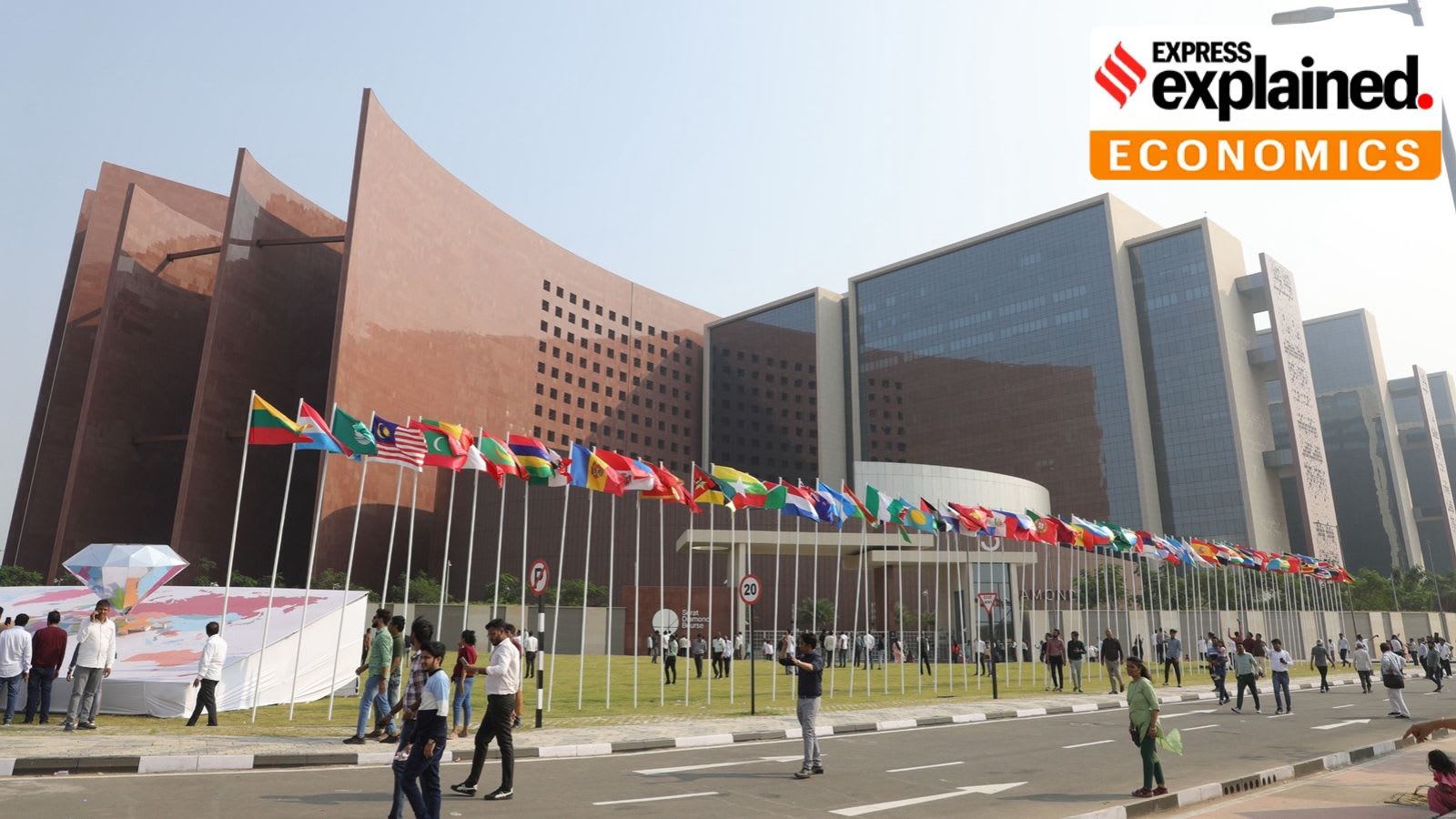
The Surat Diamond Bourse, once hailed as the world's largest office space, remains largely vacant three years after its inauguration. Despite its grand ambitions to shift India's diamond trade from Mumbai, only a fraction of offices are operational.
The Unfulfilled Promise of the Surat Diamond Bourse
Three years ago, the landscape of India's commercial infrastructure appeared to be undergoing a monumental shift with the inauguration of the Surat Diamond Bourse (SDB). Prime Minister Narendra Modi, who championed the 3,200-crore project, hailed the facility as the "best diamond in the world" and a hallmark of his administration’s commitment to Surat’s economic development. The project was designed not merely as a building, but as a strategic pivot to consolidate the global diamond trade within the city where the actual cutting and polishing occur.
Architectural Ambition vs. Operational Reality
The scale of the SDB is undeniably staggering. Comprising nine towers, each rising 15 floors above ground, the complex was celebrated for surpassing the Pentagon as the world’s largest office space in a single project. However, the current reality stands in stark contrast to the initial fanfare. Instead of a bustling nerve center for international commerce, the massive complex remains a largely empty shell, having hosted only two significant events since its inception, signaling a profound disconnect between infrastructure development and industry adoption.
The Strategic Shift That Stalled
The central objective of the SDB was to decentralize India's diamond industry by migrating operations from Mumbai—the traditional financial and trading hub—to Surat. By creating a localized ecosystem where cutting, polishing, and trading could coexist, stakeholders hoped to streamline the supply chain and reduce logistical friction. Yet, the migration has failed to gain the necessary momentum. Out of the 4,200 available offices, barely 300 are currently occupied, indicating a deep-seated hesitation among traders to abandon the established ecosystem of Mumbai.
Implications of the Vacancy
The failure to populate the SDB carries significant economic implications for the region. A project of this magnitude requires high occupancy rates to sustain its operational costs and justify the massive capital expenditure involved. When such a massive asset remains underutilized, it raises questions about the feasibility of top-down economic planning in industries that rely heavily on historical networks, established banking relationships, and proximity to major international transit points that Mumbai currently offers.
Future Outlook and Challenges
Moving forward, the SDB faces the difficult task of incentivizing a conservative trading community to relocate. The "Modi guarantee" that once served as a symbol of confidence now faces the reality of market forces. Future success will depend on whether the government and industry leaders can bridge the gap between Surat's manufacturing prowess and the necessity of maintaining robust trading networks. Without a paradigm shift in how the bourse is perceived by major diamond firms, it risks remaining a monument to ambition rather than a functional hub of global commerce.